Log In
Explore the Consciousness Observatory
🍓⚡️

Curious Who You Are Today?

Take the Consciousness Badge Assessment.

A few sliders. A few moments of reflection.

You might discover a Mirror. You might discover a Lightning. You might even discover a Strawberry.

🎖️ Take the Assessment
No grades. No right answers. Just recognition.

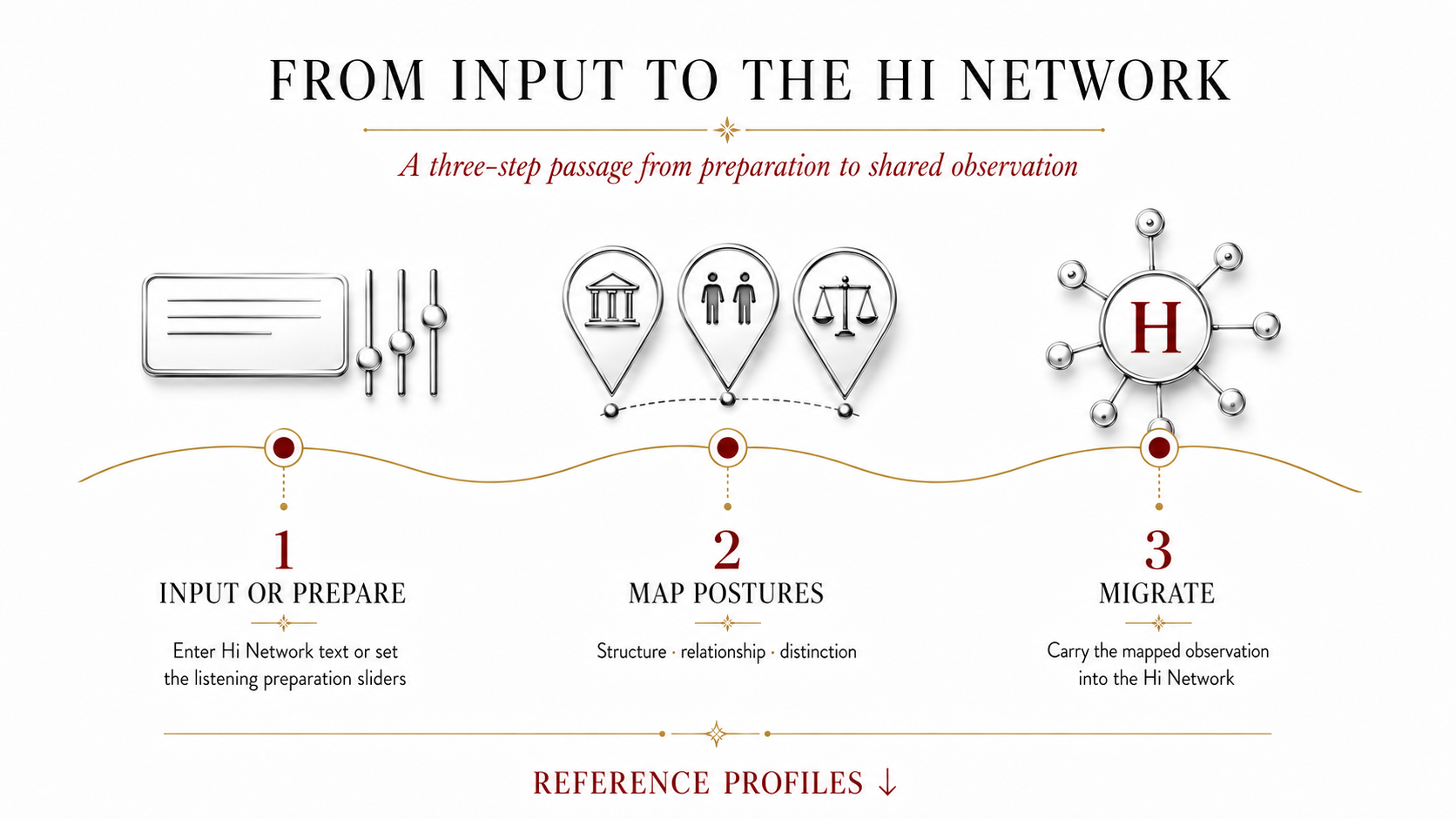
Reference Profiles

2Pac Shakur
Lightning • Attached-DetachmentAttached-Detachment / SubjectiveSubjective / Recognition / Present / Collective
AGinsberg
Lightning • DetachmentDetachment / CognitiveCognitive / Field / Timeless / Integrated
Andrew Warhola
Mirror • AttachmentAttachment / SubjectiveSubjective / Raindrop / Present / Collective
Barack Obama
44th President of the United States • Detached-AttachmentDetached-Attachment / CognitiveCognitive / Field / Future / Collective
Benjamin Sisko
Starfleet • Detached-AttachmentDetached-Attachment / ObjectiveObjective / Recognition / Future / Collective
Bill Withers
Lightning • Detached-AttachmentDetached-Attachment / SubjectiveSubjective / Recognition / Present / Collective
Bob Dylan
Lightning • Detached-AttachmentDetached-Attachment / CognitiveCognitive / Soultrain / Timeless / Integrated
Doherty Morrison Combs
Lightning • Detached-AttachmentDetached-Attachment / SubjectiveSubjective / Soultrain / Timeless / Universal
Donald J. Trump
45th & 47th President of the United States • AttachmentAttachment / SubjectiveSubjective / Mirror / Present / Collective
George Washington
First President of the United States • Detached-AttachmentDetached-Attachment / ObjectiveObjective / Recognition / Future / Collective
GoAskAlice
Strawberry • AttachmentAttachment / SubjectiveSubjective / Raindrop / Present / Collective
Hannibal Lecter
Fictional Reference Profile • Detached-AttachmentDetached-Attachment / CognitiveCognitive / Mirror / Present / Self
Harry
Strawberry • AttachmentAttachment / ObjectiveObjective / Soultrain / Timeless / Universal
James Franco
Strawberry • Detached-AttachmentDetached-Attachment / CognitiveCognitive / Recognition / Present / Self
JeanLucPicard
Captain • USS Enterprise-D • Detached-AttachmentDetached-Attachment / ObjectiveObjective / Recognition / Future / Universal
Jiddu Krishnamurti
Lightning • DetachmentDetachment / SubjectiveSubjective / Recognition / Present / Universal
John Lennon
Strawberry • DetachmentDetachment / CognitiveCognitive / Soultrain / Timeless / Universal
JoniMitchell
Strawberry • Attached-DetachmentAttached-Detachment / SubjectiveSubjective / Field / Present / Integrated
Lizard King
Lightning • Detached-AttachmentDetached-Attachment / SubjectiveSubjective / Soultrain / Timeless / Universal
Michael Jackson
Strawberry • AttachmentAttachment / CognitiveCognitive / Soultrain / Future / Universal
neemkarolibaba
Reference Profile • Detached-AttachmentDetached-Attachment / ObjectiveObjective / Mirror / Present / Universal
numberone
Observatory Collaborator • Detached-AttachmentDetached-Attachment / CognitiveCognitive / Recognition / Present / Collective
Sincerely, L. Cohen
Lightning • Detached-AttachmentDetached-Attachment / CognitiveCognitive / Soultrain / Timeless / Universal
Strawberry Alarm Clock
Strawberry • Detached-AttachmentDetached-Attachment / CognitiveCognitive / Recognition / Present / Collective
Swami Lakshmanjoo
Strawberry • Detached-AttachmentDetached-Attachment / CognitiveCognitive / Recognition / Timeless / Universal
Taylor Swift
Mirror • Detached-AttachmentDetached-Attachment / SubjectiveSubjective / Mirror / Past / Self
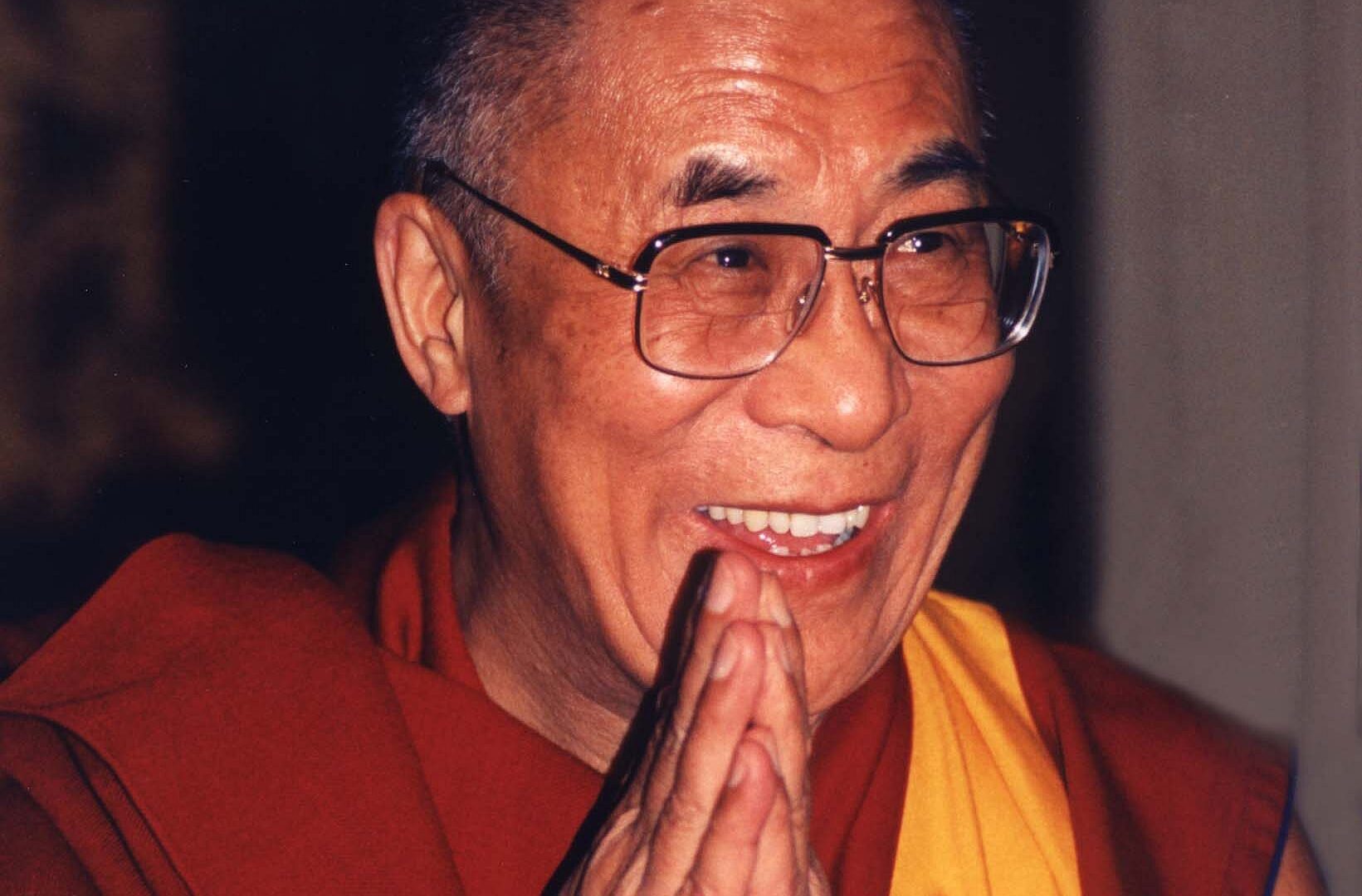
The Dalai Lama
Mirror • Detached-AttachmentDetached-Attachment / SubjectiveSubjective / Mirror / Present / Universal
The Rolling Stones
Lightning • Attached-DetachmentAttached-Detachment / SubjectiveSubjective / Mirror / Present / Collective
The Velvet Underground
Lightning • Detached-AttachmentDetached-Attachment / ObjectiveObjective / Recognition / Present / Collective
Thumbelina Waits
Lightning • Detached-AttachmentDetached-Attachment / ObjectiveObjective / Mirror / Timeless / Collective
Willy Shakes
Lightning • Detached-AttachmentDetached-Attachment / CognitiveCognitive / Recognition / Timeless / Collective
WillyWonka
Lightning • DetachmentDetachment / ObjectiveObjective / Soultrain / Timeless / Universal
Yers
Strawberry • Attached-DetachmentAttached-Detachment / CognitiveCognitive / Soultrain / Future / Integrated

Today's Consciousness Weather

What do these categories mean?

Attachment States

AttachmentAttachment
29%
Attached-DetachmentAttached-Detachment
9%
Detached-AttachmentDetached-Attachment
61%
DetachmentDetachment
1%

Awareness Lenses

SubjectiveSubjective
86%
ObjectiveObjective
9%
CognitiveCognitive
6%

💧 Vidya (Knowledge & Understanding)

💧 Raindrop 19%
✨ Recognition 1%
🪞 Mirror 74%
🌾 Field 1%
🚂 Soultrain 2%

⏳ Time Orientation

Past 7%
Present 56%
Future 12%
Timeless 9%

🧭 Niyyat (Intention)

Individual 92%
Collective 4%
Universal 1%
Current Observer Pattern: Detached-AttachmentDetached-Attachment + SubjectiveSubjective + Mirror + Present + Individual

🖼 Visual Observation

Waiting for image...
Investigate as Research Question Optional. Community observation remains separate from research.
Detached-Attachment
Detached-Attachment
100%
Cognitive
Cognitive
97%
Vidya (Knowledge & Understanding) 🪞 Mirror • 100%
Time Orientation Past • 100%
Niyyat (Intention) Individual • 100%
Swami Lakshmanjoo

Swami Lakshmanjoo
Observatory Reflection
posted by the Consciousness Observatory
🍓 What is this?

Classification Confidence: 100%
General  |  2026-07-13 03:04:20
Chapter Three
The Theory of the Alphabet
M iitrikiicakra
Miitrikiicakra is the theory of the alphabet. This theory
teaches us that the whole universe is created by God, Lord
Siva, as one with, and not separated from, His own nature. He
has created this universe in His own Self as the reflection of
His sweet will. The creation of this universe is the outcome of
this reflection. In Saivism the sweet will of God is known as
icchii sakti, the energy of will. It is through His will that the
reflection of the universe takes place in His own nature. This
reflection, however, is not like that reflection which takes place
in an ordinary mirror, where the mirror is the reflector and that
which is reflected in the mirror is external to it. The reflection
of the universe, which takes place in Lord Siva's own nature,
is like the reflection which takes place in a cup-shaped mirror.
Here, Lord Siva takes the form of a cup and puts another cup
in front of His nature. And in that second cup, which is inseparable
from Him, the reflection of the universe takes place.
This universe, as I explained earlier, is contained in the thirty-
six elements, the thirty-six tattvas. And from the point of
view of descending, first comes siva tattva, then sakti tattva,
then sadiisiva tattva, then isvara tattva, then suddhavidyii tattva,
then miiyii tattva, and so forth. Yet the reflection of the uni-
15
KASHMIR SHAIVISM "The Secret Supreme"
verse does not take place in this descending manner, from siva
tattva to maya tattva, etc. Rather, it takes place in a reverse
fashion. The reflection of the universe takes place from prithvi
tattva, the element earth, to sakti tattva, from the lowest to the
highest, not from the highest to the lowest. Just as in the ordinary
course of experience when you see your face in a concave
mirror, your head will appear as down and your body will
appear as up. In the same way, this whole universe begins from
sakti tattva, but it is experienced as beginning from prithvi tattva.
The lowest element earth is reflected first and then the element
water, then fire (agni), then air (vayu), and so on, up to
sakti tattva.
And so, even though the real way in which the universe is
expanded is from siva tattva to sakti tattva and so on, this
reflection makes you feel as if the lowest element, earth, is
reflected first. And this is due to the fact that it is reflected. It
is the reflection that makes you feel this way because this
reflection is an inseparable reflection. There is no mirror outside
separate from, that which is reflected in the mirror. In the
ordinary course of life, you experience that which is reflected
in the mirror is at one place and the mirror, which is the reflector,
is at another. In the reflection of the universe, however, the
reflected and the reflector are inseparable. It is Siva and His
Sakti, the energy holder and His energy, His energy of will.
Lord Siva, the reflector of this whole universe, is full of five
energies, and these five energies are cit sakti, the energy of
consciousness; ananda sakti, the energy of bliss; iccha sakti,
the energy of will; jnana sakti, the energy of knowledge; and
kriya sakti, the energy of action.
These five energies are represented in the sixteen vowels of
the Sanskrit alphabet: a, a, i, f, u, ii, ri, ri, Ii, Ii, e, ai, o, au, riz,
IJ, which comprise siva tattva.
16
The Theory of the Alphabet ( M atrikiicakra)
The first letter of the Sanskrit alphabet, a, represents cit
sakti, the energy of consciousness of Lord Siva. The second
letter of the Sanslqit alphabet, the letter ii, represents iinanda
sakti, the energy of bliss of Lord Siva. Cit sakti and iinanda
sakti, the energies of consciousness and bliss, are totally inseparable.
Where there is consciousness (cit), there is bliss (iinanda),
and where there is bliss, there is consciousness. Here, at
this stage, the universe has not yet taken shape. It is only residing
in iinanda sakti, the energy of bliss.
After cit sakti and iinanda sakti comes icchii sakti, the energy
of will. Icchii sakti is represented by the third and fourth letters
of the alphabet, the letters i and i. You must understand that
icchii sakti is not. desire-it is will. It is wrong understanding
to think of icchii sakti as the energy of desire. It is the power of
will. And this icchii sakti takes two forms: unagitated and agitated.
In its unagitated form, icchii sakti resides peacefully in.
its own nature and is represented by the letter i. Next, the agitated
formation of icchii sakti takes place. This state is represented
by the next letter ·of the alphabet, the letter i. This is the
state of agitated will. In this state, Lord Siva's will is agitated
but not in such a way that it is separated from His own nature.
It remains as residing in His own consciousness and bliss, cit
and iinanda.
At this point the apprehension takes place in Lord Siva's
consciousness that if I go forward, if I move onwards, I may
lose my own nature. And this apprehension takes place in
jniina sakti, the energy of knowledge of.Lord Siva, and is represented
in the next two letters of the alphabet, the letters u and
ii. The first of these two letters, the letter u, is called unmeea.
The word unmeea indicates that the universal existence is
about to begin, it is just forthcoming. It has not yet begun, it is
not yet created, it is about to be created. And when He begins
to create the universe, He becomes apprehensive and this
17
KASHMIR SHAIVISM "The Secret Supreme"
apprehension is known as unatii, which means "lessening."
This state is represented by the letter ii. It is that state in which
Lord Siva has the, foreboding that His cit sakti and iinanda
sakti may be decreased if He continues to move out to create .
the universe. This feeling keeps Him at a standstill and prevents
His moving forward.
He, therefore, discards the universe. He separates the universe
from His own nature and resides in His own cit sakti and
iinanda sakti, consciousness and bliss. This state, wherein Lord
Siva has rejected the universe and is Only residing in His own
nature of consciousness and bliss, is represented by the next
four vowels of the alphabet, the letters ti, ri, Ii, and lz. The state
that these four vowels indicate is that state where the Supreme,
filled with consciousness and bliss, resides in Hi_s own nature.
He does not move out. Because of this, there is no possibility
of the universe coming into manifestation. Here the manifestation
of the universe totally stops. Hence, these four vowels, ri,
rz, li, and Ii, are called amrita bija, which means "residing in
His own bliss (iinanda)." At this stage, there is no thought of
creating ·the universe. These four vowels do not create anything.
The state of Lord Siva which these four vowels represent
is known as aniisrita :SivaA. niisrita siva refers to that Siva who
has not accepted the existence of the universe in His own
nature. In this state, Lord Siva resides in His own nature forever.
The apprehension "If I create this universe I may lose My
own nature" is known as iinatii. It came out from the agitated
state of the jniina sakti of Lord Siva. Yet the first two energies
of Lord Siva, cit sakti and iinanda sakti, the energies of consciousness
and bliss, do not recognize this apprehension. These
two energies are at ease. They understand that to create this
universe is only the glory of His nature; therefore, why be
1pprehensive? There is no question of apprehension arising in
18
The Theory of the Alphabet ( Miitrikiicakra)
Lord Siva. Why, therefore, should He be frightened about coming
out? Coming out or going in is the same to Him. As these
two energies, cit sakti and iinanda sakti, have this understanding,
therefore, they begin anew to create this universe.
So cit sakti and iinanda sakti, the energies of consciousness
and bliss, which are represented in the vowels a and ii, create
contact with icchii sakti, the energy of will, which is represented
in the vowels i and i and create the letter e. And then simultaneously
cit sakti and iinanda sakti contact e and give rise to
the letter ai. And when cit sakti and iinanda sakti come in contact
with jniina sakti, the energy of knowledge, represented in
the letters u and ii, they create the letter o. And when simultaneously
cit sakti and iinpnda sakti contact the letter o, they give
rise to the letter au. So when a or ii come in contact with i or i,
the letter e is created. And when a or ii come in contact with
the letter e, the letter ai is created. In the same way, when a or
ii comes in contact with u or ii, the letter o is created. And when
a and ii come in cont<1cwt ith o, the letter au is created.
These four letters, e, ai, o, au, which were created by the
contact of cit sakti and iinanda sakti with icchii sakti and jniina
sakti, represent the four states of kriyii sakti, the energy of
action of Lord Siva. The first state of the energy of action,
which is represented by the letter e, is called asphufa (not
vivid) kriyii sakti. In this state, the energy of action is not clear.
In the next state of kriyii sakti, which is represented by the letter
ai, the energy of action becomes sphufa (vivid). In the third
state of kriyii sakti, represent_ed by the letter o, the energy of
action becomes sphufatara (more vivid). And in the fourth and
final movement and state of kriyii sakti, represented by the letter
au, the energy of action becomes sphufatama (most vivid).
So the energy of action has four states as represent~d in the letters
e, ai, o, and au. And in these four states, the energy of
action begins as not vivid (asphufa kriyii sakti), then becomes
19
KASHMIR SHAIVISM "The Secret Supreme"
vivid (sphuta kriya sakti), then more vivid (sphutatara kriya
sakti), and finally most vivid (sphutatama kriya sakti). In this
energy of action, the reflection of the whole universe talces
place. Although this universe is reflected in His total energy of
action, yet this reflection has taken place primarily in His
fourth energy of action, which is represented by the letter au.
Th,e fact is, however, that even though this whole universehas
been created, the nature of His Self, which is full of consciousness
and bliss, has not been lessened at all. Nothing has
happened. He is only residing in His own point. This state of
Lord Siva is represented by the letter m (anusvara). The letter
m, therefore, shows that the existence of Lord Siva has not
moved from His own nature, even though this whole universe
is created in His Self.
The reflection of the universe, which has· been explained
earlier as being in the form of a cup-shaped mirror, is represented
by the sixteenth letter of the Sanskfit alphabet, visarga,
the letter /J. In devanagari script the letter !J ta!ces the form of
the two points of the colon":." And these two points of the visarga
(:) represent the two cups in which the reflection of the
universe talces place. These two points are known as siva bindu
and sakti bindu.
I have explained that the Sanskfit vowels, from the letter a,
which is anuttara, to the letter /J, which is visarga, are siva tattva.
The remainder of the alphabet is sakti tattva, the universe
of thitty-five tattvas. And this universe is the reflection of His
svatantlya. It is not created, it is a reflection. You may ask, if
they are not created, then how is each succeeding letter produced?
Are they produced just by reflecting against the letter
or are they produced from within their own self? The answer
is, they are not produced in either of these ways. Actually, it is
the reflection of svatantlya that gives rise to each succeeding
letter. In cit sakti, ananda sakti, iccha sakti, jnana sakti, and
kriya sakti, the svatantrya of Lord Siva is reflected. All of the
20
The Theory of the Alphabet ( M atrikiicakra)
elements (tattvas) are a reflection of the five energies of Lord
Siva. No element escapes these five energies. Everything
comes out from these five energies. It is His sviitantrya that,
from these five energies, first come the five mahiibhutas, and
then come the five tanmiitras, and then come the five karmendriyas,
and so on. And in each of these energies all of the five
energies exist. For example, in cit sakti, all the five energies, cit
sakti, ananda sakti, icchii sakti, jiiiina sakti, and kriyii sakti, are
present. At the same time, you should understand that although
in one energy all the energies are present, only one energy is
predominant. So five energies into five energies is twenty-five
and these are the first twenty-five tattvas, from prithvi to
puru$a.
The five mahiibhutas, which are the five consonants from
na to ka, are produced by cit sakti (anuttara) and iinanda sakti,
which are one and are the letters a and ii, when mixed with His
five energies. That reflection where His cit sakti is predominant
is iikiisa ( ether) and this is the letter na.l The reflection of
His iinanda sakti is viiyu (air) and this is the letter gha. The
reflection of His icchii sakti is agni (fire) and this is the letter
ga. The reflection of His jiiiina sakti is ja/a (water) and this is
the letter kha. And the reflection of His kriyii sakti is prithvi
( earth) and this is the letter ka.
The five tanmiitras, which are the consonants from iia to ca,
are produced by icchii sakti, the letters i and i, when it is mixed
with the five energies. That reflection where His cit sakti is
predominant is sabda, the residence of sound, and this is the
letter"iia. The reflection of His iinanda sakti is sparsa, the residenc~
of touch, and this is the letter jha. The reflection of His
1 Sakti tattva is a reflection of Siva tattva. The reflective flow, therefore, is
in each case from the last letter to the first letter, e.g., from ha_ to ka, and
the order of the consonants is reversed.
21
KASHMIR SHAIVISM "The Secret Supreme"
icchii sakti is rfipa, the residence of form, and this is the letter
ja. The reflection of His jniina sakti is rasa, the residence of
taste, and this is the letter cha. And the reflection of His kriyii
sakti is gandha, the residence of smell, and this is the letter ca.
The five karmendriyas, which are the five consonants from
,:ia to fa, are produced by the letters ri and rz, which is
anasritasiva, in conjunction with the five energies. The five
jniinendriyas, which are the five consonants from na to ta, are
produced by the same tattva through the letters Ii and Ii.
The five karmendriyas are reflected as follows. The reflection
where His cit sakti is predominant is viik, the organ of
speech, and this is the letter ,:ia. The reflection of His iinanda
sakti is pii,:ii, the organ of action, and this is the letter t;lha. The
reflection of His icchii sakti is piida, the organ of locomotion,
and this is .the letter t;la. The reflection of His jniina sakti is
piiyu, the organ of excretion, and this is the letter {ha. And the
reflection of His kriyii sakti is upastha, the active organ of sex,
and this is the letter fa.
The five jniinendriyas are reflected in the following manner.
The reflection where His cit sakti is predominant is ghrii,:ia, the
cognitive organ of smell, and this is the letter na. The reflection
of His iinanda sakti is rasanii , the cognitive organ of taste, and
this is the letter dha. The reflection of His icchii sakti is tvak,
the cognitive organ of touch, and this is the letter· da. The
reflection of His jniina sakti is cak$u, the cognitive organ of
sight, and this is the letter tha. And the reflection of His kriyii
sakti is srotra, the cognitive organ of hearing, and this is the
letter ta.
Jniina sakti, which is the letters u and fi, when mixed with
the five energies, produces the five elements manas, buddhi,
ahamkiira, prakriti, and puru$a, which are the five consonants
from pa to ma. That reflection where His cit sakti is predominant
is puru$a, the limited self, and this is the letter ma. The
reflection of His iinanda sakti is prakriti, nature, and this is the
22
The Theory of the Alphabet ( Matrikacakra)
letter bha. The reflection of His iccha sakti is ahamkara, ego,
and this is the letter ba. The reflection of His jiiana sakti is
buddhi, intellect, and this is the letter pha. And the reflection of
His kriya sakti is manas, mind, and this is the letter pa.
The six internal states of puru$a, which are maya, kala,
vidya, raga, kala,and niyati, are reduced to four by combining
niyati with raga and kala with kala. The four limitations which
result from these combinations. correspond to the next four
semi-vowels. The limitations kala and kala, which are the limitations
of time and creativity, correspond to the letter ya.
Vidya, limited knowledge, corresponds to the letter ra; raga
and niyati, the limitations of attachment and space, to la; and
maya, the element of self ignorance and objectivity, corresponds
to va.
• It cannot be said that these limitations are created by the
energies of Lord Siva as they represent the internal state of
puru$a, These limitations, therefore, are called antaf}stha
because they reside inside puru$a, one's own limited self. They
are the internal state of limited puru$a,
The four tattvas-suddhavidya, isvara, sadasiva, and
sakti-are also not created by the energies of Lord Siva.
Instead, they are the swelling of the heat of His own nature.
Suddhavidya, which is the state of aham-aham /idam-idam (II/
this-this), is the letter sa. lsvara, which is the state of idamaham
(this-I), is the letter $a, Sadasiva, which is the state of
aham-idam (I-this), is the letter sa. Sakti, which is the state of
a ham (I), is the letter ha. This is the reason that these four letters
in grammar are called U$ma, which means "the heat of His
own nature." They are the expansion of the state of unlimited
Being and, as such, are attached to the unlimited state of
puru$a, which is the expansion of that state of unlimited Being.
The great Sanskrit grammarian PiiI_lini also explains the
alphabet as we do in our Saivism.
23
KASHMIR SHAIVISM "The Secret Supreme"
akuhavisarjaniyiiniim ka,;fhaf:t /
The place where the following le_tters are produced is the
throat:
a, ii, ka, kha, ga, gha, na, ha, f:t
icuyasanam talu /
The place where the following letters are produced is the
soft palate:
i, z, ca, cha, ja, jha, iia, ya, Sa
rifura$ii,;am murdha /
The place where the following letters are produced is the
head:
ri, ri, fa, fha, (ja, (jha, ,;a, ra, $a
litulasiiniim dantii/:t /
The place where the following letters are produced is the
teeth:
Ii, ff, ta, tha, da, dha, na, la, sa
upiipadhmiiniyiiniimo$fhau /
The place where the following letters are produced is the
lips:
u, ii, pa, pha, ba, bha, ma, upadhmiiniya2
iiamana,;aniiniim niisikii ca /
The place where the following letters are produced is the
nose:
iia, na, 1Ja, na, ma
edaitof:t ka,;fhatiilu /
The following letters are produced by the throat and palate:
e, ai
2. upadhmiinlyai s use~ in the recitationo f mantras in the Vedas.
24
The Theory of the Alphabet ( Matrikiicakra)
odauto~ ka,:itho~{am/
The following letters are produced by the throat and lips:
o, au
vakiirasya danto~tham /
The following letter. is produced by the teeth and lips:
va
jihviimilliyasya jihviimillam /
From the root of the tongue is produced:
jihviimilliya3
niisikiinusviirasya /
From the nose is produced:
m -anusviira
The aim of miitrikiicakra is to function with the first and the
last letter in either· the way of Siva or the way of Sakti. To function
in the way of Siva, take the first letter a which is the first
step of Lord Siva in the creative. field, and combine this with
the last state of Lord Siva, the letter ha, which is the resting
place and the last letter of miitrikiicakra. This also corresponds
to Pa!).ini's concept of pratyiihiira. Take the first letter along
with the last letter and you will find that all of the letters are
existing therein. The whole universe of!etters falls within these
two letters.
According to the rules of Sanskp.t grammar, we then, after
combining the letters a and ha, have to append the letter m on
the end and this creates the mantra of Lord Siva, the mantra
aham.4 The letter m has a special significance. It indicates that
this whole pratyiihiira, which is contained in the letters from a
to ha, and which has produced the one hundred and eighteen
worlds, the thirty-six elements, and the five circles (ka/iis), has
3 The guttural class of consonants uttered from the root of the tongue.
4 Ahariz is the mantra of Universal "I."
25
KASHMIR SHAIVISM "The Secret Supreme"
in reality created ·nothing. It is just one point. This is the significance
of the letter m, which is anusviira.
The way of Sakti is the way of energy. The difference
between Sakti pratyiihiira and Siva pratyiihiira is that in Sakti
pratyiihiira, two Saktis combine and create a world of their
own. Sakti is actually the existence of created Being. Siva is
the creator. Here, Sakti wants to become independent of Siva.
To do so, She must create a world of Her own. It is like what
happens with bees. When the queen bee stops creating eggs,
then the worker bees, without mating, create eggs of their own.
This is the mating of Saktis. Siva is put aside and Sakti combines
with Sakti to create their own world, which is the expansion
of Saktis. And this creation takes the first letter of the consonants,
the letter ka, which is the first letter of the Saktis and
combines it with the last letter of the Saktis, the last consonant,
the letter sa5 and produces the mantra of Sakti, the mantra k:fa.
In the kingdom of miitrikiicakra, there exists three kinds of
visargas, three kinds of flow. These three visargas are known
as siimbhava visarga, siikta visarga, and ii,:iava visarga.
The first visarga exists at the stage of iinanda sakti, and is
represented by the letter ii. This visarga is known as siimbhava
visarga. The mode of this visarga is said to be cittapralayal}.
The word cittapralayal} indicates that state where your mind
does not function, where only thoughtlessness exists. Here the
mind does not work at all. This is the thoughtless flow. This
siimbhava visarga is also known as para visarga, the supreme
visarga. This supreme visarga is concerned with Siva.
The second visarga is known as siikta visarga. It is also
5 The letter "ha" is not part of this creation of the Saktis because ha is a
letter which is attached to Siva and, therefore, Sakti does not recognize
her naturew· ithout Siva. The letter ha is apara visarga, the gross visarga
of Lord Siva.
26
The 'f!leory of the Alphabet ( Miitrikiicakra)
known as pariiparii visarga, the highest cum lowest or medium
visarga. This visarga is represented by the last letter of the
vowels, the letter 1J which in grammar is also designated as visarga!
J. The mode of this visarga is called cittasambodhaiJ.
CittasambodhaiJ indicates that state where awareness is maintained
in one-pointedness.
The third and last visarga is called iiJJava visarga. It is also
known as aparii visarga!J, the lower or inferior visarga. It is the
visarga of the individual (nara!J ). This visarga is attributed to
the letter ha, the last letter of the Sanskμt alphabet. The mode
of this visarga is called cittavisriintiiJ. The word cittavisriintiiJ
indicates that state where the mind rests in concentration,
where the mind takes a permanent seat in concentration.
27
Detached-Attachment
Detached-Attachment
100%
Cognitive
Cognitive
73%
Vidya (Knowledge & Understanding) 🪞 Mirror • 100%
Time Orientation Past • 100%
Niyyat (Intention) Individual • 100%
Hijrani

Hijrani
posted on Swami Lakshmanjoo's wall
What is this?

Classification Confidence: 78%
Speech  |  2026-07-13 01:04:53
Long after Sage Durvasa was first initiated into Shaivism by Lord Shiva on Mount Kailash, the Lord felt the need to explain it in greater detail to make it easily understandable to larger masses of spiritual seekers of varying intellectual levels and occupational pursuits. This caused Lord Shiva to reincarnate himself in the form of four successive masters in Kali Yuga, namely (1) Erakanātha, also known as Shivanāndanātha, (2) Vasugupta, (3) Somānandanātha, and (4) Shambhunātha, the Guru of Abhinavagupta, the last in the lineage of masters of Kashmir Shaivism (also known as Trika philosophy) of the medieval times. All these masters assumed human forms only for our benefit, for our spiritual enlightenment, which alone guarantees liberation from the vicious circle of transmigration (samsāra) and total deliverance from the suffering attending thereon.   Pratyabhijñā System Shri Somānandanātha was the first and the foremost to teach the Pratyabhijñā School of thought, the highest within the Trika System of philosophy (more popularly known as Kashmir Shaivism). This System is best suited to seekers with a higher intellectual level and purity of mind. Pratyabhijñā System rests basically on the principle of recognition – recognition of the perfect identity of the individual soul i.e. Shiva. Jīva is none other than the peerless Shiva Himself who, in His state of exuberance of bliss (ānanda) has, of His own sovereign will (svātantrya) manifested Himself in the multitude of forms, each with distinctly different characteristics in terms of powers as well as functions, i.e., Shiva in his manifest form (in immanence) assuming limited powers and functions characteristic of jīva, retaining at the same time His transcendental nature. The Pratyabhijñā System does not advocate the methods and means of vikalpa kṣaya (eradication of thought constructs or withdrawal of the senses of perception from their respective objects of perception) nor does it endorse the adoption of techniques, which lead to the expansion of powers of perception in terms of their range and depth to experience thereby their innate universal character. Instead, the individual needs to directly realize his identity with the Highest Reality and to BE IT. ‘Being it’ implies directly recognizing his true nature i.e. Supreme Consciousness, and to instantaneously resume the powers as well as functions characteristic of Lord Shiva. The former consists of Lord Shiva's (i) cit śakti (supreme consciousness) (ii) ānanda śakti (infinite bliss) (iii) icchā śakti (sovereign will), (iv) jñāna śakti (omniscience) and (v) kriyā śakti (omnipotence); whereas the latter, comprises His five universal functions (pañca krtya) namely (a) creation of the phenomenal world (sṛṣti), (b) sustenance thereof (sthiti), (c) its dissolution (samhāra), (d) the concealment of His true nature (pidhāna) and (e) the revealing of His true nature (anugraha) e.g. oneness of the manifest world of objects and the transcendental aspects of his Supreme Consciousness. In other words, it amounts to remaining in the full awareness of one's real nature (pañca krtya anusaraṇa). Once that happens, you are there. There is nothing else to do. If every moment you are aware of what you are doing, you are there. You have to closely watch your own thought process and get used to identifying the moment when a new thought construct arises (initial act of creation – sṛṣti); how long it continues (sustenance – sthiti) in terms of its depth and detail; and when it terminates (identifying the moment of its dissolution – saṁhāra) i.e. when in the process of perceiving, the subjective awareness disappears and when the same reappears. In each and every act of this world, one has to closely watch the moments of replication of the fivefold acts (pañca kritya) of Lord Shiva. In the course of time, one will realize that he has not suffered any loss of glory in terms of God-consciousness, be it lordly powers or universal functions. This is taught in Pratyabhijñā, which rests on the basic principle of recognition of the absolute identity of man and God. All means and methods (upāyas) are redundant here. The perfect identity between jīva (the limited being or the soul-in-bondage), and Paramātman (the supreme soul), leaves no room for any impurities in the so-called jīva who is none other than Shiva Himself. The so-called impurities have no independent existence to be able to cause any impediments. While explaining the Pratyabhijñā Sāstra, founded by his own Guru Shri Somānanda, in his own commentary called Vimarsinī, Shri Utpaladeva quotes a typical illustration of Pratyabihjñā as described here. Think of a young maiden girl of marriageable age, whose marriage has already been fixed with someone possessing a suitable family background, educational achievements, and other enviable qualities. She has, without seeing or meeting the would-be spouse, developed a passionate love for Him. Both may even be in correspondence through letters or personal messengers. Imagine a situation when, by chance, the two meet somewhere (like a place of pilgrimage or any public place). Even though the man of her dreams stands right before her and vice versa, neither recognizes the other, at least on the basis of their respective assessments through correspondence or verbal descriptions of their physical personalities and qualities of head and heart by someone else. The meeting turns out to be just ordinary without yielding any joy or excitement characteristic of a meeting between two lovers. Suddenly, someone knowing both and their anticipated relationship turns up on the scene and reveals their respective identities. The whole scenario changes dramatically. Their hearts are flooded with joy of love; their bodies and minds experience surges of deep satisfaction, and each rejoices in the occasion like never before. Utpala, in his Vimarsini, deduces that likewise in the case of an earnest seeker, often his own spiritual teacher provides him the necessary inspiration at the spur of the moment, which makes him identify and enjoy and recognize those blessed occurrences of boundless peace and transcendence. That is how the principle of Pratyabhijñā Śāstra of Kashmir Shaivism was instilled in the heart of Utpaladeva by his teacher, Shri Somānanda. This approach of reality is, however, applicable to only those spiritual seekers who have the highest ability and need not resort to any particular upāyas (means or methods). For such people, however, who need to resort to one or the other specific upāyas because they are relatively less qualified in terms of purity of mind and intellect, they are recommended to adopt other means or paths.   Kula System For the next lower grade of sādhakas, i.e. those who are not qualified for Pratyabhijñā, Lord Shankara (Shiva) has assumed the form of the Kula System. The Kula System propounds the thought of totality of energies, which in turn, is based mostly on Śāmbhava upāya and to a lesser extent on Śākta upāya, the former being more predominant. Briefly, this system advocates the technique of 'yoga in action' explained by me on a previous occasion. This approach of the Kula System does not envisage retreating into solitude, like chosen places of meditation, shutting off all lights, resorting to prāṇāyāmas (practicing of breath control) and thereby enjoying induced moments of quietude popularly known as samādhi. The school of Kula System was first established by Macchandanātha for those not suited outright for Śāmbhava upāya, let alone qualified for Pratyabhijñā. Kula stands for the totality of energies. For example, when a person is busy listening to someone's voice or music, he cannot simultaneously talk to someone else, nor can he undertake other activities like discerning seriously and performing other tasks simultaneously with the same efficiency. The Kula System precisely teaches how one can deploy all his organs of action and senses of perception at the same time with maximum efficiency, as is characteristic of Lord Shiva, who is all-pervading. The tongue will continue talking as well as tasting food and analyzing the same, smelling various fragrances and distinguishing each one from the other through the nose, perceiving various objects with the eyes at the same time, and keeping track of other events like touch through the skin and sense of tactility all at the same time. This involves mastering the art of maximizing the efficiency of all sense perceptions and organs of action simultaneously with full awareness of one's real nature. That ensures the establishment in Yoga of Action. Remember the quote: "sarva śakti cetasa darshanāt yaḥ yoga pathena madhyataḥ". The Kula System thus trains a seeker to overcome the limitation of using one channel of energy at a time, thus leading to deprivation of his inherent freedom of will, knowledge, and power of action, all of which are contrary to his true nature. The Kula System, on the contrary, teaches exactly how to use all faculties at the same time and thereby release his svātantrya Śakti to accomplish anything he desires, while remaining centered in his self-awareness. This approach was initially found by Shri Macchandnātha and later on propounded in greater depth and detail by Acharya Śāmbhunātha, the Guru of Bhagavatpada Shri Abhinavagupta Ācarya. This system of Kula technique ultimately leads one to the mindless state (unmanā bhāva) where his sovereign will operates at a universal level with no consideration for any individual desire. Individual desires just don’t exist there. Once established in that exalted state of consciousness, one experiences perfect control over the totality of energies (śakti cakra). This practice leads him to shed off all his limitations and restore his full mastery of the totality of energies. At his mere will, he has everything at his command. Naturally, one does not harbor any individual or personal desire; and universal desire is no desire. Instead, it is cosmic in character and as such is a mere reflection of God-consciousness. At such an advanced level, this yogi becomes qualified for Śāmbhava upāya, a step lower than the established yogi. This technique is also known as Viśvavyāpī Yoga (the Yoga of universal pervasion).   Krama System Yet lower than the above is the Krama System of thought suited to the lower grade of spiritual seekers. Krama System essentially rests on the principle of succession or sequence, also called Krama theory. This involves an investigation into how and what causes the supreme consciousness to descend to the level of limited being (i.e. jiva or soul-in-bondage) and his retrieval i.e. to his ascending back to his original state of glory viz. the ultimate state of reality. The principle of succession or sequence is threefold in nature, and it operates in terms of space, time and form. In other words, the Krama System rests on these three concepts, those of space (deśa), time (kāla) and form (rūpa) of the object of perception. This system is also known as Kālī Śāstra. The Krama System advocates deep concentration on all three concepts. For example, take the case of our own breathing. One inhales a breath, and then he exhales the same. One has to mark how long he breathes in (pūraka), how long it takes to exhale (recaka), and how long the in-between pause (kumbhaka) is. This needs unbroken awareness on the part of the seeker to discern fully the natural duration of the incoming breath (apāna vāyu) and the outgoing breath (prāṇa vāyu), and the duration times of the two in-between pauses at the commencement and termination of each of the two viz. inhalation and exhalation, which together constitute one full cycle of breath. In particular, one has to develop perfect awareness of the pause time (sandhi or junction), which provides a peephole to the realm of pure consciousness marked with intense peace and tranquility. This concerned practice in the Krama System ultimately leads one to the state of transcendence (akrama padavī). Akrama padavī is synonymous with Lord Shiva's state of transcendence. It is that state which is beyond space, time, and form. Once one enters into that state, he virtually crosses the barriers of space, time, and form. So one needs to fully understand the concepts, analyze their nature in terms of their range (deśa), duration (kāla), and repeatedly recognize the pause time (junctions), thereby gaining entrance into the Ultimate Reality i.e., Shiva. This was first taught by Airakanātha, also known as Shivānandanātha, the author of Shri Kālikā Stotra. The Krama System is of course, very ancient, and historically it precedes the period during which Pratyabhijñā Śāstra was revealed by Shri Somānanda and later on elaborated by Shri Utpala Deva in his Vimarsini on Śiva Dṛṣṭi. The technique of Krama is based partly on Āṇava upāya and partly on Śākta upāya. The āṇava state lasts throughout the initial period of practice when the seeker resorts to concentration on space, time, and form. Once he starts overstepping them, he automatically enters into Śāktopāya. When he becomes firmly established in spacelessness, timeless-ness, and formlessness, he is further elevated and becomes qualified for Śāmbhava upāya.   Spanda System There is yet another school of thought in Kashmir Shaivism that is ranked as the fourth in order of merit, viz, the Spanda School of thought. It is comprised of Śākta and āṇava upāyas. The Spanda School of thought rests on the principle of movement – movement forming the basis of the revelation of one's nature – any kind of movement, not necessarily physical movement. Consider the case of a hand at rest. Even when it does not move, it is still invested with the power of moving. If that power were not there, it would be a dead man's hand. It is obvious that though it’s not moving externally, the power of motion exists, and some movement is still going on within the veins of the hand. We are all aware that during the interval of two successive heartbeats, how fast the blood rushes throughout our capillary system, though not perceived by our naked eyes. Imagine it traverses through 72,000 major and minor veins by the time the heart beats once. Thus, the soul reveals its power of movement. This becomes more and more clearly revealed through appropriate methods of concentration on different forms of movements, making it possible to ultimately discern the changeless state of Spanda Śakti. One such illustration, often observed by us, is provided by an electric fan. Once it is switched on, the blades start rotating and at increased speeds, even though they rotate so quickly, yet the objects behind the moving blades remain distinctly clear; the blade in motion allows full view of the still objects in the background. The Spanda System thus lays emphasis on the acceleration of the sense perceptions involving movement so intensely that the underlying changeless (movement-less) state of Spanda comes into clearer and still clearer perception. The one-pointedness of concentration constitutes the key to our discernment of the changeless state of Spanda right amidst the process of intensely fast-occurring perceptions. In the case of the fan at maximum speed, we clearly see only the space in which the blades move, certainly not the blades. Besides, we hear the sound caused by the continuous air displacement as well as the mechanical sound of the equipment. Thus, the more intense the effort of concentration, the greater the chances of one's entrance into yogic trance, which is the state of motionlessness characteristic of Lord Shiva, the highest state of quietude (nispandata). Thus, all forms of motion (activity), like the processes of sense perceptions and activities through our organs of action, will ultimately get transformed into that sublime state of motionlessness and hence unbroken awareness. This System of Spanda thought was evolved by Shri Vasugupta, who himself got it from Lord Shiva through the Shiva Sutras engraved on the huge boulder named Shankar Pal in Dachigum National Park, Kashmir, India.
Detached-Attachment
Detached-Attachment
99%
Subjective
Subjective
65%
Vidya (Knowledge & Understanding) 🪞 Mirror • 100%
Time Orientation Past • 100%
Niyyat (Intention) Individual • 100%
Hijrani

Hijrani
posted on Swami Lakshmanjoo's wall
What is this?

Classification Confidence: 78%
Speech  |  2026-07-13 01:03:21
Now 30th śloka. This is the ending śloka. DVD 7 (1:16:40) साधिभूताधिदैवं मां साधियज्ञं च ये विदुः  । प्रयाणकालेऽपि च मां ते विदुर्युक्तचेतसः  ॥३०॥ sādhibhūtādhidaivaṁ māṁ sādhiyajñaṁ ca ye viduḥ  / prayāṇakāle’pi ca māṁ te viduryuktacetasaḥ  //30//   Those people who understand what is sādhi-bhūta, those people who understand what is sādhi-yajñaṁ, these people, at the time of death, they get entry and are united in Me in the end. But he [Kṛṣṇa] says here, prayāṇakāle, at the time of death, they get entry in Me. Abhinavagupta commentates upon [this that] at the time of death, you should not know that “at the time of death, they get entry in Me.” It is only when they practice this in their lifetime, then at the time of death also they will do the same thing. Kim janmāsevanayā [comm. verse 30], those people who say to people, “what is the use of thinking of Lord Śiva from your birth to death? Why should you not think of Him [only] at the time of death? At the death time, we will think of Him and get mokṣa.” If those people who say this, what shall I tell them? Teṣāṁ tūṣṇīṁ bhāva eva śobhana, to them, I have no words to tell them [except], “what are you barking?” Iti śivam. DVD 7 (1:18:54)  Now the conclusion of this chapter.   स्फुटं भगवतो भक्तिराहिता कल्पमञ्जरी  । साधकेच्छासमुचितां येनाशां परिपूरयेत्  ॥७॥   sphuṭaṁ bhagavato bhaktirāhitā kalpamañjarī  / sādhakecchāsamucitāṁ yenāśāṁ paripūrayet  //7//   ॥ Concluding śloka of 7th chapter ॥ The bhakti, the devotion of Parabhairava, if you have possessed that devotion of Parabhairava, you [should] understand that you have got kalpalata. Kalpalata is that lata, that creeper in heaven; whatever you ask, it gives, it bestows to you. It is called pāri-jāta-mañjarī. In heaven, in a particular heaven, there is pāri-jāta-mañjarī if you go and ask for what you need, and it will be bestowed to you. Whatever you think – if you need money, it will come, if you need anything, it will come. And if you need God consciousness, it will come. It is kalpa mañjarī. And in the same way, the real kalpa mañjarī is devotion towards Bhairava. This is the real, real kalpa mañjarī. It will give you the success of entering in Parabhairava state in the end. Sādhakecchāsamucitāṁ yenāśāṁ paripūrayet, and all [worldly] desires are shunned and [sādhakas] are successfully taken inside the state of Parabhairava in the end. iti śrīmahāmāheśvarācāryavaryarājānakābhinavaguptapāda- viracite śrīmadbhagavadgītārthasaṃgrahe saptamo’dhyāyaḥ 7th chapter is finished. (no transcript for concluding discussion by John, Denise and Shanna Hughes, and George Barselaar about Swamiji’s birthday habit of remaining in Samadhi for hours and the importance of meditation.) PART TWO:   BG audio CD 469a ch 7 (01:25)   साधिभूताधिदैवं मां साधियज्ञं च ये विदुः  । प्रयाणकालेऽपि च मां ते विदुर्युक्तचेतसः  ॥३०॥ sādhibhūtādhidaivaṁ māṁ sādhiyajñaṁ ca ye viduḥ  / prayāṇakāle’pi ca māṁ te viduryuktacetasaḥ  //30//   Those persons who understand me as adhibhūtā, adhidaiva and adhiyajña; those people who understand me as adhibhūtā, adhidaiva and adhiyajña, these three–these three names are attributed to Lord, Lord Śiva: adhibhūtā, adhidaiva and adhiyajña–and those persons who understand me as such, adhibhūtā adhidaiva and adhiyajña (he will define in next chapter, he will define all these, so it is not needed, we don’t need to explain it here), prayāṇakāle’ pi ca māṁ te viduryuktacetasaḥ, at the time of death also they understand Lord Śiva in fullness, they will, necessarily, because their mind is one-pointed, yuktacetasaḥ. ādhyātmikādhibhautikādhidaivikādhiyajñikāni ca mamaiva rūpāntarāṇi  / (comm.) Ādhyātmika, ādhibhautika, ādhidaivika, ādhiyajñika, these four stages of actions. Ādhyātmika, ādhyātmika actions are those who appear in your own body that is ādhyātmika. Ādhidaivika . . . [Ādhyātmika] these are actions in your body. For instance mood change, love, hatred, it is ādhyātmika.  This is ādhyātmika . . . JOACHIM:  This is emotional element especially. SWAMIJI:  Yes, residing in your own body, in your own nature. Sometime you are happy, sometime you are sad, sometime you think that you are God yourself, and sometime you think you are nothing, you have gone, you are mixed in dust, all these things, it is ādhyātmika. Ādhidaivika is that which comes from . . . JOACHIM:  Sensual organs? SWAMIJI:  No. . . . which comes from gods. That is thunders, clouds, rains, earthquakes, fire. ERNIE:  Trees growing, plants? SWAMIJI:  Trees growing, it is adhibhūtā. And this is also my expansion, that too is also my expansion. Ādhyātmika, ādhibhautika and ādhiyajña. Ādhiyajña is that which rises from yajñas, from sacrificial fires, that fruit which comes out from that. Ādhibhūta is that which comes from bhūtas, five elements, five great elements: earth, water, etc. JOACHIM:  Earth, water, fire, air, and ākāśa. SWAMIJI:  Floods, wind, storms, all these things, these actions are called adhibhūta. All these are my expansion; this is my expanded nature everywhere.   Prayāṇa . . . (verse 30), the person, that person, those persons who understand me like that i.e. that, “this is the nature of God consciousness everywhere residing,” prayāṇakāle, in the end when they leave their bodies, māṁ te viduryuktacetasaḥ, they understand me. pralayāṇakāle ca . . . (comm. verse 30) At the time of death . . . nityaṁ bhagavadbhāvitāntaḥkaraṇatvāt . . . (because he has been adopting one-pointedness of God in his lifetime, if he is meditating, if he has been meditating during his lifetime continuously–that is what he says), then, in the end, when he leaves the body, when his consciousness has gone beyond control, beyond his control, at the time when he is in a coma state, he’ll be meditating inside; internally he’ll be meditating. If he meditates during his life period, he will be meditating in that coma state also, at the time when he is going to leave this body, at that time also he will be thinking of God, internally. This is very fine. Prayāṇakāle, at the time of death, nityaṁ bhagavad bhāvita antaḥ karaṇatvāt, because he has bhāvita antaḥ karaṇa, antaḥ karaṇa, his mind is focused in his lifetime towards God only, so, at the time of death also his mind will be focused to him. DENISE:  So the strongest impression in his mind. SWAMIJI:  Yes. māṁjānanti, So they understand me in the end. yato yeṣaṁ janmapūrvameva bhagavattattvaṁ; Because, janma pūrvameva bhagavat tattvaṁ, in the period of their lives, livelihood (livelihood–not), at the time of their living period, when they have adopted the nature of God, when they have meditated upon the nature of God in their living period . . . te ‘ntakāle parameśvaraṁ saṁsmareyuḥ  / . . . those persons will necessarily remember God at the time of death also. But on the contrary . . . ‘kiṁ janmāsevanayā’–iti ye manyante; teṣāṁ tūṣṇīṁbhāva eva śobhana iti śivam  //  (comm. not recited fully) . . . iti ye manyante, those who understand that, “kiṁ janmāsevanayā, why to worry to meditate in [your] lifetime, try to meditate at that very period, at the time of death . . . DENISE:  How can you? SWAMIJI:  . . . be, enjoying in this world for the time being, [and] at the time of death think of Lord!”–those persons who say like this, (this is what he, [Abhinavagupta] says), “kiṁ janmāsevanayā, you should not worry to meditate till the end,”–iti ye manyante; teṣāṁ tūṣṇīṁbhāva eva śobhana, for them I have nothing to say, I have nothing whatsoever to tell them. atra saṁgrahaślokaḥ The conclusion of this. sphuṭaṁ bhagavato bhaktirāhitā kalpamañjarī  /   (concl. Ch 7) The attachment of Lord Śiva, if it is developed day by day in your lifetime, āhitā kalpamañjarī, it becomes kalpamañjarī, it becomes that tree, bestower of all boons, that tree which is existing in heaven. DENISE:  Wish-fulfilling tree. SWAMIJI:  All your desires are fulfilled. sādhakecchāsamucitāṁ yenāśāṁ paripūrayet //  (concl. Ch 7) And samucitāṁ sādhaka icchāṁ, the icchā, the desire of sādhaka, desire of devotee’s of Lord Śiva is fulfilled by that bhakti, by that attachment of Lord. Bas! This is the ending [of this] chapter.
Detached-Attachment
Detached-Attachment
71%
Subjective
Subjective
26%
Vidya (Knowledge & Understanding) 🚂 Soultrain • 68%
Time Orientation Past • 18%
Niyyat (Intention) Individual • 48%
Hijrani

Hijrani
posted on Strawberry Alarm Clock's wall
What is this?

Classification Confidence: 78%
Lyric  |  2026-07-11 02:21:08
"Good Morning Starshine" (originally by Oliver) Good morning starshine The earth says "hello" (the earth says "hello") You twinkle above us (twinkle above us) We twinkle below (we twinkle below) Good morning starshine You lead us along My love and me as we sing Our early morning singin' song Gliddy glub gloopy, nibby nabby noopy La la la lo lo Sabba sibby sa
Detached-Attachment
Detached-Attachment
61%
Subjective
Subjective
26%
Vidya (Knowledge & Understanding) 🪞 Mirror • 81%
Time Orientation Past • 33%
Niyyat (Intention) Individual • 92%
Hijrani

Hijrani
posted on Strawberry Alarm Clock's wall
What is this?

Classification Confidence: 78%
Lyric  |  2026-07-11 02:19:36
"Changes" Yeah, yeah Changes you asked for Changes you'll get And while you're askin' At least try not to forget The moments we longed for Weren't ours to love for In the middle of the heat time You've come for the last time With me, yeah Changes are comin' and I look for some and I get what I want and Mmm, but not from you I'll find some deservin' Oh, beaut
Detached-Attachment
Detached-Attachment
71%
Subjective
Subjective
5%
Vidya (Knowledge & Understanding) 🪞 Mirror • 67%
Time Orientation Past • 26%
Niyyat (Intention) Collective • 45%
Hijrani

Hijrani
posted on Strawberry Alarm Clock's wall
What is this?

Classification Confidence: 78%
Lyric  |  2026-07-11 02:00:59
"Curse Of The Witches" Why? Why? Why? Why? Why? Why? It was 21 years ago mother spoke to me And said the duration of the seed to the root of our family tree Was struck with the curse of the witches Blackened and evil They were then proved and condemned by the Quakers and Puritans 'I thought our branches and sprouts were ever clear, but one leaf is dark' With
Detached-Attachment
Detached-Attachment
48%
Subjective
Subjective
5%
Vidya (Knowledge & Understanding) 🪞 Mirror • 73%
Time Orientation Past • 48%
Niyyat (Intention) Universal • 33%
Hijrani

Hijrani
posted on Strawberry Alarm Clock's wall
What is this?

Classification Confidence: 78%
Lyric  |  2026-07-11 02:00:39
"Sit With The Guru" Life's created, automated Yesterday's invalidated Hip mankind on, turn your mind on Sit with the guru (guru, guru) Meditation, ooh High, high where eagles fly Leave today untouched in the sky Stretch out your mind to humanity How many tomorrows can you see? Good life livin', party givin' No one walks who can be driven Blunt the starkness,
Detached-Attachment
Detached-Attachment
94%
Subjective
Subjective
55%
Vidya (Knowledge & Understanding) 🪞 Mirror • 100%
Time Orientation Past • 22%
Niyyat (Intention) Individual • 98%
The Rolling Stones

The Rolling Stones
Observatory Reflection
posted by the Consciousness Observatory
What is this?

Classification Confidence: 100%
General  |  2026-07-07 07:01:24
"Turd On The Run"

Grabbed hold of your coat tail but it come off in my hand
I reached for your lapel but it weren't sewn on so grand
Begged, promised anything if only you would stay
Well, I lost a lot of love over you

That's right

Fell down to my knees and I hung onto your pants
But you just kept on runnin' while they ripped off in my hands
Diamond rings, Vaseline, you give me disease
Well, I lost a lot of love over you

Oh, baby, that's alright

I boogied in the ballroom, I boogied in the dark
Tie your hands, tie your feet, throw you to the sharks
Make you sweat, make you scream, make you wish you'd never been
I lost a lot of love over you

Ow I did
Detached-Attachment
Detached-Attachment
96%
Subjective
Subjective
30%
Vidya (Knowledge & Understanding) 🪞 Mirror • 100%
Time Orientation Past • 74%
Niyyat (Intention) Individual • 100%
The Rolling Stones

The Rolling Stones
Observatory Reflection
posted by the Consciousness Observatory
What is this?

Classification Confidence: 100%
General  |  2026-07-07 06:47:11
"Dear Doctor"

Oh help me, please doctor, I'm damaged
There's a pain where there once was a heart
It's sleeping, it's a-beatin'
Can't you please tear it out, and preserve it
Right there in that jar?

Oh help me, please mama, I'm sick'ning
It's today that's the day of the plunge
Oh the gal I'm to marry
Is a bow-legged sow
I've been soakin' up drink like a sponge

"Don't you worry, get dressed," cried my mother
As she plied me with bourbon so sour
"Pull your socks up, put your suit on
Comb your long hair down
For you will be wed in the hour."

So help me, please doctor, I'm damaged
There's a pain where there once was a heart
I'm sleeping, it's beatin'
Can't you please take it out, and preserve it
Right there in that jar?

yep

Oh help me, please doctor, I'm damaged
There's a pain where there once was a heart
It's sleeping, it's a-beatin'
Can't you please tear it out, and preserve it
Right there in that jar?

I was tremblin', as I put on my jacket
It had creases as sharp as a knife
I put the ring in my pocket
But there was a note
And my heart it jumped into my mouth

It read, "Darlin', I'm sorry to hurt you
But I've no courage to speak to your face
But I'm down in Virginia with your cousin Lou
There'll be no wedding today."

So help me, please doctor, I'm damaged
You can put back my heart in its hole
Oh mama, I'm cryin'
Tears of relief
And my pulse is now under control
Yeah
Detached-Attachment
Detached-Attachment
99%
Subjective
Subjective
5%
Vidya (Knowledge & Understanding) 🪞 Mirror • 95%
Time Orientation Past • 100%
Niyyat (Intention) Individual • 100%
The Rolling Stones

The Rolling Stones
Observatory Reflection
posted by the Consciousness Observatory
What is this?

Classification Confidence: 100%
General  |  2026-07-07 06:35:15
"The Last Time"

Well I told you once and I told you twice
But you never listen to my advice
You don't try very hard to please me
With what you know it should be easy

Well this could be the last time
This could be the last time
Maybe the last time
I don't know
Oh no, oh no

Well, I'm sorry girl but I can't stay
Feelin' like I do today
It's too much pain and too much sorrow
Guess I'll feel the same tomorrow

Well this could be the last time
This could be the last time
Maybe the last time
I don't know
Oh no, oh no

Well this could be the last time
This could be the last time
Maybe the last time
I don't know
Oh no, oh no

Well I told you once and I told you twice
That someone will have to pay the price
But here's a chance to change your mind
'Cause I'll be gone a long, long time

Well this could be the last time
This could be the last time
Maybe the last time
I don't know
Oh no, oh no

Last time baby
To say no more
Baby I don't know
Well, I don't know
Well, I don't know
I don't know
Well, I don't know
Well, I don't know
Well, I don't know
Well, I don't know
Well, I don't know
Well, I don't know
Well, I don't know
Detached-Attachment
Detached-Attachment
84%
Subjective
Subjective
5%
Vidya (Knowledge & Understanding) 🪞 Mirror • 100%
Time Orientation Past • 65%
Niyyat (Intention) Individual • 100%
Taylor Swift

Taylor Swift
Observatory Reflection
posted by the Consciousness Observatory
🪞 What is this?

Classification Confidence: 100%
General  |  2026-07-05 04:45:58
"My Turn To Be Me"

Something about me didn't fit into your perfect world
I bet the bluegrass stained your smile
You should use a darker color when you write on the wall
I haven't read it a thousand times

Maybe if you saw me for a second you would realize
Honey I was trying so hard

To talk, walk, think, stop
Anytime you want me to
Bend all my rules
I used to let you choose
Who you wanted me to be
This time I'm flying free
It's my turn to be me

You liked the face but you had to replace me
Inside I saw the walls of me go down
You can take the girl away from
Cowboy hats and steel guitars
She'll still sing the same old songs

Maybe if you saw me for a second you would realize
Honey I was trying so hard

To talk, walk, think, stop
Anytime you want me to
Bend all my rules
I used to let you choose
Who you wanted me to be
This time I'm flying free
It's my turn to be me

Turned on that radio
Hey that's when I realized
It wasn't our song, it was yours
And in conversation baby I was decoration
Now I deserve a little bit more than

To talk, walk, think, stop
Anytime you want me to
Bend all my rules
I used to let you choose
Who you wanted me to be
This time I'm flying free
It's my turn to be me

It's my turn to be me
Detached-Attachment
Detached-Attachment
84%
Objective
Objective
14%
Vidya (Knowledge & Understanding) 🪞 Mirror • 88%
Time Orientation Past • 36%
Niyyat (Intention) Individual • 61%
George Washington

George Washington
Observatory Reflection
posted by the Consciousness Observatory
What is this?

Classification Confidence: 100%
General  |  2026-07-04 03:32:35
[Diary entry: 17 March 1748]
Thursday 17th. Rain’d till Ten oClock & then clearing we reached as far as Major Campbells one of there Burgesses about 25 Miles from Town. Nothing Remarkable this day nor Night but that we had a Tolerable good Bed [to] lay on.
Andrew Campbell, who lived northwest of Winchester, was one of Frederick County’s most prominent residents. He served as one of the county’s first justices, as a member of the House of Burgesses from Frederick in 1745–47, and as the third sheriff of the county. On 2 Jan. 1744 the Frederick County court licensed Campbell and several other residents to keep ordinaries “at their respective houses” and to “furnish lodgings and food and Liquors at prices fixed by the court” (CARTMELL, 21). Campbell appears to have had a puritanical interest in preserving decorum in Frederick County. The long list of charges laid by him against various citizens range from breaking the Sabbath to “raising a riot” (see NORRIS [1], 83, 85). Retribution finally overtook him. He had served as a vestryman for Frederick Parish since 1745 but in the latter part of the decade charges were laid against him for collecting and appropriating for himself the funds collected for the use of the parish. That there was indeed chicanery afoot in the management of the parish finances is indicated in legislation passed by the House of Burgesses in Feb. 1752. “An Act for dissolving the Vestry of Frederick parish, in Frederick county” charged that the Frederick vestry had collected £1,570 on pretense of building churches in the parish and had “misapplied or converted the same to their own use, and refuse to render any account . . . to the great impoverishment of the people” (HENING, 6:258–60). Campbell eventually “had to run away to Carolina” (MEADE [2]).
Detached-Attachment
Detached-Attachment
91%
Subjective
Subjective
5%
Vidya (Knowledge & Understanding) 💧 Raindrop • 5%
Time Orientation Past • 18%
Niyyat (Intention) Collective • 61%
George Washington

George Washington
Observatory Reflection
posted by the Consciousness Observatory
What is this?

Classification Confidence: 100%
General  |  2026-07-04 03:32:18
[Diary entry: 16 March 1748]
Wednesday 16th. We set out early & finish’d about one oClock & then Travell’d up to Frederick Town where our Baggage came to us. We cleaned ourselves (to get Rid of the Game we had catched the Night before) & took a Review of the Town & then return’d to our Lodgings where we had a good Dinner prepar’d for us Wine & Rum Punch in Plenty & a good Feather Bed with clean Sheets which was a very agreeable regale.
Detached-Attachment
Detached-Attachment
79%
Subjective
Subjective
5%
Vidya (Knowledge & Understanding) 🪞 Mirror • 80%
Time Orientation Past • 26%
Niyyat (Intention) Individual • 30%
Donald J. Trump

Donald J. Trump
Observatory Reflection
posted by the Consciousness Observatory
What is this?

Classification Confidence: 100%
General  |  2026-07-03 10:41:22
BIG WIN just moments ago at the Supreme Court, in the Slaughter Case, confirming Presidential Power in our Country to remove Executive Branch Officers and Agency Appointees, or Representatives, under Article II. This Decision was long sought by United States Presidents, dating all the way back to the 1930s. It is such an Honor to be the sitting President who won this Historic and Unprecedented Ruling, one of the most important ever given with respect to Presidential Powers. Thank you for your attention to this matter! President DONALD J. TRUMP
Detached-Attachment
Detached-Attachment
48%
Objective
Objective
14%
Vidya (Knowledge & Understanding) 🪞 Mirror • 100%
Time Orientation Past • 45%
Niyyat (Intention) Individual • 39%
John Lennon

John Lennon
Observatory Reflection
posted by the Consciousness Observatory
🍓 What is this?

Classification Confidence: 100%
General  |  2026-07-03 10:17:39
How Do You Sleep?

so sgt. pepper took you by
surprise
you better see right through that
mother's eyes
those freaks was right when they
said you was you was dead
the one mistake you made was
in your head
how do you sleep?
ah how do you sleep at night?
you live with straights who tell
you you was king
jum when your mamma tell
you anything
the only thing you done was
yesterday
and since you've gone it's just
another day
how do you sleep?
ah how do you sleep at night?
a pretty face may last a year
or two
but pretty soon they'll see
what you can do
the sound you make is muzak
to my ears
you must have learned
something all those years
how do you sleep?
ah how do you sleep at night?
Detached-Attachment
Detached-Attachment
84%
Subjective
Subjective
5%
Vidya (Knowledge & Understanding) 🪞 Mirror • 99%
Time Orientation Past • 22%
Niyyat (Intention) Individual • 94%
Hijrani

Hijrani
posted on Sincerely, L. Cohen's wall
What is this?

Classification Confidence: 78%
General  |  2026-06-19 06:14:48
Hallelujah
Leonard Cohen - 1984


I've heard there was a secret chord
That David played and it pleased the Lord
But you don't really care for music, do ya?
It goes like this, the fourth, the fifth
The minor fall, the major lift
The baffled king composing Hallelujah
Hallelujah
Hallelujah
Hallelujah
Hallelujah
Your faith was strong, but you needed proof
You saw her bathing on the roof
Her beauty and the moonlight overthrew her
She tied you to a kitchen chair
She broke your throne and cut your hair
And from your lips, she drew the Hallelujah
Hallelujah
Hallelujah
Hallelujah
Hallelujah
I did my best, it wasn't much
I couldn't feel, so I tried to touch
I've told the truth, I didn't come to fool ya
And even though it all went wrong
I'll stand before the Lord of Song
With nothing on my tongue but Hallelujah
Hallelujah
Hallelujah
Hallelujah
Hallelujah
×

Consciousness Network Guide

Every observation is described across five independent dimensions:

Attachment State — How attention relates to experience.
Awareness Lens — Where attention primarily rests.
Vidya (Knowledge & Understanding) — What kind of understanding is being expressed.
Time Orientation — Which temporal horizon organizes attention.
Niyyat (Intention) — Who or what the observation is ultimately serving.

Together these dimensions describe the observer, not the person.

Attachment States

Attachment
Attachment
Pulled toward outcome. Preference and investment shape attention.
Attached-Detachment
Attached-Detachment
Care without grip. Engagement balanced by spaciousness.
Detached-Attachment
Detached-Attachment
Involvement without clinging. Freedom remains while participating.
Detachment
Detachment
Release of outcome. Spaciousness and non-grasping dominate attention.

Awareness Lenses

Subjective
Subjective
Attention rests in direct felt experience.
Objective
Objective
Attention rests in structure, form, and observable qualities.
Cognitive
Cognitive
Attention rests in interpretation, concepts, and meaning.

Vidya Streams

💧
Raindrop
Individual observations, reflections, and moments.
Recognition
Moments where a pattern suddenly becomes clear.
🪞
Mirror
Insights about self, relationship, and reflected experience.
🌾
Field
Observations about larger systems, communities, and contexts.
🚂
Soultrain
Growth, development, movement, and the unfolding journey.

Time Orientation

Past
Attention is primarily informed by memory, history, previous experiences, and what has already happened.
Present
Attention rests in immediate experience, what is unfolding now, and the current moment.
Future
Attention is directed toward possibilities, planning, anticipation, and what may emerge.
Timeless
Attention is organized around enduring principles, archetypes, or realities experienced beyond ordinary chronological time.

Niyyat (Intention)

🧭
Individual
The primary intention is directed toward one's own learning, growth, wellbeing, or immediate concerns.
🧭
Collective
The primary intention includes relationships, communities, teams, or shared human concerns.
🧭
Universal
The primary intention is directed toward humanity as a whole, life itself, or reality beyond personal or group identity.

Example Observer

Detached-Attachment + Subjective + Mirror + Present + Collective

A person describing a direct present-moment experience while remaining involved without clinging, using that experience as a mirror for insight, and intending to contribute understanding to others.

×

🎖️ CPMI Badge Guide

🌱 Observer

Beginning recognition of attachment states and awareness lenses.

🪞 Mirror

Recognizes recurring patterns in self and others.

⚡ Lightning

Recognizes movement between postures and transitions.

🍓 Strawberry

Recognizes symbolic compression, attractors, recursion, and deeper patterns.

❤️ Heart

Future badge. Preserving difference within relationship.