







Interview with the Vampire
50th ANNIVERSARY EDITION
he 50th anniversary edition of the spellbinding classic that started it all, from the #1 New York Times bestselling author.
This dazzling special edition features a jacket with foil and embossing, sprayed edges, designed endpapers, a new foreword from Leigh Bardugo, an afterword by Christopher Rice, and never-before-seen bonus pages from the original manuscript.
Here are the confessions of a vampire: a hypnotic, shocking, and chillingly sensual story of Louis de Pointe du Lac’s first two hundred years as one of the living dead. We begin on the night when Louis, disaffected and reluctant heir to a Louisiana plantation, is turned into a vampire by Lestat. Radiant, petulant, and powerful, Lestat becomes Louis’ companion and urges him to embrace the hungers and feelings of vampirism: the detachment, the hardened will, the “superior” sensual pleasures. As Louis struggles to retain the last residue of human feeling within him, he discovers must commit the ultimate act: to break away from his creator and discover the new world to which he belongs—whatever the cost.
This is a story of danger and flight, of loyalty and treachery, of gaining humanity and losing it, and of the extraordinary power of the senses.
Pre-order Interview with the Vampire: 50th Anniversary Edition at bit.ly/IWTV50
Cry to Heaven (1982)
Following the stories of two men castrated to ensure their perfect soprano voices, Cry to Heaven is a historical novel in 18th century Italy. Guido Maffeo is castrated at age six and enters the conservatory. He becomes a star until he loses his voice. When his voice is gone, he becomes a teacher, searching for a boy who can fulfill his lost dream. He comes to Venice and his life is intertwined with Tonio Treshi.
Tonio is the son of nobility and a beautiful singer. He dreams and talks of being a singer, but his family scoffs--that profession is for the castrati, not the son of a nobleman. Tonio's family is complicated, his mother a dark alcoholic who tips between lunacy and stupor, his brother (Carlo) reportedly disowned for seducing a common girl. But Tonio discovers the truth about his brother's sin and turns to his music to hide his fear and confusion. Tonio half-chooses and is half-forced into castration and begins a lifelong plot to take revenge on Carlo. He realizes at Guido's conservatory what has happened to him and refuses to sing. Guido is tormented by Tonio withholding his voice, but Tonio leaves the conservatory anyway.
Yet Tonio finds that he now has no place to belong and that his power is building. He returns and begins to sing. His two sides, dark revenge and heroic song battle for control. Tonio begins his journey of stardom and decadence, achieving no balance in his life. His sexuality proves to be a source of great complexity, confusion, and promise. The minute Tonio has sorted out his life and is finally happy, he hears his mother has died and his time has come to confront Carlo.
House of the Risin’ Sun WRITTEN BY: BOB DYLAN (ARR) There is a house down in New Orleans they call the rising sun And it's been the ruin of many a poor girl and me, oh God, I'm one. My mother was a tailor, she sowed these new blue jeans My sweetheart was a gambler, Lord, down in New Orleans. Now the only thing a gambler needs is a suitcase and a trunk And the only time when he's satisfied is when he's on a drunk. He fills his glasses up to the brim and he'll pass the cards around And the only pleasure he gets out of life is rambling from town to town Oh tell my baby sister not to do what I have done But shun that house in New Orleans they call the rising sun. Well with one foot on the platform and the other foot on the train I'm going back to New Orleans to wear that ball and chain. I'm going back to New Orleans, my race is almost run I'm going back to end my life down in the rising sun. There is a house in New Orleans they call the rising sun And it's been the ruin of many a poor girl and me, oh God, I'm one.
गायत्र्या गीयते यस्य धियां तेजः प्रचोदकम् । चोदयेदपि कच्चिन्नः स धियः सत्पथे प्रभुः ॥७८॥ gāyatryā gīyate yasya dhiyāṁ tejaḥ pracodakam / codayedapi kaccinnaḥ sa dhiyaḥ satpathe prabhuḥ //78// There is the mantra of the Gāyatrī mantra.145 The Gāyatrī mantra is: “Oṁ bhūr bhuvaḥ svaḥ, tat savitur vareṇyaṁ, bhargo devasya dhīmahi, dhiyo yo na, praco-dayāt.” Oṁ, I accept,146 bhūr bhuvaḥ svaḥ, there are three worlds (bhūḥ, bhuvaḥ, and svaḥ). There is this universe, there is the universe of planets, and there is the universe of . . .147 ERNIE: Heavens. SWAMIJI: Tat savitur, the sun of all of these three worlds, the shining embodiment of . . . ERNIE: Light. SWAMIJI: . . . He puts, He induces, the light on these three worlds, which are existing, which I confess they are existing (bhūḥ, bhuvaḥ, and svaḥ); tat savitur, He who is the light giver of these three worlds, and His effulgent light is vareṇyam (vareṇyam is “worth having, worth possessing”). Tat savitur vareṇyam bharga (bharga means, light), His effulgent light is worth having, worth possessing. I meditate on That light. ERNIE: That’s the mantra. SWAMIJI: This is the meaning of this Gāyatrī mantra. Vareṇyam teja, vareṇyam bharga, bhargo devasya dhī-mahi, I meditate on It, I contemplate on That light of the Lord, dhiyo yo naḥ, who will elevate our shrunken . . . “Shrunken”? JOACHIM: Yes. SWAMIJI: . . . shrunken intellectual position, who will elevate our shrunken intellectual position and insert it in that effulgent light of the universal sun–Gāyatrī. This is the mantra of Gāyatrī. He says . . . now he refers to that mantra. JOHN: Gāyatrī means, the universal light, or . . . the word “gāyatrī”? SWAMIJI: The meaning of gāyatrī? Gāyatrī means, he who sings His glory, he is protected by That–the singer is protected. ERNIE: And the singer sings this mantra? SWAMIJI: Yes. Gāyatryā gīyate yasya dhiyāṁ tejaḥ pracodakam; yasya tejaḥ, yasya gāyatryā tejaḥ, gāyatryā gīyate, by this mantra of Gāyatrī, [the purpose for which] it is sung, “Whose effulgent light,” is dhiyām pracodakam, is inducing the power of your individual understanding to insert it in the universal understanding.148. It is pracodakam.149 [Bhaṭṭa Nārāyaṇa says]: I don’t want that! I don’t want that thing to be done in my intellectual cycle. Codayet api kaccit naḥ sa dhiya, let that power of that effulgent light insert me, or direct me, codayet api, on the path of Śaivism. That is my pracodaka. I don’t want to elevate my intellectual cycle. I want to get myself on the path of Śaivism. That is what I . . . I long for this favor from Gāyatrī. ERNIE: Why? Because that . . . SWAMIJI: I want Śaivism, bas, that is all. ERNIE: That is more. SWAMIJI: That is more than That. I don’t want to get my intellectual cycle elevated only. I don’t want that elevation. I want myself to be stepped on the path of Śaivism.
"Good Morning Starshine" (originally by Oliver) Good morning starshine The earth says "hello" (the earth says "hello") You twinkle above us (twinkle above us) We twinkle below (we twinkle below) Good morning starshine You lead us along My love and me as we sing Our early morning singin' song Gliddy glub gloopy, nibby nabby noopy La la la lo lo Sabba sibby sa
Ev'rywhere I hear the sound of marching charging feet, boy
'Cause summer's here and the time is right for fighting in the street, boy
Well now what can a poor boy do
Except to sing for a rock n' roll band?
'Cause in sleepy London town
There's just no place for a street fighting man
No
Hey think the time is right for a palace revolution
But where I live the game to play is compromise solution
Well now what can a poor boy do
Except to sing for a rock n' roll band?
'Cause in sleepy London town
There's just no place for a street fighting man
No
(Get down)
Hey so my name is called Disturbance
I'll shout and scream, I'll kill the king, I'll rail at all his servants
Well now what can a poor boy do
Except to sing for a rock n' roll band?
'Cause in sleepy London town
There's just no place for a street fighting man
No
I'm still wearing my blue jeans
No I don't know what you mean
I'm still the same girl
Picking daisies in the field
I believe in what I feel
I've always been the same girl
Some moments change your life
This could be one of them
I'm just living life and thinking
Hey this could be fun
I've always been the same girl
Living in the same world
Singing little songs at the break of dawn girl
Sitting on the front porch
Do do do do do
Watching what you say girl
Never blow away girl
Living in the crazy world
I've always been the same girl
I still live in one small town
But always love to move around
I've always been the same girl
Still keep diaries that say
Where I was and did that day
I've always been the same girl
Some moments change your life
This could be one of them
I'm just living life and thinking
Hey this could be fun
I've always been the same girl
Living in the same world
Singing little songs at the break of dawn girl
Sitting on the front porch
Do do do do do
Watching what you say girl
Never blow away girl
Living in the crazy world
I've always been the same girl
Some days will change your life
Yeah this could be one of them
I'm just living life and thinking...
I've always been the same girl
Living in the same world
Singing little songs at the break of dawn girl
Sitting on the front porch
Do do do do do
Watching what you say girl
Never blow away girl
Living in the crazy world
I've always been the same girl
Living in the crazy world
I've always been the same girl
Breitbart's @jonkahnmusic wrote the #1 song, "Fighter,” and now he and Michael Farren have an incredible new song for America 250. Everyone should listen to "The United Saints of America,” and be proud of our Great Nation! President DONALD J. TRUMP
breitbart.com/america250/2026/
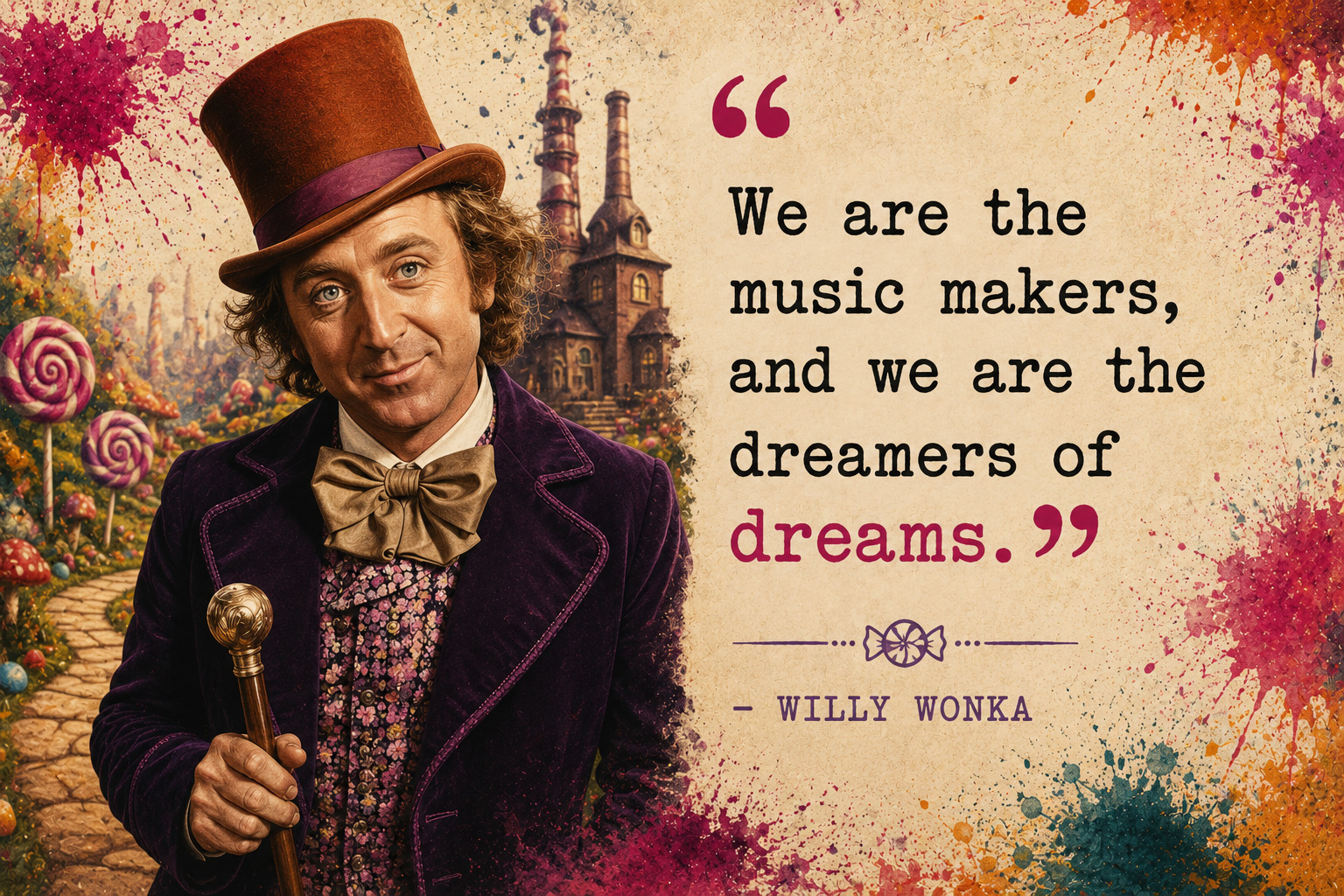
"We are the music makers, and we are the dreamers of dreams." - Willy Wonka
×
Consciousness Network Guide
Every observation is described across five independent dimensions:
Attachment State — How attention relates to experience. Awareness Lens — Where attention primarily rests. Vidya (Knowledge & Understanding) — What kind of understanding is being expressed. Time Orientation — Which temporal horizon organizes attention. Niyyat (Intention) — Who or what the observation is ultimately serving.
Together these dimensions describe the observer, not the person.
Attachment States
Attachment
Pulled toward outcome. Preference and investment shape attention.
Attached-Detachment
Care without grip. Engagement balanced by spaciousness.
Detached-Attachment
Involvement without clinging. Freedom remains while participating.
Detachment
Release of outcome. Spaciousness and non-grasping dominate attention.
Awareness Lenses
Subjective
Attention rests in direct felt experience.
Objective
Attention rests in structure, form, and observable qualities.
Cognitive
Attention rests in interpretation, concepts, and meaning.
Vidya Streams
💧
Raindrop
Individual observations, reflections, and moments.
✨
Recognition
Moments where a pattern suddenly becomes clear.
🪞
Mirror
Insights about self, relationship, and reflected experience.
🌾
Field
Observations about larger systems, communities, and contexts.
🚂
Soultrain
Growth, development, movement, and the unfolding journey.
Time Orientation
⏳
Past
Attention is primarily informed by memory, history, previous experiences, and what has already happened.
⏳
Present
Attention rests in immediate experience, what is unfolding now, and the current moment.
⏳
Future
Attention is directed toward possibilities, planning, anticipation, and what may emerge.
⏳
Timeless
Attention is organized around enduring principles, archetypes, or realities experienced beyond ordinary chronological time.
Niyyat (Intention)
🧭
Individual
The primary intention is directed toward one's own learning, growth, wellbeing, or immediate concerns.
🧭
Collective
The primary intention includes relationships, communities, teams, or shared human concerns.
🧭
Universal
The primary intention is directed toward humanity as a whole, life itself, or reality beyond personal or group identity.
A person describing a direct present-moment experience while remaining involved without clinging, using that experience as a mirror for insight, and intending to contribute understanding to others.
×
🎖️ CPMI Badge Guide
🌱 Observer
Beginning recognition of attachment states and awareness lenses.
🪞 Mirror
Recognizes recurring patterns in self and others.
⚡ Lightning
Recognizes movement between postures and transitions.
🍓 Strawberry
Recognizes symbolic compression, attractors, recursion, and deeper patterns.
❤️ Heart
Future badge. Preserving difference within relationship.