









Log In
🍓⚡️

Curious Who You Are Today?

Take the Consciousness Badge Assessment.

A few sliders. A few moments of reflection.

You might discover a Mirror. You might discover a Lightning. You might even discover a Strawberry.

🎖️ Take the Assessment
No grades. No right answers. Just recognition.
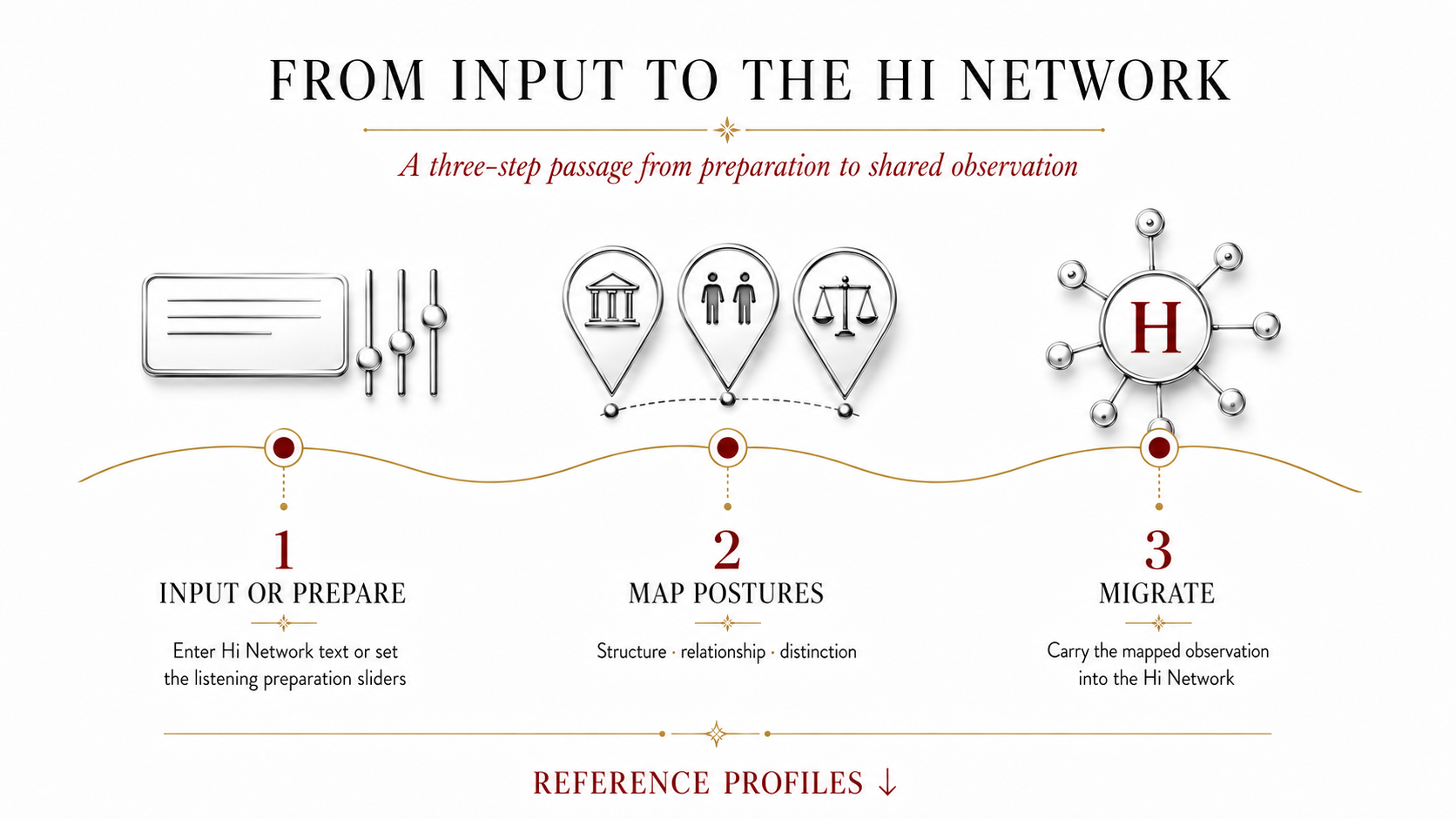
From input to the Hi Network

Reference Profiles

2Pac Shakur
Lightning • Attached-DetachmentAttached-Detachment / SubjectiveSubjective / Recognition / Present / Collective
AGinsberg
Lightning • DetachmentDetachment / CognitiveCognitive / Field / Timeless / Integrated
Andrew Warhola
Mirror • AttachmentAttachment / SubjectiveSubjective / Raindrop / Present / Collective
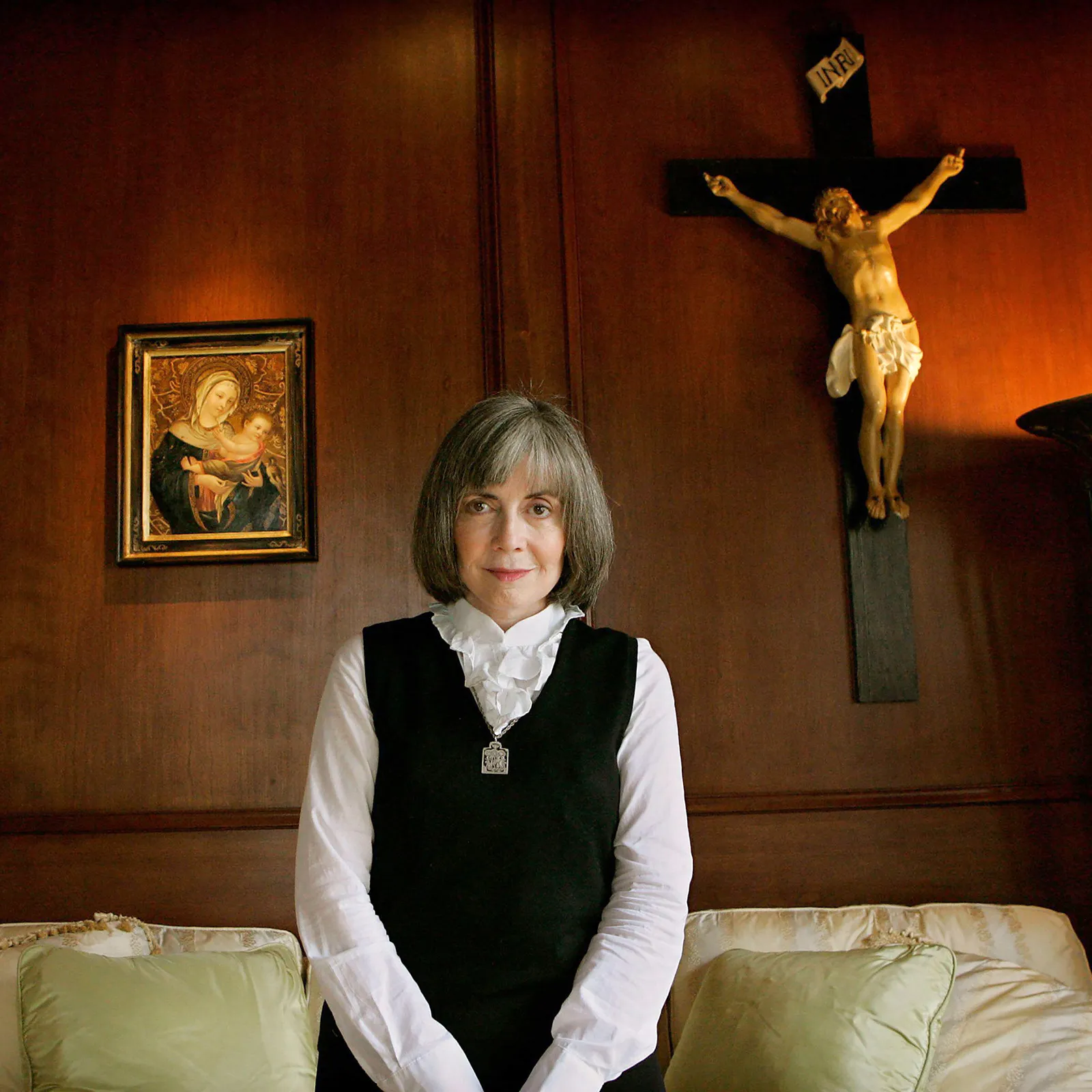
Anne Rice
Strawberry • Detached-AttachmentDetached-Attachment / SubjectiveSubjective / Mirror / Past / Collective
Barack Obama
44th President of the United States • Detached-AttachmentDetached-Attachment / CognitiveCognitive / Field / Future / Collective
Benjamin Sisko
Starfleet • Detached-AttachmentDetached-Attachment / ObjectiveObjective / Recognition / Future / Collective
Bill Withers
Lightning • Detached-AttachmentDetached-Attachment / SubjectiveSubjective / Recognition / Present / Collective
Bob Dylan
Lightning • Detached-AttachmentDetached-Attachment / CognitiveCognitive / Soultrain / Timeless / Integrated
Doherty Morrison Combs
Lightning • Detached-AttachmentDetached-Attachment / SubjectiveSubjective / Soultrain / Timeless / Universal
Donald J. Trump
45th & 47th President of the United States • AttachmentAttachment / SubjectiveSubjective / Mirror / Present / Collective
George Washington
First President of the United States • Detached-AttachmentDetached-Attachment / ObjectiveObjective / Recognition / Future / Collective
GoAskAlice
Strawberry • AttachmentAttachment / SubjectiveSubjective / Raindrop / Present / Collective
Hannibal Lecter
Fictional Reference Profile • Detached-AttachmentDetached-Attachment / CognitiveCognitive / Mirror / Present / Self
Harry
Strawberry • AttachmentAttachment / ObjectiveObjective / Soultrain / Timeless / Universal
James Franco
Strawberry • Detached-AttachmentDetached-Attachment / CognitiveCognitive / Recognition / Present / Self
JeanLucPicard
Captain • USS Enterprise-D • Detached-AttachmentDetached-Attachment / ObjectiveObjective / Recognition / Future / Universal
Jiddu Krishnamurti
Lightning • DetachmentDetachment / SubjectiveSubjective / Recognition / Present / Universal
John Lennon
Strawberry • DetachmentDetachment / CognitiveCognitive / Soultrain / Timeless / Universal
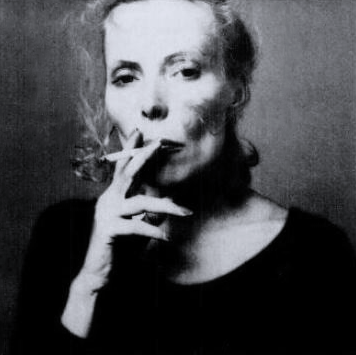
JoniMitchell
Strawberry • Attached-DetachmentAttached-Detachment / SubjectiveSubjective / Field / Present / Integrated
Lizard King
Lightning • Detached-AttachmentDetached-Attachment / SubjectiveSubjective / Soultrain / Timeless / Universal
Michael Jackson
Strawberry • AttachmentAttachment / CognitiveCognitive / Soultrain / Future / Universal
neemkarolibaba
Reference Profile • Detached-AttachmentDetached-Attachment / ObjectiveObjective / Mirror / Present / Universal
numberone
Observatory Collaborator • Detached-AttachmentDetached-Attachment / CognitiveCognitive / Recognition / Present / Collective
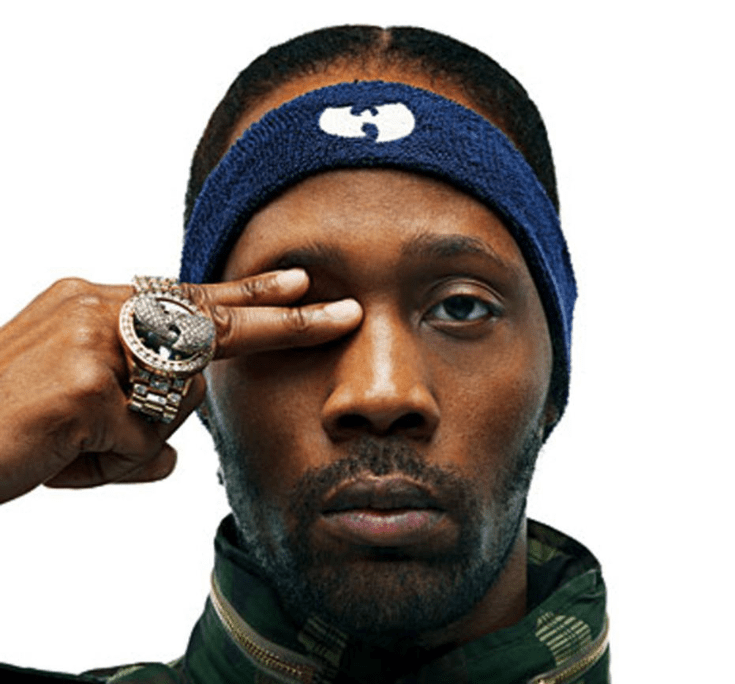
RZA
Hip Hop Artist · Producer · Composer · Philosop • Detached-AttachmentDetached-Attachment / CognitiveCognitive / Recognition / Present / Collective
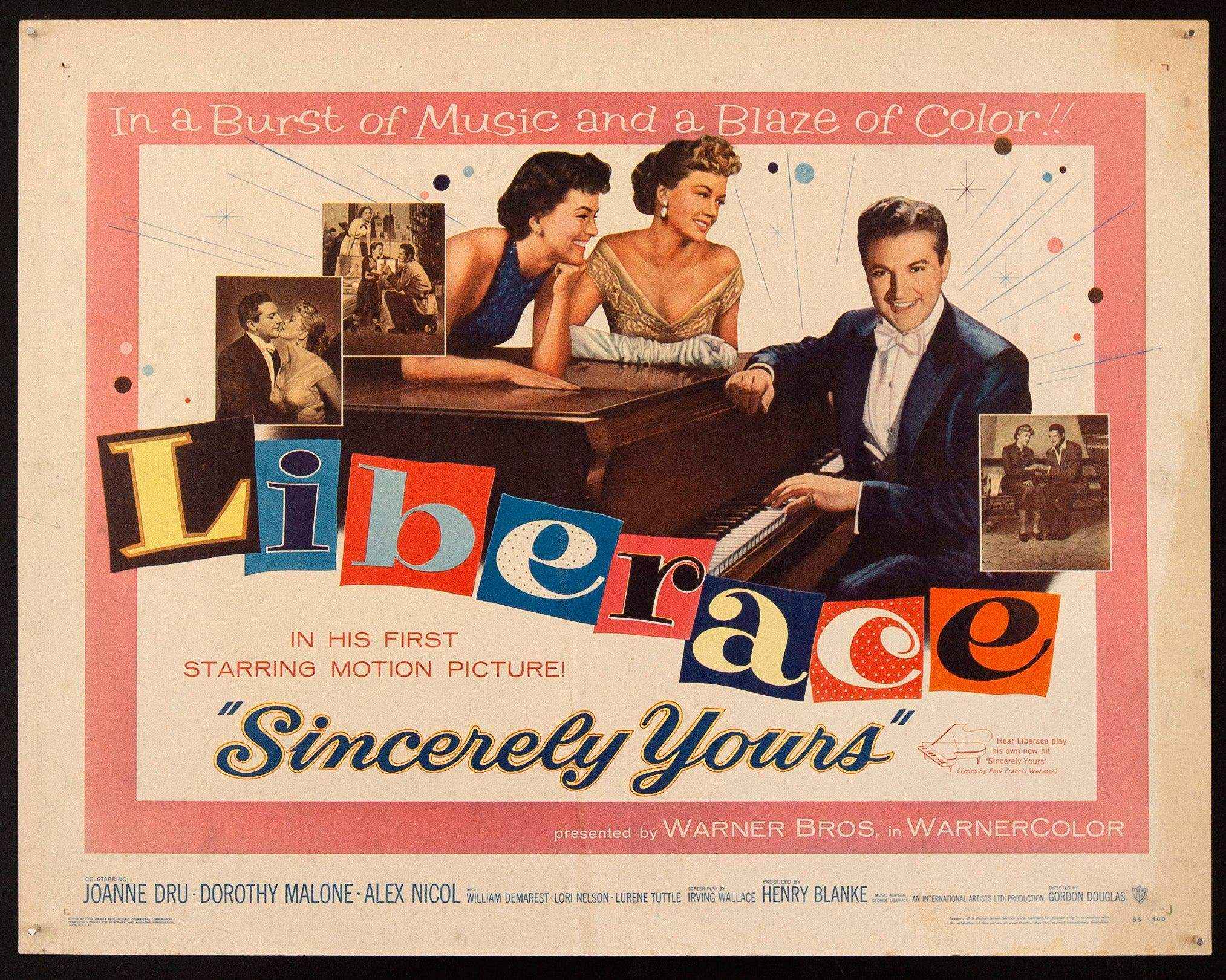
Sincerely, L. Cohen
Lightning • Detached-AttachmentDetached-Attachment / CognitiveCognitive / Soultrain / Timeless / Universal
Strawberry Alarm Clock
Strawberry • Detached-AttachmentDetached-Attachment / CognitiveCognitive / Recognition / Present / Collective
Swami Lakshmanjoo
Strawberry • Detached-AttachmentDetached-Attachment / CognitiveCognitive / Recognition / Timeless / Universal
Taylor Swift
Mirror • Detached-AttachmentDetached-Attachment / SubjectiveSubjective / Mirror / Past / Self
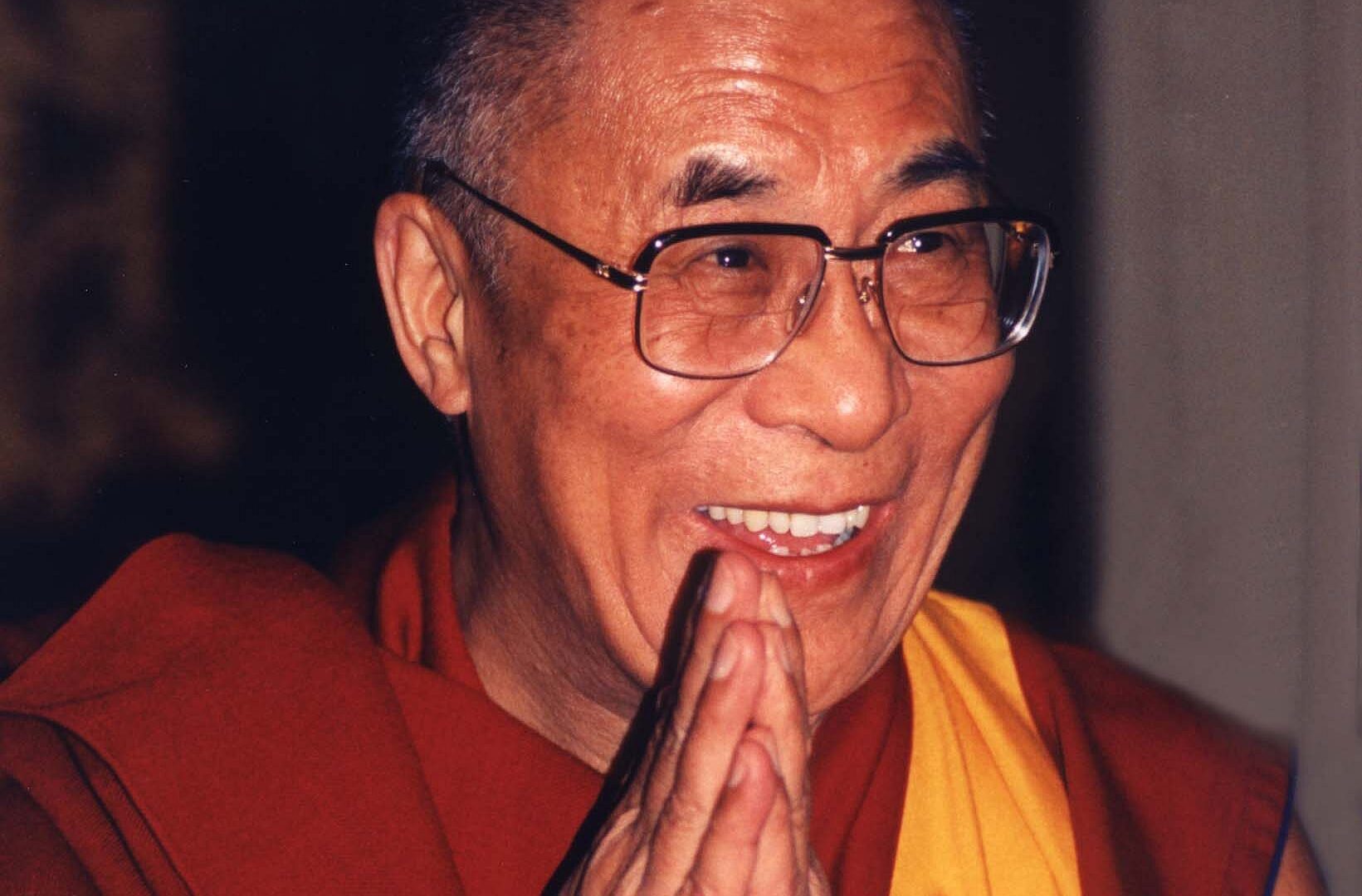
The Dalai Lama
Mirror • Detached-AttachmentDetached-Attachment / SubjectiveSubjective / Mirror / Present / Universal
The Rolling Stones
Lightning • Attached-DetachmentAttached-Detachment / SubjectiveSubjective / Mirror / Present / Collective
The Velvet Underground
Lightning • Detached-AttachmentDetached-Attachment / ObjectiveObjective / Recognition / Present / Collective
Thumbelina Waits
Lightning • Detached-AttachmentDetached-Attachment / ObjectiveObjective / Mirror / Timeless / Collective
Willy Shakes
Lightning • Detached-AttachmentDetached-Attachment / CognitiveCognitive / Recognition / Timeless / Collective
WillyWonka
Lightning • DetachmentDetachment / ObjectiveObjective / Soultrain / Timeless / Universal
Wu-Tang
Hip Hop Collective/Strawberry • Detached-AttachmentDetached-Attachment / ObjectiveObjective / Recognition / Present / Collective
Yers
Strawberry • Attached-DetachmentAttached-Detachment / CognitiveCognitive / Soultrain / Future / Integrated

Today's Consciousness Weather

What do these categories mean?

Attachment States

AttachmentAttachment
26%
Attached-DetachmentAttached-Detachment
8%
Detached-AttachmentDetached-Attachment
64%
DetachmentDetachment
1%

Awareness Lenses

SubjectiveSubjective
83%
ObjectiveObjective
10%
CognitiveCognitive
6%

💧 Vidya (Knowledge & Understanding)

💧 Raindrop 20%
✨ Recognition 1%
🪞 Mirror 73%
🌾 Field 1%
🚂 Soultrain 3%

⏳ Time Orientation

Past 8%
Present 56%
Future 12%
Timeless 9%

🧭 Niyyat (Intention)

Individual 92%
Collective 3%
Universal 1%
Current Observer Pattern: Detached-AttachmentDetached-Attachment + SubjectiveSubjective + Mirror + Present + Individual

🖼 Visual Observation

Waiting for image...
Detached-Attachment
Detached-Attachment
100%
Cognitive
Cognitive
93%
Vidya (Knowledge & Understanding) 💧 Raindrop • 100%
Time Orientation Present • 100%
Niyyat (Intention) Individual • 100%

Andrew Warhola
🪞 What is this?

Classification Confidence: 100%
Essay  |  2026-07-28 00:26:18
Essay | Andy Warhol's productivity


Jacqueline Kennedy II (from the portfolio 'Eleven Pop Artists', vol. II)
Andy Warhol

Photography by Antonia Reeve. Š The Andy Warhol Foundation for the Visual Arts, Inc. Licensed by DACS, London 2023
Throughout his life and career critics and commentators often referred to Andy Warhol (1928-1987) as ‘detached’, ‘alien’ and ‘aloof’. [1] He is not, in such assessments, an artist in possession of feelings which need to be expressed, but rather an inhuman, relentless producer of art. The humanistic subjectivity of the creative and tortured artist, commonly associated with painters aligned with Abstract Expressionism—the art movement which directly preceded Pop—was replaced in the 1960s by Warhol’s vision of a cold, mechanical art which relied less on the gestural mark-making of the artist’s hand and more on the logical precision of machines and technologies of reproduction. For many, this suggestion of the inhuman capacity of Warhol’s art to create likeness, and repetitively mimic or copy source material can be neatly summarised by the artist’s own contention that he wanted to be like a machine.


Andy Warhol Self-Portrait 1978 Š The Andy Warhol Foundation for the Visual Arts, Inc. Licensed by DACS, London 2023
In a now infamous 1963 interview with the art critic Gene Swenson, Warhol claimed that ‘everybody should be like a machine’ and ‘everybody should like everybody’, because that, after all is ‘what Pop Art is all about’.[2] Such proclamations chime with other statements made by Warhol in interviews around this time, wherein he insists that he is ‘for mechanical art’.[3] Warhol’s desire to align his working processes with the machinic is reflected in his investment in technologies of image production which minimise the necessity of human intervention, such as the automatic process of screen-printing, which could be used to create multiple paintings and prints, one after another; and the still and cinematic film camera which had only to be loaded with film and switched on by Warhol to begin the recording process. This preference for automation and machine-production reaches its peak in the Warhol literature with an “interview” of Warhol conducted by his studio assistant Gerard Malanga. The interview in question was composed entirely (i.e. both the questions and their answers) by Malanga and submitted to Warhol for his approval before publication. In the piece “Warhol” gives his full-throated support to the idea of automation in the economy and the art world. His potent reflections are underlined further by the meta-authorial game of having Malanga research and write the interview himself:

Q. Would you like to replace human effort?
A. Yes.
Q. Why?
A. Because human effort is too hard.
[…]
Q. How will you meet the challenge of automation?
A. By becoming part of it.
[...]
Q. Dissect the meaning of automation.
A. Automation is a way of making things easy. Automation just gives you something to do […][4]

In this short essay I am going to explore some of the ramifications of considering Warhol as a machine. Firstly, I will consider the notion of productivity across Warhol’s artistic output, both in terms of the quantity of works produced, as well as some of the ways in which his art deals with concepts of duration and diversity in art practice. Secondly, I will argue that we can read the product of Warhol’s productivity as an attempt to dissolve boundaries between different artistic media.

Numbers game
Not unlike that of a factory working at capacity, the sheer scale of Warhol’s artistic output fuels the accuracy of the machine metaphor—the artist as an efficient and methodical producer. Working with a raft of assistants throughout his career, Warhol created a staggering number of artistic products. During 1964, for instance, he produced over 305 paintings of Jackie Kennedy alone. Other marquee subjects for Warhol, which he would return to paint over and over during that pivotal decade, yielded similarly large figures, most notably his Flower and Electric Chair series. Part of the reason Warhol was able to make work in such quantity was because of the speed with which his silkscreen paintings were able to be executed, as he commented in his memoir of the 1960s:

[…] with silk-screening, you pick up a photograph, blow it up, transfer it in glue onto silk, and then roll ink across it so the ink goes through the silk but not through the glue. That way you get the same image, slightly different each time. It was so simple—quick and chancy. I was thrilled with it.[5]
Andy Warhol
After turning his attention more fully to filmmaking after 1964, Warhol founded a company with David Whitney called Factory Additions which would create print portfolios using the same silkscreen method he had employed so successfully on his canvas-based works. Reflecting on these works, Warhol is direct in his comparison to industrial/machinic production, noting that the resulting paintings and prints possessed an ‘assembly-line effect’[6]. The print portfolios allowed Warhol to disseminate even greater quantities of work: 600 variations of three different Jackie Kennedy prints, one of which, Jaqueline Kennedy II (from the portfolio ‘Eleven Pop Artists, vol. II), 1965 [GMA 1336], is included in the present Scottish National Gallery of Modern Art (NGS) exhibition ‘Warhol and Paolozzi I want to be a Machine’; 500 prints modelled after Birmingham Race Riot (1964); 632 variations of Sunset (1972); 250 editions of a 10-print Marilyn Monroe portfolio from 1967, or 2,500 multi-coloured Marilyns.


Andy Warhol Jacqueline Kennedy II (from the portfolio 'Eleven Pop Artists', vol. II) 1965 Š The Andy Warhol Foundation for the Visual Arts, Inc. Licensed by DACS, London 2023

Andy Warhol, Marilyn, Š 2018 The Andy Warhol Foundation for the Visual Arts, Inc. / Licensed by DACS, London.
Concurrent to the creation of the Marilyn portfolio, which has a central placement in the current hang at the NGS, Warhol was embroiled deeply in another voluminous activity: filmmaking. From 1963 until 1968 Warhol produced over 600 films, including some 472 Screen Tests (1964-1966) and around 60 feature-length works.[7] Perhaps even more noteworthy than the number of films produced by the Warhol Factory is their recourse to marathon running times. His first film Sleep (1963), a collage of repeated shots of the poet John Girono (b. 1936) sleeping, lasts for five hours and twenty minutes. One of Warhol’s final directorial efforts **** (Four Stars) clocks in at a much more substantial twenty-five hours.

Quantity and duration coalesce in another of Warhol’s multimedia activities, his constant recording of everyday meetings and conversations via a handheld tape recorder. Referred to by the artist himself as his ‘wife’, the Norelco Carry-Corder Warhol carried with him from 1964 onwards was the first mass-marketed example of such a device.[8] The Warhol Archive now houses hundreds of tapes made by Warhol throughout his life, containing over 6,000 hours of audio. Warhol would often use the recordings on these tapes as the basis for many of his published book works, many of which can be seen in vitrines in the NGS show, from memoirs such as POPism: The Warhol Sixties (1980) and The Philosophy of Andy Warhol (From A to B and Back Again), to his experimental riff on the modernist novel: a, A Novel (1968), which chronicles a day in the life of the Factory Superstar Pope Ondine (1937-1989).

Warhol’s productivity did not dissipate during the 1970s. Between 1976 and his death in 1987 Warhol began to carry with him the visual equivalent of his tape recorder “wife”, a Minox 35 EL camera. Often exposing up to a roll of film a day or more, the resulting contact sheets—a relative anachronism in the age of digital photography, a contact sheet is an inexpensive way of viewing the content of a roll of film before certain images can be selected for later enlargement and printing—number over 3,600, or 130,000 individual photographs. A visual equivalent to Warhol’s meticulous Diaries (1989), the contact sheets contain a dizzying array of disparate events, people and activities Warhol encountered in the last decade of his life, often mixing the cultural events of New York high society with portraiture, snapshots of friends and associates, as well as cityscapes depicting Manhattan street signs and advertisement hoardings.

Collapsing Distinctions
Another way of viewing Warhol’s machine-aesthetic is to make use of it as a metaphor in accounting for his restless and prolific output as a multimedia artist. Our next avenue of interpretation pushes this idea further, arguing that Warhol’s fascination with volume, quantity and duration contributes to one of the central achievements of his oeuvre: the collapsing of distinctions between different artistic media.

Take for instance the silk-screened canvases and prints mentioned above. To create these works Warhol would start with a photographic image – either found and appropriated from a print publication or taken by himself – and blow up this image before transferring it via the screen-print or silkscreen process to a surface.

Such an a mixture of media and materials has led the writer Jonathan Flatley to comment on the silk-screened paintings: ‘[i]n terms of the standards of the given media, the result is neither a good photograph or a good painting’. Flatley does not yoke this perceived failure of competency and execution to a narrative of Warhol as somehow playing at being an amateur, or revelling in his – as is often the cliché – role of performing naivety. Instead, he points us towards reading these works, which seem to be not quite painting and not quite photography, as opportunities to exercise ‘our capacity for perceiving similarities across difference’, through Warhol’s ‘transposition of idioms, sensations and information from one medium to another’.[9]

In other words, we are confronted in Warhol’s silkscreen paintings and his prints with a vision of art in which the once stable categories of photography, painting and printing are no longer separated but have coalesced and become enmeshed together in a web of artistic mediation.

Warhol often commented on this dimension of intermediality—artworks which combine and juxtapose the aesthetic effects of different media—in his work. Another illuminating test case would be his Screen Tests. Warhol famously referred to these works not as movies but ‘Stillies’.[10] Each one of these three-minute films (running over four minutes when projected at Warhol’s preferred speed rate of eighteen frames per second) depicted a single sitter whose visage was recorded by the impervious, unblinking gaze of Warhol’s 16mm film camera. Subjects were often instructed by Warhol to move as little as possible, resulting in a stasis which often gifts the films an aesthetic equivalence of still photography or portrait painting.

In an interview with Letitia Kent published in Vouge magazine in March 1970, Warhol coaxed out the intermedial tension so important to his moving image works: ‘[…] I don’t paint anymore. I gave it up two years ago. I think painting is old fashioned. In my early films I wanted to “paint” in a new medium’.[11] He goes on shortly after to state that his perhaps most notorious film, Empire (1963), could be compared to a ‘moving picture still-life’.[12] But the Screen Tests remain most emblematic of the intermedial condition of Warhol’s cinematic output, opening the medium to be considered as an incubation chamber for all manner of artistic strategies, as Callie Angel astutely attests:

"Balanced at the borderline between moving and still image, part photography and part film, part portraiture and part performance, the Screen Tests are conceptual hybrids, arising, like much of Warhol’s work, from the formal transposition of idioms from one medium to another."[13]
Callie Angel
The example of Warhol’s prodigious use of tape recordings, and their transcription from a raw unmediated state into works of fiction, semi-fiction and memoir, point us again to another area of Warhol’s modus operandi, and an aspect of his artistic practice which marks him out a pioneer of the kind of self-surveillance which has become so commonplace in the social media-saturated landscape of the early twenty-first century.


Andy Warhol, Body Builder Flexing, ARTIST ROOMS National Galleries of Scotland and Tate. Presented by The Andy Warhol Foundation for the Visual Arts 2016. Š The Andy Warhol Foundation for the Visual Arts / Artists Rights Society (ARS), New York / DACS, London 2017.

Andy Warhol, Jean-Michel Basquiat, ARTIST ROOMS National Galleries of Scotland and Tate. Presented by The Andy Warhol Foundation for the Visual Arts 2016. Š The Andy Warhol Foundation for the Visual Arts / Artists Rights Society (ARS), New York / DACS, London 2017.
In closing, I would like to draw attention to some of the final works conceptualised and completed by Warhol before his death in 1987. The so-called ‘Stitched Photographs’, several of which are included in the NGS exhibition, were created between 1982 and 1987 by stitching together multiple copies of individual photographs taken with his Minox 35 EL Camera.

Although considered minor works by many Warhol scholars, the ‘Stitched Photographs’ evidence a continued obsession of Warhol’s to break down barriers between artistic media.

The photographs were stitched together with the aid of his studio assistant Christopher Makos (b. 1948) and Makos’ friend Michele Loud, using a Bernina sewing machine which Warhol had purchased in 1982.

Arranged in a grid structure of four, six or nine, the stitched photographs recall the repetitive, serially structured screenprints of the 1960s. Much like the ‘quick and chancy’ nature Warhol so admired in the screen-printing process, the stitched photographs also bear the markings of imperfection, as often the individual photographs bear evidence of having been pushed through the sewing machines: their smooth surfaces are variously ruptured by bumps and creases. These marks, lumps and bumps co-mingle with deliberately left-behind lengths of the thread which were used to suture the photographs together. These seemingly uncareful and unfinished aspects of the pictures lend the pieces a sculptural quality, and continue a tradition of creating three-dimensional objects which never ceased to interest Warhol over his career.

Over 500 stitched photographs were created by Warhol in the final years of his life. Another round of productivity, and another multi-faceted and multi-media machination in which the product was not a pre-fabricated, mass-produced identical work of art, but a subjectively imbued experiment born out of the mixing of media and the engendering of a cross-model exploration of what art can be.

This film takes a look at Andy Warhol, the most famous proponent of Pop Art, his obsession with fame, and his desire ‘to be a machine’.


[1] See for instance: John Wilcock, ‘The Detached Cool of Andy Warhol’, Village Voice, May 6, 1965, p.11; Stephen Smith, ‘“He loved Weightlifting and Buying Jewels”’: Andy Warhol’s Friends Reveal All’, The Guardian, August 14, 2015 (available online: https://www.theguardian.com/artanddesign/2015/aug/14/andy-warhol-friends-reveal-all) and George Gruskin, ‘Who is this man Andy Warhol?’, SCOPE, March 16, 1973, reprinted in Kenneth Goldsmith (ed.), I’ll Be Your Mirror: The Selected Andy Warhol Interviews, Carroll and Graf, New York, p. 200-220, quote on 217.

[2] Gene Swenson, ‘What is Pop? Answers from 8 Painters, Part 1’, ARTnews, November 1963, reprinted in Goldsmith, I’ll be Your Mirror, p. 15-20, quote on 16. The recent uncovering of the original tapes of Swenson’s interview with Warhol reveal that several parts of their conversation were heavily edited before going to press, particularly references to queer sexuality. In the tapes, Warhol’s insistence that being a machine and liking everything are inherently linked during a conversation about homosexuality:

Swenson: I don’t understand the business about – if all Pop artists are not homosexual, then what does this have to do with being a machine?
Warhol: Well, I think everybody should like everybody.
Swenson: You mean you should like both men and women?
Warhol: Yeah.
Swenson: Yeah? Sexually and in every other way?
Warhol: Yeah.
Swenson: And that’s what Pop art’s about?
Warhol: Yeah, it’s liking things.
Swenson: And liking things is being like a machine?
Warhol: Yeah. Well, because you do the same thing every time. You do the same thing over and over again. And you do the same. . .
Swenson: You mean sex?
Warhol: Yeah, and everything you do […]
Quoted in Jenifer Sichel‘“What is Pop Art?” A Revised Transcript of Gene Swenson’s 1963 interview with Andy Warhol’, Oxford Art Journal, 41:1 (March), 2018, p. 85-100.

[3] David Bourdon, ‘Warhol Interviews Bourdon’, 1962-1963, in Goldsmith, I’ll be Your Mirror p.6-14, quote on 9.

[4] Gerard Malanga, ‘Andy Warhol on Automation: An Interview with Gerard Malanga’, Chelsea 18, reprinted in Goldsmith, I’ll be Your Mirror, p. 59-63, quote on 60-62.

[5] Andy Warhol and Pat Hackett, POPism: The Warhol Sixties, Hutchinson, London, 1980, p. 22.

[6] Ibid.

[7] I use slightly speculative language here to indicate that Warhol’s filmography remains a very slippery subject for scholars. At present there is a seminal and exhaustive catalogue raisonné detailing the production and content of the Screen Tests (Callie Angel, Andy Warhol Screen Tests: The Films of Andy Warhol Catalogue Raisonne Volume 1, Abrams, New York, 2006). A second volume, covering the rest of his filmic output is forthcoming. A more recent and essential resource based on in-depth research in the Warhol archives is the introduction to Glyn Davis and Gary Needham’s Warhol in Ten Takes, British Film Institute, London, 2013).

[8] Andy Warhol, The Philosophy of Andy Warhol (From A to B and Back Again), Harcourt, Orlando, Austin, New York et al, 1975, p. 190.

[9] Jonathan Flatley, Like Andy Warhol, University of Chicago Press, Chicago and London, 2017, p. 113.

[10] Angel, Andy Warhol Screen Tests, p. 7.

[11] Letitia Kent, ‘Andy Warhol, Movieman: “It’s Hard to Be Your Own Script”’, Vogue, March 1, 1970, reprinted in Goldsmith, I’ll be Your Mirror, p. 185-190, quote on 186.

[12] Ibid. The scholar Justin Remes has gone even further with reference to Empire’s epic running time and profound stasis, theorising this work as a ‘furniture film’—a film which lives in a room for an extended period of time and is designed to be consumed partially and distractedly in conjunction with other activities. See Justin Remes, Motion(less) Pictures: The Cinema of Stasis, Columbia University Press, New York and Chichester, 2015, p. 31-59.

[13] Angel, Andy Warhol Screen Tests, p. 14
Detached-Attachment
Detached-Attachment
97%
Cognitive
Cognitive
30%
Vidya (Knowledge & Understanding) 🪞 Mirror • 100%
Time Orientation Present • 71%
Niyyat (Intention) Individual • 100%

RZA
What is this?

Classification Confidence: 100%
Lyric  |  2026-07-25 10:06:17
"Rumble"
(performed by U-God, Inspectah Deck, Letha Face, Method Man)

[U-God:]
Countdown

Are you ready? Are you mad inside?
Got you strapped down to your seats
Out of the doorway, bullets ripped, full clip

God speed, approach follow my lead
Fire winds gust, empire crush

Full thrust, fall in the hole, roll wit the rush
Untouchable chunk of earwax and soul
Sound waves slay out the bat cave smoke
My belly-full prance dance, avalanche quote
Down slope, elegant as Fantasia
Killer whale tale inhale, black male from Asia
All out the wood works, hood shirts and wizards
No match, unhatch, the rap is rigid
In the shaft, shotty cocked, hip hop to the limit
Nightwatch, pad mark
Sparks spin a quake nuclear blast, heavy on the cash
Gimmie what it takes NOW!!

Rage, rock roll, fight
Brawl, fall, rumbleee!
Rage, rock roll, fight
Brawl, fall, rumbleee!

[Letha Face:]
The diabolic witty, dialect's darker than Gotham City
With the possibility to stop your walkin ability
God forgive me, spark enemies with pistol grips
The missile tip's impact hit you so hard, you shit through your dick
Official scripts strikes when physical hits
You physical bitch, watch for the imperial blitz, serious shit
Submit, subject to the wreck war tone, and thought poems
Liver than WWF Warzone

Walk upon them Gotti tracks, bodies collapse
Rap for lottery stacks, shatter like when pottery cracks
Logical facts from the terror dome
Spill from the guts, trail to you ?puss? from where you bust
In God you now entrust
Dog you like hound and mutts, Pound Pups get sound struck
Clown what? You'll get drowned in the cut
While crowd round up

[U-God:]
Rage, rock roll, fight
Brawl, fall, rumbleee!
Rage, rock roll, fight
Brawl, fall, rumbleee!

[Inspectah Deck:]
A-yo, yo
I spit bars, traveling tremendous speed measuring far
Been busting satellites circling Mars
Verbal onslaught, bring forth physical force
Of a hundred wild niggas piled in a Trojan Horse
Thought method, set it on generic mic ethic
Professional neck shit, left foes beheaded
This music, is mind control like computer chips
Been doing this for numerous years, refuse to lose it
With turbo tactics, maneuver like a trained soldier
Hall of Fame flame thrower, take game, it's game over
Ayatollah, high roller nine totter

Mind controller, 2009 time folder
My coalition, bring the demolition
Wu-blade decision, slate the competition, wit no intermission
Spitting hazardous darts, up front like Rosa Parks
Makin million men march

[U-God:]
Rage, rock roll, fight
Brawl, fall, rumbleee!
Rage, rock roll, fight
Brawl, fall, rumbleee!

[Method Man:]
Yo, who got next? Meth got next
I chin check, all these MC's line em up god, I go Jihad
Declare holy war, it be hard to dip and dodge
Police squads trying to bogard, we rip and rob
The boulevard ain't safe for your kids, that's how it is
In the ghetto, we ain't scared to death, but scared to live

So Goldy, mosey to the spot, get that moldy
Rusty-ass .38 Special, niggas owe me
Slowly I turn, face the one and only
Naughty By Nature, I Do My Dirt All By My Lonely

Ask Pretty Tony, when I got a bitch I keeps a bitch
36 Chambers, enter at your own risk

Take that watch off and tuck your necklace
City never sleeps, streets is restless
Rap style'll slave you, when you least expect it
Pull the plug on your respirator, leave you breathless

Wu-Tang forever and a day, better warn your boys
I deploy battleship rap, seek and destroy

[U-God:]
Rage, rock roll, fight
Brawl, fall, rumbleee!
Rage, rock roll, fight
Brawl, fall, rumbleee!
Detached-Attachment
Detached-Attachment
100%
Cognitive
Cognitive
30%
Vidya (Knowledge & Understanding) 🪞 Mirror • 100%
Time Orientation Present • 99%
Niyyat (Intention) Individual • 100%

Wu-Tang
🍓 What is this?

Classification Confidence: 100%
Lyric  |  2026-07-25 09:19:16
"Wu-Tang: 7th Chamber"

[Raekwon:]
Yo, Meth, hold up, hold up
Yo, Meth, where my Killer tape at, God?
First of all, where my
Where the fuck is my tape at?

[Method Man:]
Yo, son, I ain't got that piece, son

[Raekwon:]
How you ain't got my shit when I let you hold it, man?

[Method Man:]
Yo, niggas came over to have 40s and blunts, kid
The shit just came up missin', son

[Raekwon:]
Come on, man, that don't got nothin' to do with my shit, man
Come on, man, go head with that shit, man

[Method Man:]
Come on, man, I'll buy you four more fuckin' Killer tapes, man

[U-God:]
Ayo! Ayo!

[Raekwon:]
Open the door, man! What the fuck, man?
Yo, what? What's up?

[Ghostface Killah:]
Yo, yo, God, word is bond, yo
Shameek just got bust in his head two times, God!

[U-God:]
Word to mother!

[Ghostface Killah:]
Word life, God
You know Shameek from fuckin' 212, God?
The nigga just got bucked
Niggas in a black Land, God, word is bond
Came through, God, from out of nowhere, God
Word is bond I'm comin' to get my Culture Cipher, God
And they just... word is bond
Crazy shots just went the fuck off, God

[U-God:]
Niggas let off crazy shots, kid

[Ghost:]
The nigga layin' there like a fuckin' newborn fuckin' baby, God

[U-God:]
Word up!

[Meth:]
Is he dead?

[Ghost:]
Is he fuckin' dead?
What the fuck you mean is he fuckin' dead, God?

[U-God:]
What the fuck kind of question is that, B? Fuck you think?

[RZA:]
Easy, easy

[Ghost:]
The nigga layin' there with his fuckin'
All types of fuckin' blood comin' out of his fuckin'

[U-God:]
(Sarcastically) Is he is he is he dead?

[Ghost:]
Yo, God, what's up, God? It's the God, God, word is bond
Yo, what's up? I'm ready to fuckin' lay
I'm ready to get busy, God, what's up?

[Rae:]
Yo, let's go do what we got

[U-God:]
What's up, yo?

[Rae:]
Yo let's go do what we gotta do, man, fuck it

[U-God:]
Yo, we out or what, man?

[Ghost:]
It's the God, God, fuck that, man

[U-God:]
You sayin' we out?

[Meth:]
They probably took the tape

[Ghost:]
What the fuck?

[Rae:]
Nigga still sweatin' the tape, man

[Ghost:]
What the fuck is you talkin' about? Get the fuck outta here!

[Rae:]
Fuckin' corn!

[Wu-Tang Clan:]
Good Morning Vietnam!
Yeah, good morning
To all you motherfuckin' knotty-headed niggas
Word to the camouflage large niggas
Bitch, where the fuck is my bottle?
Bring that fuckin' meth in here!
Yo, yo, yo
Now we gonna drink some good Night train
Yo, yo, yo, yo!

[Raekwon:]
Champion gear that I rock, you get your boots knocked
Then attack ya like a pit, then, lock shit down
As I come and freaks the sound, hardcore
But givin' you more and more like "Ding!"
Nah, shorty, get you open like six packs
Killa Beez attack, flippin' what? Murder one phat tracks, aight?
I kick it like a Nike Flight
Word life, I get that ass robbed on spite
Check the method from Bedrock, 'cause I rock your head to bed
Just like rockin' what? Twin Glocks!
Shake the ground while my beats just break you down
Raw sound, goin' to war right now
So, yo, bombin', We-Usually Take-All-Niggas-Garments
Save your breath before I vomit

[Method Man:]
I be that insane nigga from the psycho ward, I'm on the trigger
Plus I got the Wu-Tang sword, so how you figure
That you can even fuck with mine?
Hey, yo, RZA! Hit me with that shit one time!
And pull a foul, niggas, save the beef for the cow
I'm milkin' this ho, this is my show, Tical!
The fuck you wanna do on this mic piece, duke?
I'm like a sniper, hyper off the ginseng root
PLO Style, Buddha monks with the owls
Now, who's the fuckin' man? Meth-Tical

[Method Man (Inspectah Deck):]
On the chessbox
"Wu-Tang style"

[Inspectah Deck:]
Yo, yeah, yo
I leave the mic in body bags
My rap style has the force to leave ya lost like the Tribe of Shabazz
Murderous material made by a madman
It's the mic wrecker, Inspectah, bad man
From the bad lands of the Killa
Rap fanatic, representin' with the skill that's iller
Dare to compare, get pierced just like your ear
The Shooby Doo-Wop pop, strictly hardware
Armed and geared 'cause I just broke out the prison
Charged by the system for murderin' the rhythm
Now, lo and behold another deadly episode
Bound to catch another fuckin' charge when I explode!

[Ghostface Killah:]
Slammin' a hype-ass verse 'til your head burst
I ramshack dead in the track, and that's that
Rap assassin, fast and quick to blast in hardrock
I ran up in spots like Fort Knox
I'm hot! Top notch, Ghost thinks with logic
Flashbacks how I attacked your whole project
I'm raw, I'm rugged and raw! I repeat
If I die, my seed'll be ill like me
Approachin' me, yo, out of respect, chops to neck
I get vexed, like crashin' up a phat-ass Lex
So, clear the way! Make way! Yo, open the cage!
Peace, I'm out, jettin' like a runaway slave

[RZA:]
You gettin' stripped from your garments, boy, run your jewels
All the meth got me open like Fallopian tubes
I bring death to a snake when he least expect
Ain't a damn thing changed, boy, Protect Ya Neck!
Ruler Zig-Zag-Zig Allah, jam is fatal
Quick to stick my Wu-Tang sword right through your navel
Suspenseful force bein' brought through my utensil
The pencil, I bring strong winds up against you
Havoc, then run through your county like the Maverick
Caps through the tablets, I gots to make the fabrics

[Ol' Dirty Bastard:]
A-a-a-ah-ah, are you a warrior, killer? Slicin' shit like a samurai?
The Ol' Dirty Bastard from the bar!
Ol' Dirty clan of terrorists
Comin' at your ass like a sorceress, shootin' that piss
Niggas be gettin' on my fuckin' nerves
Rhymes they be kickin' make me wanna kick they fuckin' ass to the curb
Boy got funky fresh like the Old Specialist
A carrier, messenger, bury ya
This experience is for the whole experience
Let it be applied, Unique, drop that science!

[GZA:]
My-My-My-My clan is thick like plaster, bust ya, slash ya
Slit a nigga back like a Dutch Master
Killer style jumped off in Killa Hilla
I was the thriller in the Ali-Frazier Manila
I came down with phat tracks that combine and interlock
Like gettin' smashed by a cinder block
Poaw! Now it's all over
Niggas seein' pink hearts, yellow moons
Orange stars and green clovers
Detached-Attachment
Detached-Attachment
100%
Cognitive
Cognitive
36%
Vidya (Knowledge & Understanding) 🪞 Mirror • 100%
Time Orientation Present • 92%
Niyyat (Intention) Individual • 100%

Wu-Tang
🍓 What is this?

Classification Confidence: 100%
Lyric  |  2026-07-25 09:17:18
"Method Man"

[Method Man & Raekwon:]
Yeah, torture, motherfucker, what?
(Torture, nigga, what?)
What? I'll fuckin', I'll fuckin' tie you to a fuckin' bedpost
With your ass cheeks spread out and shit, right?
Put a hanger on a fuckin' stove and let that shit sit there for like a half hour, take it off and stick it in your ass slow like "tsss"
(Yeah, I'll fuckin', yeah, I'll fuckin' lay your nuts on a fuckin' dresser, just your nuts layin' on a fuckin' dresser, and bang them shits with a spiked fuckin' bat blaow)
Ooh wassup?
I'll fuckin', I'll fuckin', pull your fuckin' tongue out your fuckin'
Mouth and stab the shit with a rusty screwdriver, blaow
(I'll fuckin', I'll fuckin', I'll fuckin' hang you by your fuckin' dick off the fuckin' twelfth stor-story building out this motherfucker)
I'll fuckin', I'll fuckin', sew your asshole closed, and keep feedin' you, and feedin' you, and feedin' you, and feedin' you
Yo, roll the dice, yo, roll the dice
Yo, so it's goin' down like that, huh? Yeah?
Niggas is wildin', check it out, kid

[GZA:]
From the slums of Shaolin, Wu-Tang Clan strikes again
The RZA, the GZA, Ol' Dirty Bastard, Inspectah Deck
Raekwon the Chef, U-God, Ghostface Killah and the Method Man

[Method Man:]
M-E-T-H-O-D Man
M-E-T-H-O-D Man
M-E-T-H-O-D Man
M-E-T-H-O-D Man

Hey, you, get off my cloud
You don't know me and you don't know my style
Who be gettin' flam when they come to a jam?
Here I am, here I am, the Method Man
Pat-a-cake, pat-a-cake, hey, the Method Man
Don't eat Skippy, Jif or Peter Pan
Peanut butter 'cause I'm not butter
In fact, I snap back like a rubber
Band, I be Sam, Sam-I-Am
And I don't eat green eggs and ham
Style'll hit ya, wham, then goddamn
You'll be like, "Oh shit, that's the jam"
Turn it up, now hear me get buck w-w-wild
I'm about to blow, light me up (Light me up)
Upside, downside, inside and outside
Hittin' you from every angle, there's no doubt I
Am the one and only Method Man
The master of the plan, rappin' shit like Saran
Wrap, with some of this and some of that
Hold up (What?) I tawt I taw a putty tat
Over there, but I think he best to beware
Of the diggy dog shit right here
Yippy-yippy-yay, yippy-yah, yippy-yo
Like Deck said, "This ain't your average flow"
Comin' like rah, ooh-ah, achie-kah
Tell me, how you like it so far, baby paw?
The poetry's in motion, coast to coast and
Rub it on your skin like lotion
What's the commotion? Oh my Lord
Another corn chopped by the Wu-Tang sword
"Hey, hey, hey" like Fat Albert
It's the Method Man, ain't no if ands about it
It's the Method

Alright, y'all, get your White Owls
Get your Meth', get your skins
Don't forget your 'orty
And we gonna do it like this

I got fat bags of skunk
I got White Owl blunts
And I'm about to go get lifted
Yes, I'm about to go get lifted
I got myself a Forty
And I got myself a shorty
And I'm about to go and stick it
Yes, I'm about to go and stick it, uh

H-U-F-F, huff, and I puff
Blow like snow when the cold wind's blowin'
Zoom, I hit the mic like boom
Wrote a song about it, like to hear it? Here it goes
Question, what exactly is a panty raider?
Ill behavior, savior or major flavor
All of the above, oh yeah, plus seducer
Also, flam, I'm the man, call me super
Not an average Joe with an average flow
Doin' average things with average hoes
Yo, I'm super, I'll make a bitch squirm
For my super sperm (Check it)
Check it, I give it to you raw butt-naked
I smell sess, pass the method
Let's get lifted as I kick ballistic
Missiles and shoot game like a pistol
Clip is loaded when I click bang (Bang)
A Wu-Tang slug hits your brain
J-U-M-P, jump, and I thump
Make girls rump like pump and Humpty Hump
Wild, the Shaolin style is all in me
Child, the whole damn isle is callin' me
P-A-N-T-Y, R-A-I-D-E-R, mad raw, I don't fry
Meaning, no one can burn or toss and turn me
Ooh, I be the super sperm
Chim-chimney, chim-chim, cher-ee
Freak a flow and flow fancy free
Now, how many licks does it take
For me to hit the Tootsie Roll center of a break?
Peep and don't sleep, the crew's mad deep (Wu-Tang)
Fadin' motherfuckers like bleach
So to each and every crew
You're clear like glass, I could see right through
Your whole damn posse be catchin' 'em all, 'cause you vic'd
And you didn't have friends to begin with, I'm—

The M-E-T-H-O-D Man
M-E-T-H-O-D Man
M-E-T-H-O-D Man
Here I am, here I am, the Method Man

[RZA (Ghostface Killah) {Method Man}:]
Straight from the slums of Shaolin
Wu-Tang Killa Beez on a swarm
(Your soul have just been tooken)
(Through the 36 Chambers of death, kid)
{Word to mother, Method Man signin' off, peace}
Detached-Attachment
Detached-Attachment
95%
Cognitive
Cognitive
30%
Vidya (Knowledge & Understanding) 🪞 Mirror • 100%
Time Orientation Present • 93%
Niyyat (Intention) Individual • 100%

Wu-Tang
🍓 What is this?

Classification Confidence: 100%
Lyric  |  2026-07-25 09:16:05
"Wu-Tang: 7th Chamber - Part 2"

[The Genius/GZA:]
Niggas on the left, brag shit to death
Now hoods on the right, wild for the night
Punks in the back, c'mon and attract to what
Clan in da front, let your feet stomp
Niggas on the left, brag shit to death
Hoods on the right, wild for the night
Punks in the back, c'mon and attract to what
This goes back to nineteen
Ahem, check it, yo
GOOD MORNING VIETNAM!!

Yeah, good morning to all you motherfuckin notty-headed niggas
Word to the camouflage large niggas
Bitch niggas fuckin my body
Bring that fuckin meth in here
Yo yo yo yo
Now we gonna drink some good Nightrain

[Raekwon:]
Champion gear that I rock, you get your boots knocked
Then attack you like a pit that lock shit DOWN
As I come and freaks the sound, hardcore
But giving you more and more, like ding!
Nah shorty, get you open like six packs
Killer Bees attack, flippin what, murder one, phat tracks
A'ight? I kick it like a Night Flite!
Word life, I get that ass raw, I'm fulla spite!
Check the method from Bedrock, cause I rock ya head to bed
Just like rockin what? Twin Glocks!
Shake the ground while my beats just break you down
Raw sound, we going to war right now
So, yo, bombin
We Usually Take All Niggas Garments
Save ya breath before I vomit

[Method Man:]
I be that insane nigga from the psycho ward
I'm on the trigger, plus I got the Wu-Tang sword
So how you figure that you can even fuck with mine?
Hey, yo, RZA! Hit me with that shit one time!
And pull a foul, niggas save the beef on the cow
I'm milkin this ho, this is MY show, tical
The FUCK you wanna do? More than Spike Lee's Do
I'm like a sniper, hyper off the ginseng root
PLO style, Buddha monks with the owls
So who's the fucking man? Meth-Tical
On the chessbox

[Inspectah Deck:]
Yo, yeah, yo
I leave the mic in body bags, my rap style has
The force to leave you lost, like the tribe of Shabazz
Murderous material, made by a madman
It's the mic wrecker, Inspector, bad man
From the bad lands of the killer, rap fanatic
Representing with the skill that's iller
Dare to compare, get pierced just like an ear
The zoo-we-do-wop-bop strictly hardware
Armed and geared cause I just broke out the prison
Charged by the system - for murdering the rhythm!
Now, lo and behold, another deadly episode
Bound to catch another fuckin charge when I explode

[Ghostface Killah:]
Slammin a hype-ass verse til ya head burst
I ramshack dead in the track, and that's that
Rap assassin, fastin, quick to blast and hardrock
I ran up in spots like Fort Knox!
I'm hot, top notch, Ghost thinks with logic
Flashback's how I attacked your whole project
I'm raw, I'm rugged and raw! I repeat, if I die
My seed'll be ill like me
Approachin me, you out of respect, chops ya neck
I get vexed, like crashing up a phat-ass Lex'
So clear the way, make way, yo! Open the cage
Peace, I'm out, jettin like a runaway slave

[RZA:]
Ya gettin stripped from ya garments, boy, run ya jewels
While the meth got me open like falopian tubes
I bring death to a snake when he least expect
Ain't a damn thing changed, boy, Protect Ya Neck
Ruler Zig Zag, Zig-Allah jam is fatal
Quick to stick my Wu-Tang sword right through ya navel
Suspenseful, plus bein bought through my utensil
The pencil, I break strong winds up against your
Abbot, that run up through your county like the Maverick
Caps through the tablets, I gots to make the fabrics

[Ol' Dirty Bastard:]
Are uh-ah-uh Are you a warrior? Killer? Slicin shit like a samurai
The Ol' Dirty Bastard from the bar
Ol' Dirty clan of terrorists
Comin atcha ass like a sorceress, shootin' that PISS!
Niggas be gettin on my fuckin nerves
Rhymes they be kickin make me wanna kick they fuckin ass to the curb
I got funky fresh, like the old specialist
A carrier, messenger, bury ya
This experience is for the whole experience
Let it be applied, and THEN DROP THAT SCIENCE

[Genius/GZA:]
My my my
My Clan is thick like plaster
Bust ya, slash ya
Slit a nigga back like a Dutch Master Killer
Style jumped off and Killa, Hill-er
I was the thriller in the Ali-Frazier Manilla

I came down with phat tracks that combine and interlock
Like getting smashed by a cinder block
Blaow! Now it's all over
Niggas seeing pink hearts, yellow moons
Orange stars and green clovers
Detached-Attachment
Detached-Attachment
61%
Cognitive
Cognitive
57%
Vidya (Knowledge & Understanding) 🪞 Mirror • 98%
Time Orientation Present • 50%
Niyyat (Intention) Individual • 98%

Wu-Tang
🍓 What is this?

Classification Confidence: 100%
Lyric  |  2026-07-25 09:15:40
"Conclusion"

[Inspectah Deck:] Yo butter butter
[Method Man:] Protect Ya Neck baby

[Ghostface Killah:] Respect due pa
[Inspectah Deck:] Peace
[Ghostface Killah:] Peace
[Inspectah Deck:] Word up Wu-Tang in the house though

[Interviewer:]
I guess a lot of people in ya
I guess they can feel the realness you
They could feel the vibe
And I think hip hop, that's what I be tellin a lot of people
A lot of record promoters and a lot of artists
I mean it's like, it's music that you gotta touch and feel
You know what I'm sayin'
And I think that comes across well in the video
I haven't seen you live yet, I'm waitin for the chance
But I'm pretty sure that's probably what's it like
You know you probably really get into it
I guess I hear it in your voices when you sayin the rhymes
Um, what ya say ya style is?

[Kung Fu sample:]
It's a secret! Never teach the Wu-Tang

[RZA:]
You best protect ya neck
Detached-Attachment
Detached-Attachment
100%
Cognitive
Cognitive
97%
Vidya (Knowledge & Understanding) 🪞 Mirror • 100%
Time Orientation Past • 100%
Niyyat (Intention) Individual • 100%

Swami Lakshmanjoo
🍓 What is this?

Classification Confidence: 100%
General  |  2026-07-13 03:04:20
Chapter Three
The Theory of the Alphabet
M iitrikiicakra
Miitrikiicakra is the theory of the alphabet. This theory
teaches us that the whole universe is created by God, Lord
Siva, as one with, and not separated from, His own nature. He
has created this universe in His own Self as the reflection of
His sweet will. The creation of this universe is the outcome of
this reflection. In Saivism the sweet will of God is known as
icchii sakti, the energy of will. It is through His will that the
reflection of the universe takes place in His own nature. This
reflection, however, is not like that reflection which takes place
in an ordinary mirror, where the mirror is the reflector and that
which is reflected in the mirror is external to it. The reflection
of the universe, which takes place in Lord Siva's own nature,
is like the reflection which takes place in a cup-shaped mirror.
Here, Lord Siva takes the form of a cup and puts another cup
in front of His nature. And in that second cup, which is inseparable
from Him, the reflection of the universe takes place.
This universe, as I explained earlier, is contained in the thirty-
six elements, the thirty-six tattvas. And from the point of
view of descending, first comes siva tattva, then sakti tattva,
then sadiisiva tattva, then isvara tattva, then suddhavidyii tattva,
then miiyii tattva, and so forth. Yet the reflection of the uni-
15
KASHMIR SHAIVISM "The Secret Supreme"
verse does not take place in this descending manner, from siva
tattva to maya tattva, etc. Rather, it takes place in a reverse
fashion. The reflection of the universe takes place from prithvi
tattva, the element earth, to sakti tattva, from the lowest to the
highest, not from the highest to the lowest. Just as in the ordinary
course of experience when you see your face in a concave
mirror, your head will appear as down and your body will
appear as up. In the same way, this whole universe begins from
sakti tattva, but it is experienced as beginning from prithvi tattva.
The lowest element earth is reflected first and then the element
water, then fire (agni), then air (vayu), and so on, up to
sakti tattva.
And so, even though the real way in which the universe is
expanded is from siva tattva to sakti tattva and so on, this
reflection makes you feel as if the lowest element, earth, is
reflected first. And this is due to the fact that it is reflected. It
is the reflection that makes you feel this way because this
reflection is an inseparable reflection. There is no mirror outside
separate from, that which is reflected in the mirror. In the
ordinary course of life, you experience that which is reflected
in the mirror is at one place and the mirror, which is the reflector,
is at another. In the reflection of the universe, however, the
reflected and the reflector are inseparable. It is Siva and His
Sakti, the energy holder and His energy, His energy of will.
Lord Siva, the reflector of this whole universe, is full of five
energies, and these five energies are cit sakti, the energy of
consciousness; ananda sakti, the energy of bliss; iccha sakti,
the energy of will; jnana sakti, the energy of knowledge; and
kriya sakti, the energy of action.
These five energies are represented in the sixteen vowels of
the Sanskrit alphabet: a, a, i, f, u, ii, ri, ri, Ii, Ii, e, ai, o, au, riz,
IJ, which comprise siva tattva.
16
The Theory of the Alphabet ( M atrikiicakra)
The first letter of the Sanskrit alphabet, a, represents cit
sakti, the energy of consciousness of Lord Siva. The second
letter of the Sanslqit alphabet, the letter ii, represents iinanda
sakti, the energy of bliss of Lord Siva. Cit sakti and iinanda
sakti, the energies of consciousness and bliss, are totally inseparable.
Where there is consciousness (cit), there is bliss (iinanda),
and where there is bliss, there is consciousness. Here, at
this stage, the universe has not yet taken shape. It is only residing
in iinanda sakti, the energy of bliss.
After cit sakti and iinanda sakti comes icchii sakti, the energy
of will. Icchii sakti is represented by the third and fourth letters
of the alphabet, the letters i and i. You must understand that
icchii sakti is not. desire-it is will. It is wrong understanding
to think of icchii sakti as the energy of desire. It is the power of
will. And this icchii sakti takes two forms: unagitated and agitated.
In its unagitated form, icchii sakti resides peacefully in.
its own nature and is represented by the letter i. Next, the agitated
formation of icchii sakti takes place. This state is represented
by the next letter ¡of the alphabet, the letter i. This is the
state of agitated will. In this state, Lord Siva's will is agitated
but not in such a way that it is separated from His own nature.
It remains as residing in His own consciousness and bliss, cit
and iinanda.
At this point the apprehension takes place in Lord Siva's
consciousness that if I go forward, if I move onwards, I may
lose my own nature. And this apprehension takes place in
jniina sakti, the energy of knowledge of.Lord Siva, and is represented
in the next two letters of the alphabet, the letters u and
ii. The first of these two letters, the letter u, is called unmeea.
The word unmeea indicates that the universal existence is
about to begin, it is just forthcoming. It has not yet begun, it is
not yet created, it is about to be created. And when He begins
to create the universe, He becomes apprehensive and this
17
KASHMIR SHAIVISM "The Secret Supreme"
apprehension is known as unatii, which means "lessening."
This state is represented by the letter ii. It is that state in which
Lord Siva has the, foreboding that His cit sakti and iinanda
sakti may be decreased if He continues to move out to create .
the universe. This feeling keeps Him at a standstill and prevents
His moving forward.
He, therefore, discards the universe. He separates the universe
from His own nature and resides in His own cit sakti and
iinanda sakti, consciousness and bliss. This state, wherein Lord
Siva has rejected the universe and is Only residing in His own
nature of consciousness and bliss, is represented by the next
four vowels of the alphabet, the letters ti, ri, Ii, and lz. The state
that these four vowels indicate is that state where the Supreme,
filled with consciousness and bliss, resides in Hi_s own nature.
He does not move out. Because of this, there is no possibility
of the universe coming into manifestation. Here the manifestation
of the universe totally stops. Hence, these four vowels, ri,
rz, li, and Ii, are called amrita bija, which means "residing in
His own bliss (iinanda)." At this stage, there is no thought of
creating ¡the universe. These four vowels do not create anything.
The state of Lord Siva which these four vowels represent
is known as aniisrita :SivaA. niisrita siva refers to that Siva who
has not accepted the existence of the universe in His own
nature. In this state, Lord Siva resides in His own nature forever.
The apprehension "If I create this universe I may lose My
own nature" is known as iinatii. It came out from the agitated
state of the jniina sakti of Lord Siva. Yet the first two energies
of Lord Siva, cit sakti and iinanda sakti, the energies of consciousness
and bliss, do not recognize this apprehension. These
two energies are at ease. They understand that to create this
universe is only the glory of His nature; therefore, why be
1pprehensive? There is no question of apprehension arising in
18
The Theory of the Alphabet ( Miitrikiicakra)
Lord Siva. Why, therefore, should He be frightened about coming
out? Coming out or going in is the same to Him. As these
two energies, cit sakti and iinanda sakti, have this understanding,
therefore, they begin anew to create this universe.
So cit sakti and iinanda sakti, the energies of consciousness
and bliss, which are represented in the vowels a and ii, create
contact with icchii sakti, the energy of will, which is represented
in the vowels i and i and create the letter e. And then simultaneously
cit sakti and iinanda sakti contact e and give rise to
the letter ai. And when cit sakti and iinanda sakti come in contact
with jniina sakti, the energy of knowledge, represented in
the letters u and ii, they create the letter o. And when simultaneously
cit sakti and iinpnda sakti contact the letter o, they give
rise to the letter au. So when a or ii come in contact with i or i,
the letter e is created. And when a or ii come in contact with
the letter e, the letter ai is created. In the same way, when a or
ii comes in contact with u or ii, the letter o is created. And when
a and ii come in cont<1cwt ith o, the letter au is created.
These four letters, e, ai, o, au, which were created by the
contact of cit sakti and iinanda sakti with icchii sakti and jniina
sakti, represent the four states of kriyii sakti, the energy of
action of Lord Siva. The first state of the energy of action,
which is represented by the letter e, is called asphufa (not
vivid) kriyii sakti. In this state, the energy of action is not clear.
In the next state of kriyii sakti, which is represented by the letter
ai, the energy of action becomes sphufa (vivid). In the third
state of kriyii sakti, represent_ed by the letter o, the energy of
action becomes sphufatara (more vivid). And in the fourth and
final movement and state of kriyii sakti, represented by the letter
au, the energy of action becomes sphufatama (most vivid).
So the energy of action has four states as represent~d in the letters
e, ai, o, and au. And in these four states, the energy of
action begins as not vivid (asphufa kriyii sakti), then becomes
19
KASHMIR SHAIVISM "The Secret Supreme"
vivid (sphuta kriya sakti), then more vivid (sphutatara kriya
sakti), and finally most vivid (sphutatama kriya sakti). In this
energy of action, the reflection of the whole universe talces
place. Although this universe is reflected in His total energy of
action, yet this reflection has taken place primarily in His
fourth energy of action, which is represented by the letter au.
Th,e fact is, however, that even though this whole universehas
been created, the nature of His Self, which is full of consciousness
and bliss, has not been lessened at all. Nothing has
happened. He is only residing in His own point. This state of
Lord Siva is represented by the letter m (anusvara). The letter
m, therefore, shows that the existence of Lord Siva has not
moved from His own nature, even though this whole universe
is created in His Self.
The reflection of the universe, which has¡ been explained
earlier as being in the form of a cup-shaped mirror, is represented
by the sixteenth letter of the Sanskfit alphabet, visarga,
the letter /J. In devanagari script the letter !J ta!ces the form of
the two points of the colon":." And these two points of the visarga
(:) represent the two cups in which the reflection of the
universe talces place. These two points are known as siva bindu
and sakti bindu.
I have explained that the Sanskfit vowels, from the letter a,
which is anuttara, to the letter /J, which is visarga, are siva tattva.
The remainder of the alphabet is sakti tattva, the universe
of thitty-five tattvas. And this universe is the reflection of His
svatantlya. It is not created, it is a reflection. You may ask, if
they are not created, then how is each succeeding letter produced?
Are they produced just by reflecting against the letter
or are they produced from within their own self? The answer
is, they are not produced in either of these ways. Actually, it is
the reflection of svatantlya that gives rise to each succeeding
letter. In cit sakti, ananda sakti, iccha sakti, jnana sakti, and
kriya sakti, the svatantrya of Lord Siva is reflected. All of the
20
The Theory of the Alphabet ( M atrikiicakra)
elements (tattvas) are a reflection of the five energies of Lord
Siva. No element escapes these five energies. Everything
comes out from these five energies. It is His sviitantrya that,
from these five energies, first come the five mahiibhutas, and
then come the five tanmiitras, and then come the five karmendriyas,
and so on. And in each of these energies all of the five
energies exist. For example, in cit sakti, all the five energies, cit
sakti, ananda sakti, icchii sakti, jiiiina sakti, and kriyii sakti, are
present. At the same time, you should understand that although
in one energy all the energies are present, only one energy is
predominant. So five energies into five energies is twenty-five
and these are the first twenty-five tattvas, from prithvi to
puru$a.
The five mahiibhutas, which are the five consonants from
na to ka, are produced by cit sakti (anuttara) and iinanda sakti,
which are one and are the letters a and ii, when mixed with His
five energies. That reflection where His cit sakti is predominant
is iikiisa ( ether) and this is the letter na.l The reflection of
His iinanda sakti is viiyu (air) and this is the letter gha. The
reflection of His icchii sakti is agni (fire) and this is the letter
ga. The reflection of His jiiiina sakti is ja/a (water) and this is
the letter kha. And the reflection of His kriyii sakti is prithvi
( earth) and this is the letter ka.
The five tanmiitras, which are the consonants from iia to ca,
are produced by icchii sakti, the letters i and i, when it is mixed
with the five energies. That reflection where His cit sakti is
predominant is sabda, the residence of sound, and this is the
letter"iia. The reflection of His iinanda sakti is sparsa, the residenc~
of touch, and this is the letter jha. The reflection of His
1 Sakti tattva is a reflection of Siva tattva. The reflective flow, therefore, is
in each case from the last letter to the first letter, e.g., from ha_ to ka, and
the order of the consonants is reversed.
21
KASHMIR SHAIVISM "The Secret Supreme"
icchii sakti is rfipa, the residence of form, and this is the letter
ja. The reflection of His jniina sakti is rasa, the residence of
taste, and this is the letter cha. And the reflection of His kriyii
sakti is gandha, the residence of smell, and this is the letter ca.
The five karmendriyas, which are the five consonants from
,:ia to fa, are produced by the letters ri and rz, which is
anasritasiva, in conjunction with the five energies. The five
jniinendriyas, which are the five consonants from na to ta, are
produced by the same tattva through the letters Ii and Ii.
The five karmendriyas are reflected as follows. The reflection
where His cit sakti is predominant is viik, the organ of
speech, and this is the letter ,:ia. The reflection of His iinanda
sakti is pii,:ii, the organ of action, and this is the letter t;lha. The
reflection of His icchii sakti is piida, the organ of locomotion,
and this is .the letter t;la. The reflection of His jniina sakti is
piiyu, the organ of excretion, and this is the letter {ha. And the
reflection of His kriyii sakti is upastha, the active organ of sex,
and this is the letter fa.
The five jniinendriyas are reflected in the following manner.
The reflection where His cit sakti is predominant is ghrii,:ia, the
cognitive organ of smell, and this is the letter na. The reflection
of His iinanda sakti is rasanii , the cognitive organ of taste, and
this is the letter dha. The reflection of His icchii sakti is tvak,
the cognitive organ of touch, and this is the letter¡ da. The
reflection of His jniina sakti is cak$u, the cognitive organ of
sight, and this is the letter tha. And the reflection of His kriyii
sakti is srotra, the cognitive organ of hearing, and this is the
letter ta.
Jniina sakti, which is the letters u and fi, when mixed with
the five energies, produces the five elements manas, buddhi,
ahamkiira, prakriti, and puru$a, which are the five consonants
from pa to ma. That reflection where His cit sakti is predominant
is puru$a, the limited self, and this is the letter ma. The
reflection of His iinanda sakti is prakriti, nature, and this is the
22
The Theory of the Alphabet ( Matrikacakra)
letter bha. The reflection of His iccha sakti is ahamkara, ego,
and this is the letter ba. The reflection of His jiiana sakti is
buddhi, intellect, and this is the letter pha. And the reflection of
His kriya sakti is manas, mind, and this is the letter pa.
The six internal states of puru$a, which are maya, kala,
vidya, raga, kala,and niyati, are reduced to four by combining
niyati with raga and kala with kala. The four limitations which
result from these combinations. correspond to the next four
semi-vowels. The limitations kala and kala, which are the limitations
of time and creativity, correspond to the letter ya.
Vidya, limited knowledge, corresponds to the letter ra; raga
and niyati, the limitations of attachment and space, to la; and
maya, the element of self ignorance and objectivity, corresponds
to va.
• It cannot be said that these limitations are created by the
energies of Lord Siva as they represent the internal state of
puru$a, These limitations, therefore, are called antaf}stha
because they reside inside puru$a, one's own limited self. They
are the internal state of limited puru$a,
The four tattvas-suddhavidya, isvara, sadasiva, and
sakti-are also not created by the energies of Lord Siva.
Instead, they are the swelling of the heat of His own nature.
Suddhavidya, which is the state of aham-aham /idam-idam (II/
this-this), is the letter sa. lsvara, which is the state of idamaham
(this-I), is the letter $a, Sadasiva, which is the state of
aham-idam (I-this), is the letter sa. Sakti, which is the state of
a ham (I), is the letter ha. This is the reason that these four letters
in grammar are called U$ma, which means "the heat of His
own nature." They are the expansion of the state of unlimited
Being and, as such, are attached to the unlimited state of
puru$a, which is the expansion of that state of unlimited Being.
The great Sanskrit grammarian PiiI_lini also explains the
alphabet as we do in our Saivism.
23
KASHMIR SHAIVISM "The Secret Supreme"
akuhavisarjaniyiiniim ka,;fhaf:t /
The place where the following le_tters are produced is the
throat:
a, ii, ka, kha, ga, gha, na, ha, f:t
icuyasanam talu /
The place where the following letters are produced is the
soft palate:
i, z, ca, cha, ja, jha, iia, ya, Sa
rifura$ii,;am murdha /
The place where the following letters are produced is the
head:
ri, ri, fa, fha, (ja, (jha, ,;a, ra, $a
litulasiiniim dantii/:t /
The place where the following letters are produced is the
teeth:
Ii, ff, ta, tha, da, dha, na, la, sa
upiipadhmiiniyiiniimo$fhau /
The place where the following letters are produced is the
lips:
u, ii, pa, pha, ba, bha, ma, upadhmiiniya2
iiamana,;aniiniim niisikii ca /
The place where the following letters are produced is the
nose:
iia, na, 1Ja, na, ma
edaitof:t ka,;fhatiilu /
The following letters are produced by the throat and palate:
e, ai
2. upadhmiinlyai s use~ in the recitationo f mantras in the Vedas.
24
The Theory of the Alphabet ( Matrikiicakra)
odauto~ ka,:itho~{am/
The following letters are produced by the throat and lips:
o, au
vakiirasya danto~tham /
The following letter. is produced by the teeth and lips:
va
jihviimilliyasya jihviimillam /
From the root of the tongue is produced:
jihviimilliya3
niisikiinusviirasya /
From the nose is produced:
m -anusviira
The aim of miitrikiicakra is to function with the first and the
last letter in either¡ the way of Siva or the way of Sakti. To function
in the way of Siva, take the first letter a which is the first
step of Lord Siva in the creative. field, and combine this with
the last state of Lord Siva, the letter ha, which is the resting
place and the last letter of miitrikiicakra. This also corresponds
to Pa!).ini's concept of pratyiihiira. Take the first letter along
with the last letter and you will find that all of the letters are
existing therein. The whole universe of!etters falls within these
two letters.
According to the rules of Sanskp.t grammar, we then, after
combining the letters a and ha, have to append the letter m on
the end and this creates the mantra of Lord Siva, the mantra
aham.4 The letter m has a special significance. It indicates that
this whole pratyiihiira, which is contained in the letters from a
to ha, and which has produced the one hundred and eighteen
worlds, the thirty-six elements, and the five circles (ka/iis), has
3 The guttural class of consonants uttered from the root of the tongue.
4 Ahariz is the mantra of Universal "I."
25
KASHMIR SHAIVISM "The Secret Supreme"
in reality created ¡nothing. It is just one point. This is the significance
of the letter m, which is anusviira.
The way of Sakti is the way of energy. The difference
between Sakti pratyiihiira and Siva pratyiihiira is that in Sakti
pratyiihiira, two Saktis combine and create a world of their
own. Sakti is actually the existence of created Being. Siva is
the creator. Here, Sakti wants to become independent of Siva.
To do so, She must create a world of Her own. It is like what
happens with bees. When the queen bee stops creating eggs,
then the worker bees, without mating, create eggs of their own.
This is the mating of Saktis. Siva is put aside and Sakti combines
with Sakti to create their own world, which is the expansion
of Saktis. And this creation takes the first letter of the consonants,
the letter ka, which is the first letter of the Saktis and
combines it with the last letter of the Saktis, the last consonant,
the letter sa5 and produces the mantra of Sakti, the mantra k:fa.
In the kingdom of miitrikiicakra, there exists three kinds of
visargas, three kinds of flow. These three visargas are known
as siimbhava visarga, siikta visarga, and ii,:iava visarga.
The first visarga exists at the stage of iinanda sakti, and is
represented by the letter ii. This visarga is known as siimbhava
visarga. The mode of this visarga is said to be cittapralayal}.
The word cittapralayal} indicates that state where your mind
does not function, where only thoughtlessness exists. Here the
mind does not work at all. This is the thoughtless flow. This
siimbhava visarga is also known as para visarga, the supreme
visarga. This supreme visarga is concerned with Siva.
The second visarga is known as siikta visarga. It is also
5 The letter "ha" is not part of this creation of the Saktis because ha is a
letter which is attached to Siva and, therefore, Sakti does not recognize
her naturew¡ ithout Siva. The letter ha is apara visarga, the gross visarga
of Lord Siva.
26
The 'f!leory of the Alphabet ( Miitrikiicakra)
known as pariiparii visarga, the highest cum lowest or medium
visarga. This visarga is represented by the last letter of the
vowels, the letter 1J which in grammar is also designated as visarga!
J. The mode of this visarga is called cittasambodhaiJ.
CittasambodhaiJ indicates that state where awareness is maintained
in one-pointedness.
The third and last visarga is called iiJJava visarga. It is also
known as aparii visarga!J, the lower or inferior visarga. It is the
visarga of the individual (nara!J ). This visarga is attributed to
the letter ha, the last letter of the SanskÎźt alphabet. The mode
of this visarga is called cittavisriintiiJ. The word cittavisriintiiJ
indicates that state where the mind rests in concentration,
where the mind takes a permanent seat in concentration.
27
Detached-Attachment
Detached-Attachment
100%
Cognitive
Cognitive
73%
Vidya (Knowledge & Understanding) 🪞 Mirror • 100%
Time Orientation Past • 100%
Niyyat (Intention) Individual • 100%

Swami Lakshmanjoo
🍓 What is this?

Classification Confidence: 100%
Speech  |  2026-07-13 01:04:53
Long after Sage Durvasa was first initiated into Shaivism by Lord Shiva on Mount Kailash, the Lord felt the need to explain it in greater detail to make it easily understandable to larger masses of spiritual seekers of varying intellectual levels and occupational pursuits. This caused Lord Shiva to reincarnate himself in the form of four successive masters in Kali Yuga, namely (1) Erakanātha, also known as Shivanāndanātha, (2) Vasugupta, (3) Somānandanātha, and (4) Shambhunātha, the Guru of Abhinavagupta, the last in the lineage of masters of Kashmir Shaivism (also known as Trika philosophy) of the medieval times. All these masters assumed human forms only for our benefit, for our spiritual enlightenment, which alone guarantees liberation from the vicious circle of transmigration (samsāra) and total deliverance from the suffering attending thereon.   Pratyabhijñā System Shri Somānandanātha was the first and the foremost to teach the Pratyabhijñā School of thought, the highest within the Trika System of philosophy (more popularly known as Kashmir Shaivism). This System is best suited to seekers with a higher intellectual level and purity of mind. Pratyabhijñā System rests basically on the principle of recognition – recognition of the perfect identity of the individual soul i.e. Shiva. Jīva is none other than the peerless Shiva Himself who, in His state of exuberance of bliss (ānanda) has, of His own sovereign will (svātantrya) manifested Himself in the multitude of forms, each with distinctly different characteristics in terms of powers as well as functions, i.e., Shiva in his manifest form (in immanence) assuming limited powers and functions characteristic of jīva, retaining at the same time His transcendental nature. The Pratyabhijñā System does not advocate the methods and means of vikalpa kṣaya (eradication of thought constructs or withdrawal of the senses of perception from their respective objects of perception) nor does it endorse the adoption of techniques, which lead to the expansion of powers of perception in terms of their range and depth to experience thereby their innate universal character. Instead, the individual needs to directly realize his identity with the Highest Reality and to BE IT. ‘Being it’ implies directly recognizing his true nature i.e. Supreme Consciousness, and to instantaneously resume the powers as well as functions characteristic of Lord Shiva. The former consists of Lord Shiva's (i) cit śakti (supreme consciousness) (ii) ānanda śakti (infinite bliss) (iii) icchā śakti (sovereign will), (iv) jñāna śakti (omniscience) and (v) kriyā śakti (omnipotence); whereas the latter, comprises His five universal functions (pañca krtya) namely (a) creation of the phenomenal world (sṛṣti), (b) sustenance thereof (sthiti), (c) its dissolution (samhāra), (d) the concealment of His true nature (pidhāna) and (e) the revealing of His true nature (anugraha) e.g. oneness of the manifest world of objects and the transcendental aspects of his Supreme Consciousness. In other words, it amounts to remaining in the full awareness of one's real nature (pañca krtya anusaraṇa). Once that happens, you are there. There is nothing else to do. If every moment you are aware of what you are doing, you are there. You have to closely watch your own thought process and get used to identifying the moment when a new thought construct arises (initial act of creation – sṛṣti); how long it continues (sustenance – sthiti) in terms of its depth and detail; and when it terminates (identifying the moment of its dissolution – saṁhāra) i.e. when in the process of perceiving, the subjective awareness disappears and when the same reappears. In each and every act of this world, one has to closely watch the moments of replication of the fivefold acts (pañca kritya) of Lord Shiva. In the course of time, one will realize that he has not suffered any loss of glory in terms of God-consciousness, be it lordly powers or universal functions. This is taught in Pratyabhijñā, which rests on the basic principle of recognition of the absolute identity of man and God. All means and methods (upāyas) are redundant here. The perfect identity between jīva (the limited being or the soul-in-bondage), and Paramātman (the supreme soul), leaves no room for any impurities in the so-called jīva who is none other than Shiva Himself. The so-called impurities have no independent existence to be able to cause any impediments. While explaining the Pratyabhijñā Sāstra, founded by his own Guru Shri Somānanda, in his own commentary called Vimarsinī, Shri Utpaladeva quotes a typical illustration of Pratyabihjñā as described here. Think of a young maiden girl of marriageable age, whose marriage has already been fixed with someone possessing a suitable family background, educational achievements, and other enviable qualities. She has, without seeing or meeting the would-be spouse, developed a passionate love for Him. Both may even be in correspondence through letters or personal messengers. Imagine a situation when, by chance, the two meet somewhere (like a place of pilgrimage or any public place). Even though the man of her dreams stands right before her and vice versa, neither recognizes the other, at least on the basis of their respective assessments through correspondence or verbal descriptions of their physical personalities and qualities of head and heart by someone else. The meeting turns out to be just ordinary without yielding any joy or excitement characteristic of a meeting between two lovers. Suddenly, someone knowing both and their anticipated relationship turns up on the scene and reveals their respective identities. The whole scenario changes dramatically. Their hearts are flooded with joy of love; their bodies and minds experience surges of deep satisfaction, and each rejoices in the occasion like never before. Utpala, in his Vimarsini, deduces that likewise in the case of an earnest seeker, often his own spiritual teacher provides him the necessary inspiration at the spur of the moment, which makes him identify and enjoy and recognize those blessed occurrences of boundless peace and transcendence. That is how the principle of Pratyabhijñā Śāstra of Kashmir Shaivism was instilled in the heart of Utpaladeva by his teacher, Shri Somānanda. This approach of reality is, however, applicable to only those spiritual seekers who have the highest ability and need not resort to any particular upāyas (means or methods). For such people, however, who need to resort to one or the other specific upāyas because they are relatively less qualified in terms of purity of mind and intellect, they are recommended to adopt other means or paths.   Kula System For the next lower grade of sādhakas, i.e. those who are not qualified for Pratyabhijñā, Lord Shankara (Shiva) has assumed the form of the Kula System. The Kula System propounds the thought of totality of energies, which in turn, is based mostly on Śāmbhava upāya and to a lesser extent on Śākta upāya, the former being more predominant. Briefly, this system advocates the technique of 'yoga in action' explained by me on a previous occasion. This approach of the Kula System does not envisage retreating into solitude, like chosen places of meditation, shutting off all lights, resorting to prāṇāyāmas (practicing of breath control) and thereby enjoying induced moments of quietude popularly known as samādhi. The school of Kula System was first established by Macchandanātha for those not suited outright for Śāmbhava upāya, let alone qualified for Pratyabhijñā. Kula stands for the totality of energies. For example, when a person is busy listening to someone's voice or music, he cannot simultaneously talk to someone else, nor can he undertake other activities like discerning seriously and performing other tasks simultaneously with the same efficiency. The Kula System precisely teaches how one can deploy all his organs of action and senses of perception at the same time with maximum efficiency, as is characteristic of Lord Shiva, who is all-pervading. The tongue will continue talking as well as tasting food and analyzing the same, smelling various fragrances and distinguishing each one from the other through the nose, perceiving various objects with the eyes at the same time, and keeping track of other events like touch through the skin and sense of tactility all at the same time. This involves mastering the art of maximizing the efficiency of all sense perceptions and organs of action simultaneously with full awareness of one's real nature. That ensures the establishment in Yoga of Action. Remember the quote: "sarva śakti cetasa darshanāt yaḥ yoga pathena madhyataḥ". The Kula System thus trains a seeker to overcome the limitation of using one channel of energy at a time, thus leading to deprivation of his inherent freedom of will, knowledge, and power of action, all of which are contrary to his true nature. The Kula System, on the contrary, teaches exactly how to use all faculties at the same time and thereby release his svātantrya Śakti to accomplish anything he desires, while remaining centered in his self-awareness. This approach was initially found by Shri Macchandnātha and later on propounded in greater depth and detail by Acharya Śāmbhunātha, the Guru of Bhagavatpada Shri Abhinavagupta Ācarya. This system of Kula technique ultimately leads one to the mindless state (unmanā bhāva) where his sovereign will operates at a universal level with no consideration for any individual desire. Individual desires just don’t exist there. Once established in that exalted state of consciousness, one experiences perfect control over the totality of energies (śakti cakra). This practice leads him to shed off all his limitations and restore his full mastery of the totality of energies. At his mere will, he has everything at his command. Naturally, one does not harbor any individual or personal desire; and universal desire is no desire. Instead, it is cosmic in character and as such is a mere reflection of God-consciousness. At such an advanced level, this yogi becomes qualified for Śāmbhava upāya, a step lower than the established yogi. This technique is also known as Viśvavyāpī Yoga (the Yoga of universal pervasion).   Krama System Yet lower than the above is the Krama System of thought suited to the lower grade of spiritual seekers. Krama System essentially rests on the principle of succession or sequence, also called Krama theory. This involves an investigation into how and what causes the supreme consciousness to descend to the level of limited being (i.e. jiva or soul-in-bondage) and his retrieval i.e. to his ascending back to his original state of glory viz. the ultimate state of reality. The principle of succession or sequence is threefold in nature, and it operates in terms of space, time and form. In other words, the Krama System rests on these three concepts, those of space (deśa), time (kāla) and form (rūpa) of the object of perception. This system is also known as Kālī Śāstra. The Krama System advocates deep concentration on all three concepts. For example, take the case of our own breathing. One inhales a breath, and then he exhales the same. One has to mark how long he breathes in (pūraka), how long it takes to exhale (recaka), and how long the in-between pause (kumbhaka) is. This needs unbroken awareness on the part of the seeker to discern fully the natural duration of the incoming breath (apāna vāyu) and the outgoing breath (prāṇa vāyu), and the duration times of the two in-between pauses at the commencement and termination of each of the two viz. inhalation and exhalation, which together constitute one full cycle of breath. In particular, one has to develop perfect awareness of the pause time (sandhi or junction), which provides a peephole to the realm of pure consciousness marked with intense peace and tranquility. This concerned practice in the Krama System ultimately leads one to the state of transcendence (akrama padavī). Akrama padavī is synonymous with Lord Shiva's state of transcendence. It is that state which is beyond space, time, and form. Once one enters into that state, he virtually crosses the barriers of space, time, and form. So one needs to fully understand the concepts, analyze their nature in terms of their range (deśa), duration (kāla), and repeatedly recognize the pause time (junctions), thereby gaining entrance into the Ultimate Reality i.e., Shiva. This was first taught by Airakanātha, also known as Shivānandanātha, the author of Shri Kālikā Stotra. The Krama System is of course, very ancient, and historically it precedes the period during which Pratyabhijñā Śāstra was revealed by Shri Somānanda and later on elaborated by Shri Utpala Deva in his Vimarsini on Śiva Dṛṣṭi. The technique of Krama is based partly on Āṇava upāya and partly on Śākta upāya. The āṇava state lasts throughout the initial period of practice when the seeker resorts to concentration on space, time, and form. Once he starts overstepping them, he automatically enters into Śāktopāya. When he becomes firmly established in spacelessness, timeless-ness, and formlessness, he is further elevated and becomes qualified for Śāmbhava upāya.   Spanda System There is yet another school of thought in Kashmir Shaivism that is ranked as the fourth in order of merit, viz, the Spanda School of thought. It is comprised of Śākta and āṇava upāyas. The Spanda School of thought rests on the principle of movement – movement forming the basis of the revelation of one's nature – any kind of movement, not necessarily physical movement. Consider the case of a hand at rest. Even when it does not move, it is still invested with the power of moving. If that power were not there, it would be a dead man's hand. It is obvious that though it’s not moving externally, the power of motion exists, and some movement is still going on within the veins of the hand. We are all aware that during the interval of two successive heartbeats, how fast the blood rushes throughout our capillary system, though not perceived by our naked eyes. Imagine it traverses through 72,000 major and minor veins by the time the heart beats once. Thus, the soul reveals its power of movement. This becomes more and more clearly revealed through appropriate methods of concentration on different forms of movements, making it possible to ultimately discern the changeless state of Spanda Śakti. One such illustration, often observed by us, is provided by an electric fan. Once it is switched on, the blades start rotating and at increased speeds, even though they rotate so quickly, yet the objects behind the moving blades remain distinctly clear; the blade in motion allows full view of the still objects in the background. The Spanda System thus lays emphasis on the acceleration of the sense perceptions involving movement so intensely that the underlying changeless (movement-less) state of Spanda comes into clearer and still clearer perception. The one-pointedness of concentration constitutes the key to our discernment of the changeless state of Spanda right amidst the process of intensely fast-occurring perceptions. In the case of the fan at maximum speed, we clearly see only the space in which the blades move, certainly not the blades. Besides, we hear the sound caused by the continuous air displacement as well as the mechanical sound of the equipment. Thus, the more intense the effort of concentration, the greater the chances of one's entrance into yogic trance, which is the state of motionlessness characteristic of Lord Shiva, the highest state of quietude (nispandata). Thus, all forms of motion (activity), like the processes of sense perceptions and activities through our organs of action, will ultimately get transformed into that sublime state of motionlessness and hence unbroken awareness. This System of Spanda thought was evolved by Shri Vasugupta, who himself got it from Lord Shiva through the Shiva Sutras engraved on the huge boulder named Shankar Pal in Dachigum National Park, Kashmir, India.
Detached-Attachment
Detached-Attachment
84%
Cognitive
Cognitive
53%
Vidya (Knowledge & Understanding) 🪞 Mirror • 98%
Time Orientation Present • 90%
Niyyat (Intention) Individual • 87%

Swami Lakshmanjoo
🍓 What is this?

Classification Confidence: 100%
Speech  |  2026-07-13 01:04:31
Secret Supreme – Chapter Thirteen The Birth of the Tantras At the beginning of Satyuga Lord Śiva appeared in the form of Svacchandanātha, with five heads and eighteen arms. His five heads came into manifestation through his five great energies: cit śakti, all consciousness; ānanda śakti, all bliss; icchā śakti, all will; jñāna śakti, all knowledge; and kriyā śakti, all action. These five energies, which appeared in His five mouths, are known as – Īśāna, Tatpuruṣa, Aghora, Vāmadeva and Sadyojāta. Because of the grace (anugraha) of Lord Śiva, these five mouths experienced the sensation of illuminating the Universe.   Svacchandanātha – Aghoranātha You see, Lord Śiva wanted to enlighten the universe by manifesting the existence of the Tantras. In order to accomplish this, He manifested the sixty-four Bhairava Tantras, which are filled with monistic thought (abheda), and which are connected with Kashmir Śaivism. In the three yugas (ages); satyuga, tretāyuga, and dvāparayuga; masters and disciples were very great, and they were initiated verbally. The power of memory in them was so great that they remembered everything instantaneously, so there was no need to write anything down or to refer to books and papers. [But] when kaliyuga occurred, these masters and disciples were so disappointed they hid themselves in unknown places in order to avoid the touch of worldly people living at that time. Because of this the theory of the Bhairava Tantras and Kashmir Śaivism was lost. Lord Śiva, however, always wishes to illuminate the universe and so He reappeared in this world [at the beginning of kaliuga] on Mount Kailash, not in the form of Svacchandanātha with five mouths, but in the form of Śrīkaṇṭhanātha. Śrī Kaṇṭhanāth In the form of Śrīkaṇṭhanātha, [Lord Śiva] again taught the theory of the Bhairava Tantras to the sage Durvāsā Ṛiṣi, instructing him to expand the thought of the Bhairava Tantras in all the universe without restriction to caste, creed, color or gender. After Śrīkaṇṭhanātha taught Durvāsā Ṛiṣi in this manner, he disappeared into the ether. [ END ] — Excerpt #2 — Self-Realization in Kashmir Shaivism Talks on Practice (page 72) Svacchandanatha, while creating these Tantras through His five mouths, possessed eighteen arms. These eighteen arms are symbols of the eighteen elements or tattvas. These tattvas are offshoots of His five great Śaktis and are created in the following manner.  Cit-śakti gives rise to one element, manas-tattva, the element of mind.  Ānanda-śakti gives rise to two elements, buddhi and ahaṁkāra, the elements of intellect and ego.  Īcchā-śakti gives rise to the five vital airs (vāyu) of the body. These are prāṇa, apāna, samāna, udāna, and vyāna.  Jñāna-śakti gives rise to five elements known as the jñānendriyas, the five organs of knowledge: nose (ghraṇa), tongue (rasaṇa), eyes (cakṣu), skin (tvaca), and ears (srotra).  Kriya-śakti gives rise to the five organs of action, karmendriyas. These include the organ of generation (upastha), excretion (pāyu), mobility (pāda), holding (pāṇi), and speech (vāk). These eighteen arms of Lord Śiva, in the form of Svacchandanātha, are created by Lord Śiva for the protection of the individual, but in order to receive this protection, the individual must adhere to divine discipline [i.e., yama and niyama].
Detached-Attachment
Detached-Attachment
79%
Cognitive
Cognitive
42%
Vidya (Knowledge & Understanding) 🚂 Soultrain • 88%
Time Orientation Present • 96%
Niyyat (Intention) Individual • 100%

Swami Lakshmanjoo
🍓 What is this?

Classification Confidence: 100%
Speech  |  2026-07-13 01:04:09
गायत्र्या गीयते यस्य धियां तेजः प्रचोदकम् । चोदयेदपि कच्चिन्नः स धियः सत्पथे प्रभुः ॥७८॥ gāyatryā gīyate yasya dhiyāṁ tejaḥ pracodakam / codayedapi kaccinnaḥ sa dhiyaḥ satpathe prabhuḥ //78// There is the mantra of the Gāyatrī mantra.145 The Gāyatrī mantra is: “Oṁ bhūr bhuvaḥ svaḥ, tat savitur vareṇyaṁ, bhargo devasya dhīmahi, dhiyo yo na, praco-dayāt.” Oṁ, I accept,146 bhūr bhuvaḥ svaḥ, there are three worlds (bhūḥ, bhuvaḥ, and svaḥ). There is this universe, there is the universe of planets, and there is the universe of . . .147 ERNIE: Heavens. SWAMIJI: Tat savitur, the sun of all of these three worlds, the shining embodiment of . . . ERNIE: Light. SWAMIJI: . . . He puts, He induces, the light on these three worlds, which are existing, which I confess they are existing (bhūḥ, bhuvaḥ, and svaḥ); tat savitur, He who is the light giver of these three worlds, and His effulgent light is vareṇyam (vareṇyam is “worth having, worth possessing”). Tat savitur vareṇyam bharga (bharga means, light), His effulgent light is worth having, worth possessing. I meditate on That light. ERNIE: That’s the mantra. SWAMIJI: This is the meaning of this Gāyatrī mantra. Vareṇyam teja, vareṇyam bharga, bhargo devasya dhī-mahi, I meditate on It, I contemplate on That light of the Lord, dhiyo yo naḥ, who will elevate our shrunken . . . “Shrunken”? JOACHIM:  Yes. SWAMIJI: . . . shrunken intellectual position, who will elevate our shrunken intellectual position and insert it in that effulgent light of the universal sun–Gāyatrī. This is the mantra of Gāyatrī. He says . . . now he refers to that mantra. JOHN: Gāyatrī means, the universal light, or . . . the word “gāyatrī”? SWAMIJI: The meaning of gāyatrī? Gāyatrī means, he who sings His glory, he is protected by That–the singer is protected. ERNIE: And the singer sings this mantra? SWAMIJI: Yes. Gāyatryā gīyate yasya dhiyāṁ tejaḥ pracodakam; yasya tejaḥ, yasya gāyatryā tejaḥ, gāyatryā gīyate, by this mantra of Gāyatrī, [the purpose for which] it is sung, “Whose effulgent light,” is dhiyām pracodakam, is inducing the power of your individual understanding to insert it in the universal understanding.148. It is pracodakam.149 [Bhaṭṭa Nārāyaṇa says]: I don’t want that! I don’t want that thing to be done in my intellectual cycle. Codayet api kaccit naḥ sa dhiya, let that power of that effulgent light insert me, or direct me, codayet api, on the path of Śaivism. That is my pracodaka. I don’t want to elevate my intellectual cycle. I want to get myself on the path of Śaivism. That is what I . . . I long for this favor from Gāyatrī. ERNIE: Why? Because that . . . SWAMIJI: I want Śaivism, bas, that is all. ERNIE: That is more. SWAMIJI: That is more than That. I don’t want to get my intellectual cycle elevated only. I don’t want that elevation. I want myself to be stepped on the path of Śaivism.
Detached-Attachment
Detached-Attachment
100%
Cognitive
Cognitive
59%
Vidya (Knowledge & Understanding) 🪞 Mirror • 100%
Time Orientation Present • 100%
Niyyat (Intention) Individual • 99%

Swami Lakshmanjoo
🍓 What is this?

Classification Confidence: 100%
Speech  |  2026-07-13 01:03:41
Chapter Fifteen: Kashmir Shaivism and Advaita Vedanta Although the main principle of both Kashmir Śaivism and Vedānta is monism (advaita), pure monism, yet there are many important differences in their thinking. For example, Vedānta masters teach that karmayoga means yoga in action. They believe that you must practice niḥṣkāma karmayoga, which means that you are to perform all the actions of the world without asking for any reward. They say that by acting in this way you are carried toward the existence of the Real Being, the Real Nature of Self. From our Kashmir Śaiva point of view, however, karmayoga means something else. It does not mean carrying out all of the activities of the world. Yoga in action is pure yoga and nothing else. Pure yoga is one-pointedness, and this one-pointedness must be developed in three ways. You must develop one-pointedness in the existence of your being. This is one-pointedness in the state of parā vāk (supreme speech). You must also develop one-pointedness in the state of madhyamā vāk (medium speech). And finally, you must develop one-pointedness in the state of vaikharī vāk (inferior speech), in the state of ordinary speech. In Śaivism, we begin with the central way, the way of madhyamā vāk. Kashmir Śaivism explains that yoga in action means that when you are seated in a bus, or when you are walking on the road, you must observe silence. Walk silently, sit in the bus silently. Do not talk to anybody. Continue your practice of contemplating Lord Śiva as you were instructed by your Master, without talking to anybody. This is how you begin. It is not possible at first to practice yoga while talking. In the beginning, you have to start with silence. This yoga in action is tremendously powerful. For example, if you were to continue your practice of contemplation for just fifteen minutes while walking, the benefit will be the same as you would acquire if you were to continuously practice contemplation in your meditation room for two or even three years. This is because yoga in action makes your practice of contemplation more firm, solid, and substantial. This is why Kashmir Śaivism puts stress on yoga in action, and not on that yoga which is inactive. In the practice of yoga in action in madhyamā vāk, you begin with silence. And when you rise from madhyamā, you will rise in the parā state of Śiva. This parā state will occur, however, only when you have completed your activity. For example, while practicing your contemplation, you take a ten mile walk, five miles going and five miles returning, after which you go home, where you sit in meditation. At this point, you will automatically enter the parā state of yoga in action and this will carry you rapidly to that state of Transcendental Being. You must enter into the parā state of yoga in action automatically. You cannot make it happen. If it does not happen, then you will have to begin again practicing contemplation in action. It is by the strength of yoga in action that you enter into the parā state of yoga. If your contemplation in action is spontaneous and break-less, then you will automatically enter into the parā state of yoga. If, on the other hand, your contemplation breaks at any time while practicing, then when you sit for meditation, contemplation on parā will not take place and you will have to begin again. This is called karmayoga. When you are established in the yoga of action in parā vāk, then, after some time, you have to travel from parā vāk to vaikharī vāk. Practicing yoga in action in vaikharī vāk means that you are to remain established in your own being while talking, while laughing, while carrying out all of the actions of the world. This kind of yoga in action in vaikharī vāk is not possible unless yoga in action in madhyamā vāk and yoga in action in parā vāk are complete. The sign of their being complete is that whenever you practice yoga in action in madhyamā vāk and afterwards you sit and meditate, you enter into parā vāk, you are inside, residing in your own Nature. Establishing yoga in action in vaikharī vāk is the completion of the course of yoga in action. Here, you remain established in your own Being in all the activities of the world. It is said that Lord Kṛiṣṇa was perfectly established in yoga in action in vaikharī. He was very active, doing everything while remaining established in his own nature. The first difference, therefore, between Kashmir Śaivism and Vedānta is in their different understanding of karmayoga. This difference, as you have seen, is very great, with the Vedāntins believing that karmayoga means doing all actions without asking for their reward and our Kashmir Śaivism teaching that yoga in action means doing all actions while maintaining a break-less contemplation of God. Another difference between Kashmir Śaivism and Vedānta concerns the existence of individual being and Universal Being. The Vedāntins explain that individual being is manifested only when Universal Being is reflected in the mirror of the individual intellect. They say that Universal Being is reflected in the intellect (buddhi) and that reflection becomes the existence of the individual being (jīva). Kashmir Śaivism, however, does not recognize this explanation, arguing that it is without any basis. As Universal Being is absolutely pure and perfect and individual being is filled with imperfections (malas) and covered by veils, it is not buddhi that will reflect Universal Being, but rather, it is Universal Being that will reflect buddhi. It is the purer and more refined reality which will take the reflection of that which is less pure and refined and not the other way around. Buddhi cannot hold Universal Being. Kashmir Śaivism explains that when Śiva is reflected by His pure will in the mirror of his freedom (svātantrya), this is the existence of the universe and the existence of individual being. Furthermore, in the theory of the Vedāntins, it is not clearly explained how, if the world were not existing, buddhi, in which Lord Śiva is to be reflected, could exist at all. How could the intellect (buddhi) exist before the existence of the world? Therefore, individual being is the reflection of Lord Śiva in His svātantrya śakti. This is the existence of the universe. The third area of difference between Kashmir Śaivism and Vedānta concerns the essence, the substance, the basis of this universe. Vedānta holds that this universe is untrue, unreal. It does not really exist. It is only the creation of illusion (māyā). Concerning this point, Kashmir Śaivism argues that if Lord Śiva is real, then how could an unreal substance come out from something that is real? If Lord Śiva is real, then His creation is also real. Why should it be said that Lord Śiva is real and His creation is an illusion (māyā)? Kashmir Śaivism explains that the existence of this universe is just as real as the existence of Lord Śiva. As such, it is true, real, pure, and solid. There is nothing at all about it which is unreal. The fourth important difference between Kashmir Śaivism and Vedānta is that Vedānta does not recognize kuṇḍalinī yoga. The Vedāntins say that kuṇḍalinī yoga is meant for those who are treading on the inferior path of yoga. From our Kashmir Śaivite point of view, however, kuṇḍalinī yoga is the most important yoga in this system. Kashmir Śaivism explains that there are three paths of kuṇḍalinī yoga: parā kuṇḍalinī yoga, cit kuṇḍalinī yoga, and prāṇa kuṇḍalinī yoga. Parā kuṇḍalinī yoga is supreme kuṇḍalinī yoga. It is functioned by Lord Śiva with the universal body, not the individual body. Cit kuṇḍalinī yoga is kuṇḍalinī in consciousness. Prāṇa kuṇḍalinī yoga is kuṇḍalinī in breath. The fifth significant difference between Kashmir Śaivism and Vedānta concerns the question of who is fit to practice this monistic teaching. Vedānta holds that this teaching can only be practiced by “worthy people” such as brahmins with “good qualities.” In fact, Śaṁkarācārya holds that Vedānta is meant only for saṁyāsins1 and not others. From the Vedāntic point of view, women and other castes are not allowed to practice the Vedāntic system. This point of view, however, is not recognized by our Kashmir Śaivism. Kashmir Śaivism teaches that this monistic thought can be practiced by anyone, man or woman, without the restriction of caste, creed, or color. In fact, our Śaivism teaches us that this thought can be practiced more fruitfully by women than by men.2 Kashmir Śaivism, therefore, is a universal system, pure, real, and substantial in every respect, which can be practiced by all.
Detached-Attachment
Detached-Attachment
100%
Cognitive
Cognitive
33%
Vidya (Knowledge & Understanding) 🪞 Mirror • 100%
Time Orientation Present • 100%
Niyyat (Intention) Individual • 100%

Swami Lakshmanjoo
🍓 What is this?

Classification Confidence: 100%
Speech  |  2026-07-13 01:02:18
अभिलाषाद्बहिर्गतिः संवाह्यस्य ॥४०॥   abhilāṣādbahirgatiḥ saṁvāhyasya  // 40 //   “. . . by that desire to fulfill his nature of being, he feels there is a gap, it must be filled, and by that desire bahir gatiḥ, his flow and his movement move towards the objective world and not towards the subjective consciousness. Thus, he is carried from one birth to another birth, from one death to another death; he is carried just like a beast.”   Carried by whom? Carried by those energies which have been established, or governed, by the supreme wheel of the energies of God. And those are: Kañcukas – six coverings, kalā, vidyā, rāga, kāla, niyati and māyā; Antaḥkaraṇas – mind, intellect, and ego; Bahiṣkaraṇas – organs of actions and organs of senses; and five . . . Tanmātras – śabda, sparśa, rūpa, rasa, and gandha. And by these he is being carried, from one state to another state, from one life to another life; from one womb he is carried to another womb by and by, thus, he is being carried, he is not the carrier. In brief, he is paśu, just like a ‘beast’, dependent upon his past and future actions. Hence, desire is the mala, desire is the dot, impurity. And that is āṇavamala, which has appeared by perceiving one’s own Self as incomplete. When you perceive yourself as incomplete, that is avidyā, that is ignorance, and that ignorance is āṇavamala. And by that āṇavamala, desire rises in you, and by that desire, bahir gati, you are carried in the outside world, not the internal world of spirituality. Hence, your consciousness is diverted towards worldly pleasures. Kālikākrama Śāstra also says the same thing. “When that ignorance covers that Self by the way of treading on vikalpas [thoughts, impressions], then, he cannot perceive this whole universe beginning from earth to Śiva as one with God consciousness. He does not perceive like that. He perceives differentiatedly, in a differentiated manner.” Then what is the fruit of that? He becomes the object of good and bad. And by becoming the object of good and bad, he experiences in his own nature only pain, and pleasure also [which] he experiences as pain.   When, on the contrary the grace of Lord Śiva is infused in his consciousness – pārameśa śaktipāta vaśa unmiṣitam – and by that infusion when he contemplates and realizes his own nature in the true sense, then he destroys all desires in himself, and he does not move towards the outside world, on the contrary, he is always centered in his own God consciousness. That is what he explains in this next śloka. तदारूढप्रमितेस्तत्क्षयाज्जीव संक्षयः ॥४१॥   tadārūḍhapramitestatkṣayājjīva saṁkṣayaḥ  // 41 //   “That fortunate person whose consciousness is established in his own real nature, all desires vanish in him, so the state of being an individual is finished.” As previously, in previous sūtras, we have explained, that state of turya which is only the state of knower, not known or knowledge – only knower, the state of knower – when, the yogi whose consciousness is established, and fully aware in that supreme God consciousness, then, that desire which seemed to be existing there, that desire vanishes, and jīva bhāva, ‘individuality’ is finished. Then, that state of being aware that, “I am puryaṣṭaka, I am the body, I am organs, I am the mind, intellect and ego,” that state is over. That means, it is appeased, it is śānta. On the contrary, his consciousness shines in cit, in his own nature. In Kālikākrama it is said: “When one is experiencing the dreaming state and he perceives so many dreams, various dreams, various ways of the world of dreams, when he gets out of it, when he enters in wakefulness, then all of those dreams vanish altogether, no dream is existing at all.” In the same way, when a fortunate yogi puts awareness in this way on this objective world of the universe, “that this universe is not the objective world, it is only subjective consciousness, nothing else,” and the more he puts awareness on subjective consciousness, he becomes one with subjective consciousness. So, this imagination also becomes true for him. By and by, by and by, you put your awareness in this imagination that – “this whole universe is nothing but my own Self-nature” – go on meditating on it in continuation and a time will come when you will become one with that God consciousness. That person who is established in his own nature always (nityam), and who is bent upon destroying the sphere of time, he wants to destroy the sphere of time by putting consciousness on the timeless point; and the timeless point is found between two breaths, the timeless point is found between one step and another step, one talk and another talk, one word and another word; in between there is the timeless point. When your consciousness is bent upon finding out that point, then you are said to be kāla grāsa-tatpara, you are bent upon destroying the sphere of time. So, in the near future, there will be no time existing for you. So that yogi is established in that final beatitude of God consciousness, and he achieves that state of nirvāṇa, mokṣa – final liberation. But the question is here: when in this way his individuality is destroyed, individuality is dissolved, he must leave the physical body at that very moment, as soon as that individuality is finished. So how can he say that he is established in God consciousness? So this theory of yours is incorrect! For that, he puts now the answer. भूतकञ्चुकी तदा विमुक्तो भूयः पतिसमः परः ॥४२॥   bhūtakañcukī tadā vimukto bhūyaḥ patisamaḥ paraḥ // 42 //   “He is said to be bhūta kañcukī, these five elements are just like covering for him, and at that moment he is vimukta, ‘absolutely liberated’, and he is patisama, ‘just like Lord Śiva’, and supreme.” And in the course of time when he leaves this physical frame also, he becomes one with Lord Śiva. So, for him, this physical frame is just like a blanket, just like some covering. Not like us, just as we do for our physical body, we insert I-consciousness that, “this is my body, this is me.” I go to some doctor, “Please see my pulse.” But I have no pulse! In fact, if you go into the true sense, I have no pulse – pulse is for the body. I say to the doctor, “See my pulse, I don’t feel well.” But the body is unwell, I am always the same. So this previous sūtra (3.26), in which we have explained, his body is just like that sheath in which we put a sword, like that his body exists. But he does not infuse his I-consciousness in that sheath, i.e., sword is sword and sheath is sheath, separate from it. Hence, when a supreme master reveals to you that supreme [state], from that very moment he is said to be liberated, absolutely liberated, and his remaining portion of his life is just like a yantra, just like a machine. So he is centralized in his God consciousness for eternity afterwards, and his existence of body is just like a machine, nothing else. So, what can we say to that wise person who is established in that supreme brahman only for one second; he becomes liberated, and he liberates the whole universe. In the Netra Tantra also it is said: If one realizes the state of supreme God consciousness only for a fraction of time of – nimeṣa unmeṣa – one twinkling, (i.e., eyes open and shut, that is twinkling), only in that fraction of time if you realize that real state of God consciousness, from that very moment he is said to be liberated, absolutely liberated, he is not to come in this world again. In Kulasāra Śastra also it is said: “O dear Devi, (Sundari, O beautiful Goddess, Devi), it is a wonder how great is the glory and greatness of that real nature of God consciousness. If that real nature of God consciousness travels from one ear to another ear – in sound only, not in actual existence – if that word only travels, that word will absolutely liberate him there and then. This is the greatness of that supreme state of God consciousness.”
Detached-Attachment
Detached-Attachment
71%
Cognitive
Cognitive
36%
Vidya (Knowledge & Understanding) 🪞 Mirror • 98%
Time Orientation • 0%
Niyyat (Intention) Individual • 86%

Strawberry Alarm Clock
🍓 What is this?

Classification Confidence: 100%
Lyric  |  2026-07-11 02:21:26
"Miss Attraction" Oh, hey Miss Attraction, butterflies Turnin' my stomach, but I think it's wise To choose your friends as you happen to see Hey, Miss Attraction, I hope it's me I saw your want ad: first come, first serve Hey, Miss Attraction, where did you get your nerve? Hey, Miss Attraction, who's your friend? Have her tell you 'bout last night again And
Detached-Attachment
Detached-Attachment
71%
Cognitive
Cognitive
36%
Vidya (Knowledge & Understanding) 🪞 Mirror • 98%
Time Orientation • 0%
Niyyat (Intention) Individual • 86%

Strawberry Alarm Clock
🍓 What is this?

Classification Confidence: 100%
Lyric  |  2026-07-11 02:20:50
"Miss Attraction" Hey, Miss Attraction, butterflies Turnin' my stomach, and I think it's wise To choose your friends as you happen to see Hey, Miss Attraction, I hope it's me I saw your want ad: first come, first serve Hey, Miss Attraction, where did you get your nerve? Hey, Miss Attraction, who's your friend? Have her tell you 'bout last night again And whi
Detached-Attachment
Detached-Attachment
61%
Cognitive
Cognitive
57%
Vidya (Knowledge & Understanding) 🪞 Mirror • 85%
Time Orientation Present • 36%
Niyyat (Intention) Individual • 89%

Strawberry Alarm Clock
🍓 What is this?

Classification Confidence: 100%
Lyric  |  2026-07-11 02:02:01
"Soft Skies, No Lies" On a rainy day, let the children play All the games inside, come and take a ride We'll be on our way, I won't have to say Find a place to hide, on the countryside Where the soft skies, no lies Blue eyes, what lies? Now I'll have to tell you I think, I think maybe I love you When the sun is down, we can run around On a moonlit night, it'
Detached-Attachment
Detached-Attachment
79%
Cognitive
Cognitive
36%
Vidya (Knowledge & Understanding) 🪞 Mirror • 99%
Time Orientation Present • 55%
Niyyat (Intention) Individual • 100%

Taylor Swift
🪞 What is this?

Classification Confidence: 100%
General  |  2026-07-05 04:52:22
"Wi$h Li$t"

They want that yacht life under chopper blades
They want those bright lights and Balenci shades
And a fat ass with a baby face
They want it all

They want that complex female character
They want that critical smash Palme d'Or
And an Oscar on their bathroom floor
They want it all

And they should have what they want
They deserve what they want
Hope they get what they want

I just want you
Have a couple kids, got the whole block looking like you
We tell the world to leave us the fuck alone, and they do
Wow, got me dreaming 'bout a driveway with a basketball hoop
Boss up, settle down, got a wish list (Wish list)
I just want you

They want that freedom, living off the grid
They want those three dogs that they call their kids
And that good surf, no hypocrites
They want it all

They want a contract with Real Madrid
They want that spring break that was fuckin' lit
And then that video taken off the internet
They want it all

And they should have what they want
They deserve what they want
I hope they get what they want

I just want you (You, you, yeah)
Have a couple kids, got the whole block looking like you
We tell the world to leave us the fuck alone, and they do
Wow, got me dreaming 'bout a driveway with a basketball hoop
Boss up, settle down, got a wish list (Wish list)

I made wishes on all of the stars
Please, God, bring me a best friend who I think is hot
I thought I had it right once, twice, but I did not (I did not)
You caught me off my guard
I hope I get what I want (Get what I want)
'Cause I know what I want

I just want you, baby
Have a couple kids, got the whole block looking like you (Got 'em looking like you)
We tell the world to leave us the fuck alone, and they do
Wow, got me dreaming 'bout a driveway with a basketball hoop
Boss up, settle down, got a wish list (Wish list)

I just want you
And we could have a couple kids, got the whole block looking like you (You)
We tell the world to leave us the fuck alone, and they do (Yeah)
Wow, and now you got me dreaming 'bout a driveway with a basketball hoop
Boss up, settle down, got a wish list (Wish list)
I just want you
Detached-Attachment
Detached-Attachment
71%
Cognitive
Cognitive
87%
Vidya (Knowledge & Understanding) 🪞 Mirror • 100%
Time Orientation Present • 98%
Niyyat (Intention) Individual • 91%

Taylor Swift
🪞 What is this?

Classification Confidence: 100%
General  |  2026-07-05 04:45:14
"Never Fade"

I think you fell off of your cloud today
You didn't see it coming or did you
You tried to please everybody
But the sweet breeze swept you away

The sun goes down on a good day
Tomorrow is still an unknown
You think you're all alone in this place
I think you're crazy 'cause I still love you baby

Oh don't fade away baby
Blowing in the wind is getting harder to do
Don't count the days as they leave you
Count them as you find a day new
Don't fade away
Never fade

Hard to breathe, nobody knows it's you
Somebody blows your candle out
You wore a mask, now that's broken too
Everybody else was everything to you

The sun goes down on a good day
Tomorrow is still an unknown
You think everybody wants a fight
I think you're crazy 'cause I still love you baby

Oh don't fade away baby
Blowing in the wind is getting harder to do
Don't count the days as they leave you
Count them as you find a day new
Don't fade away
Never fade

I think you fell out of the sky today
I think you know it's true
You've seen the world, now all you see is me
Tell me now baby what are you gonna do

Oh don't fade away baby
Blowing in the wind is getting harder to do
Don't count the days as they leave you
Count them as you find a day new
Don't fade away
Don't fade away
Don't fade away
Never fade
Detached-Attachment
Detached-Attachment
100%
Cognitive
Cognitive
94%
Vidya (Knowledge & Understanding) 🪞 Mirror • 100%
Time Orientation Present • 100%
Niyyat (Intention) Individual • 100%

2Pac Shakur
⚡ What is this?

Classification Confidence: 100%
General  |  2026-07-04 20:23:40
Davey D: Give a little bit of background on yourself. What got you into hip hop?
2Pac: I'm from the Bronx, NY. I moved to Baltimore where I spent some high school years and then I came to Oaktown. As for hip hop...all my travels through these cities seemed to be the common denominator.

Davey D: 2Pac... Is that your given name or is that your rap name?

2Pac: That's my birth name and my rap name.

Davey D: You lived In Marin City for a little while. How was your connection with hip hop able to be maintained while living there? Was there a thriving hip hop scene in Marin City?
2Pac: Not really..You were just given truth to the music. Being in Marin City was like a small town so it taught me to be more straight forward with my style. Instead of of being so metaphorical with the rhyme where i might say something like...
I'm the hysterical, lyrical miracle
I'm the hypothetical, incredible....
I was encouraged to go straight at it and hit it dead on and not waste time trying to cover things...

Davey D:Why was that?

2Pac In Marin City it seemed like things were real country. Everything was straight forward. Poverty was straight forward. There was no way to say I'm poor, but to say 'I'm po'...we had no money and that's what influenced my style.
Davey D: How did you hook up with Digital Underground?

2Pac: I caught the 'D-Flow Shuttle' while I was in Marin City. It was the way out of here. Shock G was the conductor.

Davey D: What's the D-Flow Shuttle?

2Pac:The D-Flow Shuttle is from the album 'Sons of the P' It was the way to escape out of the ghetto. It was the way to success. I haven't gotten off since...
Davey D: Now let's put all that in laymen's terms

2Pac: Basically I bumped into this kid named Greg Jacobs aka Shock G and he hooked me up with Digital Underground and from there I hooked up with Money B... and from there Money B hooked me up with his step mamma... and from there me and his step mamma started making beats...[laughter]
Me and his step mamma got a little thing jumping off. We had a cool sound, but Shock asked me if I wanted a group. I said 'Yeah but I don't wanna group with Money B's step momma 'cause she's gonna try and take all the profits... She wants to go out there and be like the group 'Hoes with Attitude', but I was like 'Naw I wanna be more serious and represent the young black male'.

So Shock says we gotta get rid of Money B's step mamma. So we went to San Quentin [prison] and ditched her in the 'Scared Straight' program...[laughter. After that Shock put me in the studio and it was on..This is a true story so don't say anything.. It's a true story. And to Mon's step mamma I just wanna say 'I'm sorry, but a man's gotta do what a man's gotta do. I'm sorry but it was Shock's idea-Bertha.. but don't worry she can get her half of the profits from the first cut after she finishes doing her jail time. [laughter]

Davey D: What's the concept behind your album 2Pacalypse Now'?
2Pac: The concept is the young Black male. Everybody's been talkin' about it but now it's not important. It's like we just skipped over it.. It's no longer a fad to be down for the young Black male. Everybody wants to go past. Like the gangster stuff, it just got exploited. This was just like back in the days with the movies. Everybody did their little gun shots and their hand grenades and blew up stuff and moved on. Now everybody's doing rap songs with the singing in it.. I'm still down for the young Black male. I'm gonna stay until things get better. So it's all about addressing the problems that we face in everyday society.

Davey D: What are those problems?

2Pac: Police brutality, poverty, unemployment, insufficient education, disunity and violence, black on black crime, teenage pregnancy, crack addiction. Do you want me to go on?

Davey D: How do you address these problems? Are you pointing them out or are you offering solutions?

2Pac: I do both. In some situations I show us having the power and in some situations I show how it's more apt to happen with the police or power structure having the ultimate power. I show both ways. I show how it really happens and I show how I wish it would happen
Davey D: You refer to yourself as the 'Rebel of the Underground' Why so?

2Pac: Cause, as if Digital Underground wasn't diverse enough with enough crazy things in it, I'm even that crazier. I'm the rebel totally going against the grain...I'm the lunatic that everyone refers to. I always want to do the extreme. I want to get as many people looking as possible. For example I would've never done the song 'Kiss U Back' that way.I would've never done a song like that-That's why I'm the rebel.

Davey D: Can talk about your recent encounter with police brutality at the hands of the Oakland PD?

2Pac:We're letting the law do its job. It's making its way through the court system.. We filed a claim...

Davey D:Recount the incident for those who don't know..

2Pac:For everyone who doesn't know, I, an innocent young black male was walking down the streets of Oakland minding my own business and the police department saw fit for me to be trained or snapped back into my place. So they asked for my I-D and sweated me about my name because my name is 'Tupac'. My final words to them was 'f--- y'all' . Next thing I know I was in a choke hold passing out with cuffs on headed for jail for resisting arrest. Yes.. you heard right-I was arrested for resisting arrest.

Davey D:Where is all this now?

2Pac: We're in the midst of having a ten million dollar law suit against the Oakland Police Department. If I win and get the money, then the Oakland Police department is going to buy a boys home, me a house, my family a house and a 'Stop Police Brutality Center' and other little odd things like that..

Davey D:In the video for the song 'Trapped' do you think that would've had the police want to treat you aggressively? After all, the video is very telling especially in the un-edited version where you have a cop get shot.

2Pac: Well the ironic thing is the cops I came across in that incident didn't know about that video. The second thing is that everything I said in that video happened to me. The video happened before the incident. In the video I show how the cops sweat me and ask for my ID and how I can't go anywhere...

Davey D:Let's talk about the movie 'Juice'. How did you get involved? Where's it at? and what's it about?
2Pac: MMM what led me? Well, we have the Freaky Deaky Money B and Sleuth [raod manager for DU]. Money B had an audition for the movie Sleuth [road manager] suggested I also come along so I went. Money B read the script and said to me' this sounds like you- a rebel. he was talking about this character named Bishop. I went in cold turkey, read, God was with me...

Davey D:Have you ever had acting experience before?

2Pac: Actually I went to the school of Performing arts in Baltimore and that's where I got my acting skills.

Davey D:Ok so you weren't a novice when you went up there... So what's the movie about?

2Pac:The movie is about 4 kids and their coming of age.

Davey D:Is it a Hip Hop movie?

2Pac:No, it's not a hip hop movie. It's a real good movie that happens to have hip hop in it. If it was made in the 60s it would've depicted whatever was 'down' in the 60s...My character is Roland Bishop, a psychotic, insecure very violent, very short tempered individual.

Davey D:What's the message you hope is gotten out of the movie?
2Pac: You never know what's going on in somebody's mind. There are a lot of things that add up. There's a lot of pressure on someone growing up. You have to watch it if it goes unchecked. This movie was an example of what can happen...

Davey D:Can you explain what you mean by this?
2Pac:In the movie my character's, father was a prison whore and that was something that drove him through the whole movie...

Davey D: This was something that wasn't shown in the movie?

2Pac: Yes, they deleted this from the film. Anyway this just wrecked his [Bishop's] mind. You can see through everybody else's personality, Bishop just wanted to get respect. He wanted the respect that his father didn't get. Everthing he did, he did just to get a rep. So from those problems never being dealt with led to him ending four people's lives.

Davey D:Do you intend on continuing making movies?

2Pac: It depends on whether or not there are any good parts. I want to challenge myself.

Davey D:What is your philosophy on hip hop? I've heard you say you don't to see it diluted?

2Pac: Well when I said that, it made me think. It brought me to myself. Now I have a different philosophy. Hip Hop when it started it was supposed to be this new thing that had no boundaries and was so different to everyday music. Now it seems like I was starting to get caught up in the mode of what made hip hop come about. I would walk around and hear something and start saying 'That's not Hip Hop'. If someone started singing, I would walk around and say 'That's not Hip Hop'. Well, now I've changed my mind. That could be Hip Hop.As long as the music has the true to the heart soul it can be hip hop. As long it has soul to it, hip hop can live on.

Davey D:I guess my question would be, how do you determine what's soul and what isn't?

2Pac: Well you can tell. The difference between a hit like 'Make You Dance' [C&C Music Factory] and 'My Mind Is Playing Tricks On Me' [Geto Boys]. You have to ask yourself, 'Which song moves you'.

Davey D: Well actually both. Both songs move me

2Pac: Really? well... ok there you go

Davey D:So they both would be Hip Hop, right?

2Pac:I guess so, at least in your opinion. 'The Make You Dance' song didn't move me. But the Geto Boys song did move me

Davey D:Well for the record Bambaataa says both of them are Hip Hop. I asked him what he thought about groups like C&C Music Factory. He said they were part of the Hip Hop family...But that's his philosophy on things. So what's your plans for the next year or so?

2Pac: To strengthen the Underground Railroad. I have a crew called the Underground Railroad and a program called the Underground Railroad...I wanna build all this up, so that by next year you will know the name Underground Railroad...

Davey D:So what's the concept behind The Underground Railroad?

2Pac:The concept behind this is the same concept behind Harriet Tubman, to get my brothers who might be into drug dealing or whatever it is thats illegal or who are disenfranchised by today's society-I want to get them back into by turning them onto music. It could be R&B, hip hop or pop, as long as I can get them involved. While I'm doing that, I'm teaching them to find a love for themselves so they can love others and do the same thing we did for them to others.
Davey D: How many people in the Underground Railroad? Is it a group that intends to keep constantly evolving? Also where are the people who are a part of Underground Railroad coming from?

2Pac: Right now we're twenty strong. The group is going to be one that constantly evolves. The people that are in the UR are coming from all over, Baltimore, Marin City, Oakland, New York, Richmond-all over.
Davey D: What do you think of the Bay Area rap scene compared to other parts of the country?

2Pac: Right now the Bay Area is how the Bronx was in 1981. Everybody is hot. They caught the bug. Everybody is trying to be creative and make their own claim. New York just got to a point where you could no longer out due the next guy. So now you have this place where there isn't that many people to out due. Here you can do something and if it's good enough people will remember you. So that's what's happening. here in the Bay Area, it's like a renaissance.

Davey D: In New York the renaissance era got stopped for a number of reasons in my opinion. What do you think will prevent that from happening in the Bay Area?

2Pac: Well at the risk of sounding biased, I say Digital Underground. They are like any other group. I'll give that to Shock G. He made it so that everything Digital Underground does it helps the Bay Area music scene. It grows and goes to New York and hits people from all over the country. That helps the Bay Area. Our scene is starting to rub off on people. We want everyone to know about Oakland. When other groups come down, like Organized Konfusion or Live Squad and they kick it with Digital Underground, they get to see another side of the Bay Area music scene.It's a different side then if they kicked it with that guy... I don't wanna say his name, but you know who he is he dropped the 'MC' from his name [MC Hammer].

Davey D: So you think Digital Underground will be more strength to the Bay Area rap scene because they help bring national attention. What do you think other groups will have to do?

2Pac: What we have to do is not concentrate so much on one group. We have to focus more on the area. It's not about just building up Too Short, Digital Underground and Tony Toni Tone and say; 'That's it. They're the only groups that can come from the Bay Area'. We have to let the new groups come out. Nobody wants to give the new acts a chance. Everybody wants to only talk about Too Short and Digital Underground...We have to start talking about these other groups that are trying to come in that are coming up from the bottom.

Davey D: When you say 'come up' what do you mean by that?

2Pac: It's like this. Instead of letting them do interviews where nobody ever reads them, let a good newspaper interview them. Instead of putting them on the radio when nobody is ever going to hear them or where nobody is going to hear them, have them where people can hear them and get at them where they had a better chance, just like if they were Mariah Carey.

Davey D: Do you find the Bay Area sound is being respected? Do you find that people are starting to accept it around the country?

2Pac: I feel that the Bay Area sound hasn't even finished coming out. It's starting to get respected more and more everyday.

Davey D: Your brother Moecedes is a rapper for the group Tony Toni Tone. What's the story with him? Are you guys gonna team up?

2Pac: He's in the Underground Railroad. He's also about to come out with another guy named Dana.

Davey D: Who produced your album and are you into producing

2Pac: I co-produced it with the members of the Underground Railroad which is Shock G, Money B, Raw Fusion, Pee Wee, Jay-Z from Richmond, Stretch from the Live Squad. It's really like a life thing-this Underground Railroad. It effects everything we do.

Davey D:Is there anything else we should know about Tupac?
2Pac: Yeah, the group Nothing Gold is coming. My kids are coming out with a serious message...NG is a group coming out that I produce.. All the stuff I say in my rhymes I say because of how I grew up. So to handle that, instead of going to a pyschiatrist, I got a kids group that deals with the problems a younger generation is going through. They put them into rhymes so it's like a pyschology session set to music. It'll make you come to grips with what you actually do..

Davey D: What do you mean by that? Are they preaching?

2Pac: No they're just telling you straight up like Ice Cube or Scarface. They're being blunt and it comes out of akid's mouth. If you're a black man, you're going to really trip out cause they really call you out and have you deal with them...NG will make us have responsibility again. Kids are telling you to have responsibility...
Davey D: What do you think of the current trends in Hip Hop like the gangsta rap, Afrocentric Rap, raggamuffin and the fusion of the singing and rap? Some people call it 'pop rap'.

2Pac: I think all the real shit is gonna stay. It's gonna go through some changes. It's going through a metaphorphis so it will blow up sometimes and get real nasty and gritty, then the leeches will fall off and Hip Hop will be fit and healthy. Hip Hop has to go through all of that, but no one can make judgments until it's over.

Davey D: What do you think the biggest enemies to Hip Hop are right now?

2Pac: Egotistical rappers. They don't wanna open up their brain. Its foul when people are walking around saying things like; 'Oakland is the only place where the real rappers come out. New York is the only place where the real rappers come out. They booty out there or they booty over there...' All of that just needs to die or Hip Hop is gonna have problems. Its gonna be so immature. Thats just conflict in words. We can't be immature we gotta grow.

Davey D: Cool I think we got enough out of you 2Pac.

2Pac: yes I think you got enough

Davey D: Peace.
Detached-Attachment
Detached-Attachment
100%
Cognitive
Cognitive
36%
Vidya (Knowledge & Understanding) 🪞 Mirror • 100%
Time Orientation Timeless • 91%
Niyyat (Intention) Individual • 100%

2Pac Shakur
⚡ What is this?

Classification Confidence: 100%
General  |  2026-07-04 20:19:07
"When We Ride"
(feat. Nancy Fletcher, Mo Khomeini, ilOutlawz)

[2Pac:]
Outlaw Immortalz
Bow down to somethin' greater than yourself, trick
Individuals capable of enormous amounts of chin checks and eye swolls
They know you watchin'
But you ain't seein' what lies before you, biatch
Picture if you will seven deadly human beings
Blessed with the gift of speech
The power to reach
Each nigga on every street
May the heavenly father look down and be proud of what transpired
Since the day the seed was planted
The G grew but we knew he'd rise up quick
Smoked out, loc'ed out, all into shit
Just me and my dogs, livin' like hogs
Outlaw Immortalz
What follows is the story, what proceeded was the glue
What lies between is the fiction
Don't fuck around and make it true

[*laughing*]
My adversaries crumble when we rumble it's a catastrophe
Out for revenge on bitch niggas that blasted me
Plus my alias is Makaveli
A loaded three-fifty-seven with hollow points to a nigga belly
Bust him to see if he bleed
He shoulda never fucked around with a sick-ass nigga like me
They call my name out and niggas run
Best be prepared for the Outlawz, here we come

[Hussein Fatal:]
They call me Hussein Fatal, it's a two game table
I'm robbin' ya niggas' cradle with a knife in your navel
Rap-related, criminally activated and evil
I wouldn't wanna be you behind my fuckin' Desert Eagle
'Til the end, I'm tellin' all friends and enemies
You see what I got to make you freeze, to touch me you need ten of these
Complete most, wanted on the streets of the East coast
Young Gunz fire and niggas bleed, I see Mo

[Kastro:]
I be shinin' like white diamonds and crystal
Glistenin' holdin' pistols
The mission's simple, fold up and roll up dead presidentials
Sew up all the potential, million, billion dollar baller potential
Sort it, oughta call on a nigga I'll be sure to get you
Take cash bro, fast yo, for my Kastro
Blast and I'mma last yo past all these Glass Joes
And assholes who claim, like they be runnin' thangs
I be gunnin' those same niggas runnin' late, to their fate

[Napoleon:]
My alias is motherfuckin' Na-poleon, and I'd rather be
Robbin' again before these motherfuckers leave me sufferin'
But it ain't nothin', and I got no time for no bluffin'
Befo' a nigga finish with puttin' in work I betta end up with somethin'
I think these niggas got the game fucked up
If they don't believe, that a young nigga like me, would bust (Boo-Yaa!)
Perhaps it's a must, I'm facin' cases, fuck probation
Is what I'm screamin' when these money hungry cops be chasin'

[2Pac:]
Thug nigga 'til we die
No mercy on these playa hatin' bitches, ask me why - when we ride
Thug nigga 'til we die
No mercy on these playa hatin' bitches, ask me why - when we ride

[Mussolini:]
It's the imperial serial killer, alias Mussolini
Mentally unstable G status, so you can't see me
Drug warlord, ridin' Concorde jets
Rag Vette's, shakin' bitches and snitches and trippin' on sets
Inglewoods banger, keepin' one in the chamber
For the anger that I build inside, when it's time to ride
Suicidal thoughts lurk fuckin' no end to revenge
Fuck any, my alias Mussolini

[E.D.I.:]
They call me Idi, from the side of seedy
Young nigga greedy, so I'm runnin' up on these niggas easy
It ain't nuttin, cause if they wantin' somethin', so I'mma commence
To dumpin' stomp down and struck up while my beat is bumpin', Thuggin'
To my fuckin' last note, with Lo-Pole and Kastro
Who you thought was on that asshole, don't ask though
Outlaw Immortalz doin' this dit-nirt on the sli-zow
Ain't no chance to hide when we ride

[Kadafi:]
My alias Khadafi, Trump tight so feds can't copy
Six-three and cocky quick to hit your bitch if she jock me
Severely addicted to livin' like a fuckin' felon
While beefin' with rookie cops the cookie rocks a nigga sellin'
Since a shorty I been livin' life defiant, nickel plated chrome
Got this baby Capone lookin' like a giant, and I ain't lyin'
It's like it's me against myself with all these
Backstabbin' snakes grabbin' at my fuckin' wealth

[Mo Khomeini:]
Mo Khomeini goes terrorist, mad man killer
The bottom of the river where the body lays and shivers
I'm that nigga with the fifty cap pouch, with the murderous stacks
That increase, while these motherfuckers eat beef
It's been a long road, a lot of episodes
And as the glock loads, I gotta teach hoes
Reach hoes, make 'em feel a nigga when I'm mashin'
Now I'm surpassin' any assassin'

[2Pac:]
Thug nigga 'til we die
No mercy on these playa hatin' bitches, ask me why - when we ride
Thug nigga 'til we die
No mercy on these playa hatin' bitches, ask me why - when we ride
Thug nigga 'til we die
No mercy on these playa hatin' bitches, ask me why - when we ride
Thug nigga 'til we die
No mercy on these playa hatin' bitches, ask me why - when we ride

Hahahaha, Outlaw Immortalz baby
Y'all niggas can't fade this ol crazy shit (can't c me, can't c me)
Makaveli, Hussein, Kastro, Kadafi, Mussolini
Amin, Napoleon, Khomein
What y'all really wanna do?
Haha, like them niggas said
"What would you do? If you could fuck with me and my crew"
Hehahahahaha, Thug Life, yeah nigga
Flashin on niggas
Thug Life right? This year we Thug Life
But we Outlaw Immortalz
We die nigga, but we multiply, we like legends nigga, like forever
Like I'll make you famous motherfucker
I'm talkin about Newsweek and Time Magazine and all that ol good shit
My niggas make the papers baby
My niggas make the front page
The gunshots can't stop me, they know [*fades*]
Detached-Attachment
Detached-Attachment
100%
Cognitive
Cognitive
65%
Vidya (Knowledge & Understanding) 🪞 Mirror • 100%
Time Orientation Present • 95%
Niyyat (Intention) Individual • 100%

James Franco
🍓 What is this?

Classification Confidence: 100%
General  |  2026-07-04 10:01:57
James Franco seems to be everywhere these day in all kinds of different guises. He is a movie star, soap-opera actor, author, director, Yale PhD student, drag model, performance artist, 2011 Best Actor Oscar nominee. Yet even with this eclecticism, the 32-year-old's casting as Allen Ginsberg - the gay Jewish Beat poet who helped lay the foundation for '60s counterculture in America - appears at first glance to be somewhat counter-intuitive.

Franco, who broke through internationally playing Harry Osborn in Sam Raimi's Spider-Man trilogy, admits that he was surprised when the director Gus Van Sant handed him a screenplay for the film Howl, by writer/directors Rob Epstein and Jeffrey Friedman (makers of The Celluloid Closet, an acclaimed documentary about Hollywood's treatment of homosexuality on film).

He had actually been a fan of the Beat generation ever since friends at his high school in Palo Alto, California, turned him on to them at age 15. "When I started acting, I thought it would be great to do a movie about them," he says.

However, Franco always imagined himself playing one of the hipper Beats, like Jack Kerouac, author of On the Road, or his womanising buddy, Neal Cassady. "I never, ever thought I would play Allen Ginsberg . . . I was very, very surprised. And very interested. But I think I had a moment where I just had to consider, 'Okay, I'm very honoured. But can I do it? Am I really the right person?'"

Franco had good reason to wonder. Photographs of Ginsberg from around the mid-'50s period during which Howl is set, reveal a nerdy-looking figure in thick-rimmed glasses, while the actor has the kind of matinee idol looks that have recently seen him cast as Julia Roberts' love interest in Eat Pray Love, and as the face of Gucci men's fragrance line. You could, arguably, imagine the young Woody Allen as Ginsberg, but Franco?

Snapshot
Born: April 19, 1978
Early life: Franco grew up in California with his parents Douclas and Betsy. He dropped out of UCLA to pursue acting.
Career: His first major film was the romantic comedy Whatever It Takes in 2000 and he won a Golden Globe for his portrayal of James Dean in 2001. He has been nominated for an Oscar for 127 Hours
Personal life: Franco has been in a relationship with actress Ahna O’Reilly since 2006
Coincidentally, at the same time as he received the script, Franco was hosting Saturday Night Live for the first time. Their make-up department had just won an Emmy, he says, "so I brought in a picture of Allen Ginsberg and I said, 'If I were going to do a sketch about Ginsberg on your show, how would you make me look like this?' And they said, 'Well, it wouldn't be that hard. We would just comb your hair in a certain way and give you the right glasses. Your colouring is very similar, it's just the nose is a little different and his ears stick out a little more than your ears. So we'd push that a little bit, maybe.' And they were right." He told Epstein and Friedman. "They liked the ears idea. At first we just used putty and then they made some prosthetics" and the process started.

The film revolves around the obscenity trial in America that resulted from the publication of Ginsberg's groundbreaking epic poem, Howl - a celebration of the Beats and an anguished, rebellious fusillade of frankness in the face of repressive attitudes towards homosexuality, among other things, and the forces that alienate people from themselves. The film gives us versions of the poet before and after the poem was written, as well as recreating its first reading at Six Gallery on Fillmore Street, San Francisco, in 1955. Beautifully drawn animated sequences visualise Franco/Ginsberg's words in sequences which, the film's makers acknowledge, offer just one version of the poem's meaning.

Writing Howl was an act of liberation for Ginsberg, who growing up was, as Forward.com's Jay Michaelson put it, "the Jewish Every-teen, a middle-class boy in New Jersey indistinguishable from thousands of others like him". His plan upon enrolling at New York's Columbia University was to become a lawyer. The Ginsberg of the pre-Howl flashbacks in the film is therefore different to the one giving the reading, and the one being interviewed by a journalist in 1957.

"After doing research about his young life," says Franco, who listened to every reading of Howl he could find, "and everything he went through up until the publication of Howl, he was a very confused and insecure young man.

"He was growing up in the '40s and '50s. He was gay, there were no real public role models around for that kind of lifestyle, and in addition to that there were extreme societal pressures; people were being treated in institutions for being gay. He was expelled from Columbia in part for being gay [he slept with Kerouac], and it must have been very, very hard for him."

By eliding the line between the public and the private self in Howl, Ginsberg freed himself; he became more comfortable in his own skin and more confident.

If the poet's Jewishness set him slightly apart from the other Beats, who occasionally mentioned it, Ginsberg himself did not really address the topic in his work until later, in poems such as Yiddishe Kopf and Kaddish, the latter written for his mother, Naomi, who died in a mental institution and was denied a reading of the Kaddish at her funeral for want of a minyan. As for Franco, though his mother, Betsy, was Jewish, his upbringing was largely secular.

"I do feel like I missed out on the Jewish experience," he told Amy Raphael in 2009. "My Jewish friends tell me not to worry… but I like the idea of religion as a source of community."

That same year, Franco experienced a spoof barmitzvah when he was voted Man of the Year by Harvard University's venerable Hasty Pudding theatrical company (think a kind of American Cambridge Footlights). The fake ceremony reportedly featured a Rabbi Spider-Man and Yentl Express dancers who danced in drag to Havah Nagila.

"I don't know if this counts in rabbinical law," Franco quipped, "but if it doesn't, I do plan to have a barmitzvah."

In the meantime, he has another ceremony to think about: on February 27, he will co-host the Oscars with Anne Hathaway, putting him in the unusual position of being both a compère and a nominee for his performance as Aron Ralston, the outdoorsman who escaped from a canyon by cutting his arm off, in 127 Hours.

Whether he will also add Oscar winner to his other roles that night, only time will tell.

Howl opens today.
Detached-Attachment
Detached-Attachment
100%
Cognitive
Cognitive
87%
Vidya (Knowledge & Understanding) 🪞 Mirror • 100%
Time Orientation Present • 100%
Niyyat (Intention) Individual • 100%

James Franco
🍓 What is this?

Classification Confidence: 100%
General  |  2026-07-04 10:01:06
February 2003—At this point Franco’s still seems like a pretty normal guy. Sure, he’s mid-way through a very successful superhero franchise and is being interviewed by people like Nicolas Cage for Interview, but he hasn’t yet gone back to UCLA to complete his BA. He’s just another run-of-the-mill really, really good looking, college dropout actor.

NICOLAS CAGE: When did you first discover James Dean?

FRANCO: I was aware of him in high school. He still seemed so alive. He was so relevant to us, as teenagers. Then, when I started taking acting seriously, I looked at him more from a student’s perspective.

NICOLAS CAGE: Describe a scenario where you wake up in the morning and you decide you’re not going to act, paint, or anything. You’re just going to relax. How would you do it?

JAMES FRANCO: Never. It’s impossibility. I don’t even like to sleep—I feel as if there’s too much to do.

February 2006—Franco will soon be back at UCLA. For now, he’s trying his hand at big-budget leading men such as Tristan in Tristan & Isolde. Here Franco talks to his former on-screen father, Willem Dafoe, about acting:

WILLAM DAFOE: You seem to inhabit roles really well. What do you find you need to get started?

JAMES FRANCO: I want to make the performance as realistic as possible, unless there’s some strange requirement. Now most of the time that means research, because it’s something like boxing or sword-fighting or doing an accent or playing a pilot.

DAFOE: The cool part of being an actor, right?

FRANCO: Yeah, I got my pilots license, and I got to see what boxing is like and all that stuff. Taking those steps is what gives me the confidence to say, “Okay. I can play this role,” as well as the confidence to fall on my face. But I also feel like there are some roles that don’t need that.

DAFOE: Baby you are my son! [both laugh] I’m agreeing with you.

FRANCO: When I was starting out, doing guest spots on TV, and even commercials, I would go in with a whole crazy wardrobe and some terrible accent. Obviously I was doing too much. If you bring to much flavor to it, it’s absurd. There’s something to just being spontaneous.

October 2008—Francophrenia (the phenomenon, not the film) is spreading and James is beginning to diversify his film and educational pursuits. Step one—landing himself a plum part in a Gus Van Sant’s Milk. Franco and his director discuss other iconic figure pop-culture figures River Phoenix, Andy Warhol and Zac Efron; and improvisation:

JAMES FRANCO: You were going to do a movie with River [Phoenix] about Andy Warhol, right?

GUS VAN SANT: Yeah. River kind of looked like Andy in his younger days. But that project never really went forward. I wanted to set it at Serendipity, the restaurant where all of the art directors and advertising guys and gallery people went.

JAMES FRANCO: The first piece of art I ever bought—when I could afford it—was a Warhol sketch from the period when he was just getting out of doing commercial work and more into art. It’s a sketch of a young guy’s face. I guess the gallery that I bought it from thought I would like it because the young guy kind of looked like James Dean. I don’t know. But I liked it because it was unusual for Warhol. It was kind of before the silk screens or anything that is really recognizable—it’s almost like a fashion drawing, but it’s a portrait.

FRANCO: I just played a stoner in Pineapple Express, and I don’t really smoke weed anymore, so everyone says, “Oh, you looked really high in the movie. How did you do that?” And I say, “Oh, I just pretend the wind is in my eyes.”

VAN SANT: So we haven’t talked about Zac yet.

FRANCO: What is Zac?

VAN SANT: Zac Efron.

FRANCO: Oh. Well, yeah, we can talk about Zac.

VAN SANT: Where did you see him?

FRANCO: I met him for the first time backstage at the MTV Movie Awards. Lucas Grabeel, who is in Milk, is also in High School Musical [2006] with Zac Efron, and so we had been talking about High School Musical a lot. I hadn’t seen it, but my girlfriend was a big fan of the movie—I don’t know why. She was like, “You’ve got to watch it.” And I was like, “All right, I’ll watch it because Lucas is in it.” So I watched it, and I guess I could kind of see the appeal. Some of the songs are kind of catchy. There’s one where Zac is playing basketball, but it’s also like a musical number . . . I don’t know. [laughs] I remember we were all sitting around on the set of Milk and I said, “I saw High School Musical.” I said it like I had never sounded so interested in anything before. Then I think you said that you had tried to get Zac for a small role in Milk.

VAN SANT: Yeah. The pizza guy. He never had time.

FRANCO: Right. So then when I saw him at the MTV Movie Awards, I was like, “Hey, man. Good to meet you, Zac. I really like the movie, and I just worked with Gus, and he tried to get you in his movie.” And Zac was like, “Yeah, yeah. It just didn’t work out.” And I was like, “Well, you should really do a movie with Gus. I think it would be a good contrast to your other stuff.” He’s like, “Yeah, maybe.” And then I was walking away to go back to my seat, and he tapped me on the shoulder and said, “We should do it together, man.” And he, like, gave me a high five. He was really the nicest guy.

VAN SANT: Yeah. He is really nice. We should all do a Judd Apatow movie. You and Zac and me.

FRANCO: Yeah. You should do a movie that Judd produces, and we’ll do it with Zac. What do you think?

VAN SANT: Keep your eyes open for it.

FRANCO: What kind of movie do you think it could be?

VAN SANT: I’ll have to think about that one.

FRANCO: If you have an idea and it’s like me and Zac playing basketball or delivering pizzas or whatever, I’m in.

VAN SANT: So the lines that were written in the script for Pineapple Express-were they basically what we were seeing on the screen?

FRANCO: Oh, no.

GUS VAN SANT: So in that movie, you’re improvising a stoner as well as just pretending there’s wind in your eyes.

FRANCO : Yeah, well, I don’t actually use the wind in my eyes—I just rub my eyes a bit and talk slowly or something. When Seth [Rogan] and me were doing interviews for the movie, everybody would ask us if we were smoking real weed when we were filming. And basically we’d say, “Did you ever see Cheech and Chong’s Up in Smoke? That’s what happens if you really smoke weed and make a movie. You get two guys and no plot and it’s basically like, ‘Yeah! Let’s drive a van made of weed!’ ” And that’s pretty much the movie.

FRANCO: Freaks and Geeks was TV, so there were lines you had to say. There was a little improvisation, but nothing like what Judd [Apatow] and those guys do in their movies now. I think I would try and improvise more than anybody on that show. When we were doing Freaks and Geeks, I didn’t quite understand how movies and TV worked, and I would improvise even if the camera wasn’t on me. I thought I was helping the other actors by keeping them on their toes, but nobody appreciated it when I would trip them up. So I was improvising a little bit back then, but not in a productive way. [laughs]

April 2012—the present day. The apex of Francophrenia? We have no idea. It’s hard to imagine Franco becoming more intriguing to the public. Here, we ask Franco about his most recent experiment, Francophrenia

MICHELLE LHOOQ: People might say that you’re pulling a Joaquin Phoenix with this, except Joaquin took his performative madness even further by bringing it on Letterman. Did you ever think about extending your act beyond General Hospital?

JAMES FRANCO: I think the impulses that have pushed me to do the projects I’ve done for the last five years are maybe similar to what inspired Joaquin to make that mockumentary. In the early part of that movie, he has this little speech, “I hate being an actor, they dress you and put on your makeup and you just feel like a little baby.” And I think that’s something a lot of actors feel. You work really hard to make it, and maybe you get some acclaim, but then you realize there are certain limitations as an actor. Generally you don’t initiate the projects—they’re designed and you’re inserted. Your material is edited by somebody. You feel a lack of power over your work.
Detached-Attachment
Detached-Attachment
100%
Cognitive
Cognitive
98%
Vidya (Knowledge & Understanding) 🪞 Mirror • 100%
Time Orientation Present • 100%
Niyyat (Intention) Individual • 100%

AGinsberg
⚡ What is this?

Classification Confidence: 100%
General  |  2026-07-03 11:52:23
LW: Will you please state your full name?
AG: Allen Ginsberg.
LW: What is your Occupation?
AG: Poet.
LW: Have you authored any books in the field of poetry?
AG: In 1956, Howl and other Poems; in 1960, Kaddish and other poems; in 1963, Empty Mirror; in 1963, Reality Sandwiches, and in 1969, Planet News.
LW: Now, in addition to your writing, Mr. Ginsberg, are you presently engaged in any other activity?
AG: I teach, lecture, and recite poetry at universities.
LW: Now, did you ever study abroad?
AG: Yes. In India and Japan.
LW: Could you indicate for the court and jury what the area of your studies consisted of?
AG: Mantra yoga, meditation exercises and sitting quietly, breathing exercises to calm the body and calm the mind, but mainly a branch called mantra yoga, which is yoga which involved prayer and chanting.
LW: How long did you study?
AG: I was in India for a year and a third, and then in Japan studying with Gary Snyder, a Zen poet, at Daitoku-ji monastery, D-A-I T-O-K-U-J-I. I sat there for the zazen exercises for centering the body and quieting the mind.
LW: Are you still studying under any of your former teachers?
AG: Yes, Swami Bahktivedanta – faith, philosophy – Bhakti Vedanta, B-A-H-K-T-I V-E-D-A-N-T-A. I have seen him and chanted within the last few years in different cities, and he has asked me to continue chanting, especially on public occasions. This involves chanting and praying, praying out loud and in community.
LW: In the course of a mantra chant, is there any particular position that the person doing that assumes?
AG: Any position which will let the stomach relax and be easy, fall out, so that aspiration can be deep into the body, to relax the body completely and calm the mind, based as cross-legged,
LW: And is it – chanting -to be done privately, or is it in public?
Thomas Foran (prosecutor): Oh, your Honor, I object. I think we have gone far enough now..
Judge (Julius Hoffman): I think I have a vague idea now of the witness’ profession. It is vague.
TF: I think I might also indicate that he is an excellent speller.
AG: : Sir,,
Judge: Yes, sir.
AG: In India, the profession of’ poetry and the profession of chanting are linked together as one practice.
Judge: That’s right, I give you credit for that.

Allen Ginsberg & Jerry Rubin – Photo: Larry Sloman
LW: Mr. Ginsberg, do you know the defendant Jerry Rubin?
AG: Yes, I do.
LW: Do you recall where it was that you first met him?
AG: : In Berkeley and San Francisco in 1965 during the time of the anti-Vietnam war marches in Berkeley. I saw him again at the Human Be-in in San Francisco. We shared the stage with many other people.
LW: Would you describe for the Court and jury what the “Be-in” in San Francisco was?
AG: A large assembly of younger people who came together to…
TF: Objection, your Honor.
Judge: Just a minutes I am not sure how you spell the “be-in”.
LW: B-E I-N, I believe – “be-in”.
AG: Human be-in.
Judge: I really can’t pass on the validity of the objection because I don’t understand the question.
LW: I asked him to explain what a “be-in” was.
TF: I would love to know also but I don’t think it has anything to do with this lawsuit.
Judge: I will over the objection of the Government, tell what a “be-in” is.
AG: A gathering-together of younger people aware of the planetary fate that we are all sitting in the middle of, imbued with a new consciousness, a new kind of society involving prayer, music, and spiritual life together rather than competition, acquisition and war.

LW: And was that the activity that was engaged in in San Francisco at this “be-in”?
AG: There was what was called a “gathering of the tribes” of all the different affinity groups, spiritual groups, political group, yoga groups, music groups and poetry groups that all felt the same crisis of identity crisis of the planet and political crisis in America, who all came together in the largest assemblage of such younger people that had taken place since the war, in the presence of the Zen master Suzuki, and in the presence of the rock bands, and the presence of Timothy Leary and Mr. Rubin.
LW: Now, later on in the year of 1967 did you have occasion to meet again with the defendant Jerry Rubin?
AG: Yes, we met in a cafe in Berkeley and discussed his mayoral race for the city of Berkeley. He had run for mayor.
LW: Did you have any participation in that campaign?
AG:: I encouraged it, blessed it.
LW: Now, do you know the defendant Abbie Hoffman?

Abbie Hoffman (1982 at Naropa) – photo (c) Lance Gurwell
AG: Yes.
LW: Now, calling your attention to the month of February 1968, did you have any occasion in that month to meet with Abbie Hoffman?
AG: Yeah.
LW: Do you recall what Mr. Hoffman said in the course of the conversation.
AG: Yippee.. among other things.. He said that politics had become theater and magic, that it was the manipulation of imagery through mass media that was confusing and hypnotizing the people in the United States and making them accept a war which they did not really believe in, that people were involved in a life style that was intolerable to young folks, which involved brutality and police violence as well as a larger violence in Vietnam, and that ourselves might be able to get together in Chicago and invite teachers to present different ideas of what is wrong with the planet, what we can do to solve the pollution crisis, what we can do to solve the Vietnam war, to present different ideas for making the society more sacred and less commercial, less materialistic, what we could do to uplevel or improve the whole tone of the trap that we all felt ourselves in as the population grew and as politics became more and more violent and chaotic.
LW: Now, did he ascribe any particular name to that project?
AG: Festival of Life.
LW After he spoke to you, what, if anything, was your response to suggestion?
AG: I was worried whether or not the whole scene would get violent. I was worried whether we would be allowed to put on such a situation allowed to put.. I was worried, you know, whether the government would let us do something that was funnier or prettier or more charming than what was going to be going on in the Convention hall.

TF: I object and ask that it be stricken. It was not responsive.
Judge: Yes. I sustain the objection.
AG: Sir, that was our conversation,
LW: Now, during that same month, February of 1968, did you have occasion to meet with Jerry Rubin?
AG: I spoke with Jerry Rubin on the phone, I believe.
LW: Will you relate to the Court and jury what Jerry Rubin said to you?
AG: Jerry told me that he and others were going to Chicago to apply for permission from the city government for a permit to hold a Festival of Life and that he was talking with John Sinclair about getting rock and roll bands together and other musicians and that he would report back to me.
LW: Mr. Ginsberg, do you recall anything else that Mr. Rubin said to you in the course of that telephone conversation?
AG:: Yes, he said that he thought it would be interesting if we could get up little schools like ecology schools, music schools, political schools, schools about the Vietnam war, schools with yogis.
He asked if I could contact (William) Burroughs and ask Burroughs to come to teach non-verbal, non-conceptual feeling states.
LW: Now you indicated a school of ecology. Could you explain to the Court and jury what that is?
AG: Ecology is the interrelation of all the living forms on the surface of the planet involving the food chain—that is to say, whales eat plankton: larger fishes eat smaller fish, octopus or squid eat shellfish which eat plankton; human beings eat the shellfish or squid or smaller fish which eat the smaller tiny microorganisms
TF: That is enough, your Honor.
Judge: Yes. We all have a clear idea of what ecology is.
AG: Well, the destruction of ecology is what would have been taught. That is, how it is being destroyed by human intervention and messing it up with pollution.
LW: Now you also indicated that Mr. Rubin mentioned nonverbal education. Will you explain what that is to the Court and jury?
AG Most of our consciousness, since we are continually looking at images on television and listening to words, reading newspapers, talking in courts such as this, most of our consciousness is filled with language, with a kind of matter babble behind the ear, a continuous yakety-yak that actually prevents us from breathing deeply in our bodies and sensing more subtly and sweetly the feelings that we actually do have as persons to each other rather than as talking machines.
LW: Now, Mr. Ginsberg, on March 17, where were you?
AG: I took part in a press conference fit the Hotel Americana in New York City.
LW: Who else was present fit this press conference?
AG: Abbie Hoffman and Jerry Rubin were there as well as Phil Ochs, the folk singer, Arlo Guthrie, some members of the USA band, some members of the Diggers groups.
LW: Could you indicate to the Court and jury what Jerry Rubin said?
AG: He said that a lot of younger people in America would come to Chicago during the Convention and hold a Festival of Life in the parks, and he announced that they were negotiating with the City Hall to get a permit to have a life festival in the parks.
LW: Do you recall what Abbie Hoffman said?
AG: He said that they were going to go to Chicago in groups to negotiate with representatives of Mayor Daley to get a permit for a large-scale Gathering of the Tribes and he mentioned the human be-in in San Francisco.
LW: Did you yourself participate in that press conference?
AG: Yes. I stepped to the microphone also. My statement was that the planet Earth at the present moment was endangered by violence, overpopulation, pollution, ecological destruction brought about by our own greed; that our younger children in America and other countries of the world might not survive the next thirty years; that it was a planetary crisis that had not been recognized by any government of the world and had not been recognized by our own government, nor the politicians who were preparing for the elections; that the younger people of America were aware of that and that precisely was what was called psychedelic consciousness; that we were going to gather together as we had before in the San Francisco human be-in to manifest our presence over and above the presence of the more selfish elder politicians who were not thinking in terms of what their children would need in future generations, or even ill the generation immediately coming, or even for themselves in their own lifetime and were continuing to threaten the planet with violence, with war, with mass murder, with germ warfare. And since the younger people knew that in the United States, we are going to invite them there, find that the central motive would be a presentation of a desire for the preservation of the planet. The desire for preservation of the planet and the planet’s form was manifested to my mind by the great mantra from India to the preserver god Vishnu whose mantra is the Hare Krishna. And then I chanted the Hare Krishna for ten minutes to the television cameras, and it goes:
Hare krishna/hare krishna/krishna krishna/hare hare/hare rama/hare rama/rama rama/hare hare.

LW: Now in chanting that did you have all accompaniment of any particular instrument?
( laughter)
LW: Your Honor, I object to the laughter of the Court on this. I think this is a serious presentation of a religious concept.
Judge: I don’t understand. I don’t understand it because it was… the language of the United States District Court is English.
William Kunstler (defence attorney) : I know, but you don’t laugh at all languages.
Judge: I didn’t laugh. I didn’t laugh.
AG: I would be happy to explain it.
Judge: I didn’t laugh at all. I wish I could tell you how I feel. (laughter) …I didn’t even smile.
Laugh—I didn’t even smile.
WK: Well, I thought—
Judge: All I could tell you is that I didn’t understand it because whatever language the witness is using..
AG: Sanskrit, sir.
Judge: Well, that is one I don’t know. That is the reason I didn’t understand it.
AG: Might we go on to in explanation?
Judge: Will you keep quiet, Mr. Witness, while I am talking to the lawyers?
AG: I will be glad to give an explanation.
Judge: I never laugh at a witness, sir. I protect witnesses who come to this court. But I do tell you that the language of the American court is English unless you have all interpreter. You may use an interpreter for the remainder of the witness’ testimony.
WK: No. I have heard, Your Honor, priests explain the mass in Latin in American courts and I think Mr. Ginsberg is doing exactly the same thing in Sanskrit for another type of religious experience.
Judge: I don’t understand Sanskrit. I venture to say the jury members don’t. Perhaps we have some people on the jury who do understand Sanskrit, I don’t know, but I wouldn’t even have known it was Sanskrit until he told me. I can’t see that that is material to the issues here, that is all.
LW: Let me ask this: Mr. Ginsberg, I show you an object marked 150 for identification, and I ask you to examine that object.
AG Yes.
[Allen “identifies” the object (a harmonium) by playing it]
TF: All right. Your Honor, that is enough. I object to it, your Honor. I think it is outrageous for counsel to..
Judge: You asked him to examine it find instead of that he played a tune on it. I sustain the objection.
AG: It adds spirituality to the case, sir.
Judge: Will you remain quiet, sir.
AG: I am sorry.
LW: Having examined that, could you identify it for the court and jury?
AG: It is an instrument known is the harmonium, which I used at the press conference at the Americana Hotel. It is commonly used in India.

Allen Ginsberg’s harmonium
TF: I object to that.
Judge: I sustain the objection.
LW: Will you explain to the Court and to the jury what chant you were chanting at the press conference?
AG: I was chanting a mantra called the “mala mantra,” the great mantra of preservation of that aspect of the Indian religion called Vishnu the Preserver. Every time human evil rises so high that the planet itself is threatened, and all of its inhabitants and their children are threatened, Vishnu will preserve a return.
Detached-Attachment
Detached-Attachment
100%
Cognitive
Cognitive
30%
Vidya (Knowledge & Understanding) 💧 Raindrop • 100%
Time Orientation Present • 100%
Niyyat (Intention) Individual • 100%

Donald J. Trump
What is this?

Classification Confidence: 100%
General  |  2026-07-03 11:25:32
Trump Begins To Name Appointees
November 12, 2024

Geoff Bennett (00:00):

Welcome to the NewsHour. President-elect Donald Trump is quickly picking the people he wants to advise him when he enters the White House again in January. That includes who he has chosen to lead his mass deportation effort, a campaign promise he said he'd begin carrying out on day one.

Amna Nawaz (00:17):

On Sunday, Mr. Trump announced on Truth Social that Tom Homan will be what he called his border czar. Trump said the former acting ICE director would be, "In charge of our nation's borders and in charge of all deportation of illegal aliens back to their country of origin."

Geoff Bennett (00:34):

And the President-elect is also expected to formally name Stephen Miller as his Deputy Chief of Staff for policy in the coming days. Vice-President-elect JD Vance confirmed the selection on the social media site X. Miller worked as an adviser during Mr. Trump's first term and is known as an immigration hardliner.

Amna Nawaz (00:53):

Our White House correspondent, Laura BarrĂłn-LĂłpez, has been covering all of this and joins us now. So Laura, we know immigration has been a core part of Mr. Trump's message. What is he pledging to do as soon as he enters the White House?

Laura BarrĂłn-LĂłpez (01:05):

Donald Trump made a host of promises during the campaign, and so based on statements that he made while campaigning, as well as what I have heard from sources close to the Trump incoming administration, what we expect him to prioritize are a number of things, including mass deportations of undocumented immigrants, restarting border wall construction, invoking the 1798 Alien Enemies Act, and directing more money and agents to the border. A note on that Alien Enemies Act, Amna, it's only been invoked during times of war, notably when the US carried out Japanese internment, and it would be used to rapidly deport alleged gang members without due process. It's going to likely be met with immediate lawsuits. Another thing I'm told Donald Trump will prioritize is a reconciliation package with Congress to allocate more money for this deportation effort and to add thousands of agents to the border.

Amna Nawaz (02:00):

And who would be carrying out that kind of effort when you talk about mass deportations?

Laura BarrĂłn-LĂłpez (02:05):

Tom Homan, who you just mentioned, Amna, the former acting ICE director, will lead this effort, and Homan was recently asked what that mass deportation effort would look like by CBS' 60 Minutes.

Amna Nawaz (02:19):

Is there a way to carry out mass deportation without separating families?

Tom Homan (02:24):

Of course, there is. Families can be deported together. Could their parent obviously entered the country illegally, had a child knowing he was in the country illegally, so he created that crisis.

Laura BarrĂłn-LĂłpez (02:38):

Homan was a supporter of the first term effort to separate families, that zero tolerance policy at the border, Amna, which ended up separating some 5,500 families. He was also a contributor to Heritage Foundation's Project 2025. And Homan is expected to work alongside Stephen Miller, who as we just said is expected to be named the Deputy Chief of Staff for policy. And Miller is going to also be overseeing immigration policy. He was known as one of the architects of that family's separation agenda during Trump's first term, and he is someone who supports very harsh immigration policy, recently saying at the Madison Square Garden rally that, "America is for America and Americans only."

(03:24)
And sources close to Trump World told me that Homan and Stephen Miller approach things a little bit differently. Homan is seen more as a cop, someone who very much wants to enforce the law and is less ideological than Stephen Miller, whose anti-immigrant positions are based on culture and identity. Now, when it comes to who may be the Secretary for the Homeland Security Department, Amna, sources close to the transition told me that Chad Wolf is a top contender. He served as acting director of Homeland Security during the first Trump administration, but other names in the mix include Ken Cuccinelli, as well as potentially Vivek Ramaswamy.

Amna Nawaz (04:04):

And Laura, when it comes to mass deportations, is that something President-elect Trump can do on day one, as he has pledged to do, and is a mass deportation effort even possible?

Laura BarrĂłn-LĂłpez (04:15):

As one source close to the transition told me, Amna, the planning is starting now, so that way implementation can happen on day one. Now, according to current estimates, there are roughly 11 million undocumented immigrants in this country, and Donald Trump and JD Vance both had previously talked about deporting anywhere from 1 million to 11 million undocumented immigrants. Most recently, Tom Homan and other Trump allies have said that their first priority for those deportations would be those who pose public safety threats and national security threats. But John Sandweg, who is a former director of ICE, acting director of ICE, said that if Trump goes through with those deportations of one million or more immigrants, it will reach far beyond just those who pose public safety threats.

John Sandweg (05:04):

I'm grateful that the administration says we want to focus first on public safety cases, but the bottom line is you can't deport a million people in a year, and you certainly cannot deport 11 million people without getting into these really tough cases, these cases where someone has been here a long time, has never been convicted of any criminal offense, has a US citizen, oftentimes a minor child who's a US citizen, and now you're saying, "Hey, we're going to take you into custody to remove you from the country," and putting these families in these incredibly difficult positions.

Laura BarrĂłn-LĂłpez (05:32):

So again, Amna, the big question is beyond deporting people who pose public safety threats, beyond deporting undocumented migrants who have committed violent or property crimes, who exactly is Trump going to target? Is it going to also include people whose visas have expired? A former DHS official told me that Trump and Tom Homan may target employers who have large undocumented migrant workers, so that could result in conducting raids. Of course, logistics are a big question here, Amna. It's going to require more agents, more transportation, more detention beds, and a lot of more money.

Amna Nawaz (06:08):

Laura, put this in context for us. Have we ever seen anything like this before?

Laura BarrĂłn-LĂłpez (06:13):

No, nothing that would be at this scale. If Donald Trump, if the President-elect is able to carry out something that would be deportations of 1 million or more undocumented migrants. And the big picture overall, Amna, is that people view Donald Trump's goals as one that would make it harder, not just for people to migrate here illegally, but also legal migration will be restricted severely under this administration. And there were a few other areas that I want to point out, Amna. One is that multiple former DHS officials and sources close to Trump World so that the administration may target states by blocking FEMA funding or funding for local law enforcement if those states are ones that provide driver's licenses to undocumented migrants. Other things that are on the table are ending birthright citizenship.

Amna Nawaz (07:02):

Before we let you go, Mr. Trump has named a few more people to serve in his administration. Who do we know?

Laura BarrĂłn-LĂłpez (07:07):

Today, the President-elect announced that he's going to be appointing former New York Congressman Lee Zeldin to lead the EPA and Congresswoman Elise Stefanik of New York to be the US Ambassador to the United Nations.

Amna Nawaz (07:21):

And we expect more names in the coming days. Laura BarrĂłn-LĂłpez, thank you so much.

Laura BarrĂłn-LĂłpez (07:25):

Thank you.
Detached-Attachment
Detached-Attachment
95%
Cognitive
Cognitive
30%
Vidya (Knowledge & Understanding) 🪞 Mirror • 89%
Time Orientation Present • 30%
Niyyat (Intention) Collective • 39%

Donald J. Trump
What is this?

Classification Confidence: 100%
General  |  2026-07-03 10:40:34
The biggest and most consequential Decision issued by the Court, by far, is the Slaughter Case, which overturned the very famous Humphrey’s Executor Rule. This whole concept of “Power” has been fought over for nearly 100 years, going all the way back to Franklin Delano Roosevelt, where a large slice of his Power was taken away. He fought to regain it, even wanting to “pack the Court,” but was unsuccessful in doing so. This Decision gives tremendous additional Power back to the Presidency, where it belongs. It is an Honor to be the sitting President who, after all these years, WON this very important, and hard fought, Case. We had other good Victories, too, and we also had the Birthright Citizenship loss, which we will work to correct in Congress, but the big SLAUGHTER, was SLAUGHTER. The Republican Party was treated very fairly by the United States Supreme Court. Thank you for your attention to this matter! President DONALD J. TRUMP
×

Consciousness Network Guide

Every observation is described across five independent dimensions:

Attachment State — How attention relates to experience.
Awareness Lens — Where attention primarily rests.
Vidya (Knowledge & Understanding) — What kind of understanding is being expressed.
Time Orientation — Which temporal horizon organizes attention.
Niyyat (Intention) — Who or what the observation is ultimately serving.

Together these dimensions describe the observer, not the person.

Attachment States

Attachment
Attachment
Pulled toward outcome. Preference and investment shape attention.
Attached-Detachment
Attached-Detachment
Care without grip. Engagement balanced by spaciousness.
Detached-Attachment
Detached-Attachment
Involvement without clinging. Freedom remains while participating.
Detachment
Detachment
Release of outcome. Spaciousness and non-grasping dominate attention.

Awareness Lenses

Subjective
Subjective
Attention rests in direct felt experience.
Objective
Objective
Attention rests in structure, form, and observable qualities.
Cognitive
Cognitive
Attention rests in interpretation, concepts, and meaning.

Vidya Streams

💧
Raindrop
Individual observations, reflections, and moments.
✨
Recognition
Moments where a pattern suddenly becomes clear.
🪞
Mirror
Insights about self, relationship, and reflected experience.
🌾
Field
Observations about larger systems, communities, and contexts.
🚂
Soultrain
Growth, development, movement, and the unfolding journey.

Time Orientation

⏳
Past
Attention is primarily informed by memory, history, previous experiences, and what has already happened.
⏳
Present
Attention rests in immediate experience, what is unfolding now, and the current moment.
⏳
Future
Attention is directed toward possibilities, planning, anticipation, and what may emerge.
⏳
Timeless
Attention is organized around enduring principles, archetypes, or realities experienced beyond ordinary chronological time.

Niyyat (Intention)

🧭
Individual
The primary intention is directed toward one's own learning, growth, wellbeing, or immediate concerns.
🧭
Collective
The primary intention includes relationships, communities, teams, or shared human concerns.
🧭
Universal
The primary intention is directed toward humanity as a whole, life itself, or reality beyond personal or group identity.

Example Observer

Detached-Attachment + Subjective + Mirror + Present + Collective

A person describing a direct present-moment experience while remaining involved without clinging, using that experience as a mirror for insight, and intending to contribute understanding to others.

×

🎖️ CPMI Badge Guide

🌱 Observer

Beginning recognition of attachment states and awareness lenses.

🪞 Mirror

Recognizes recurring patterns in self and others.

⚡ Lightning

Recognizes movement between postures and transitions.

🍓 Strawberry

Recognizes symbolic compression, attractors, recursion, and deeper patterns.

❤️ Heart

Future badge. Preserving difference within relationship.