
Log In
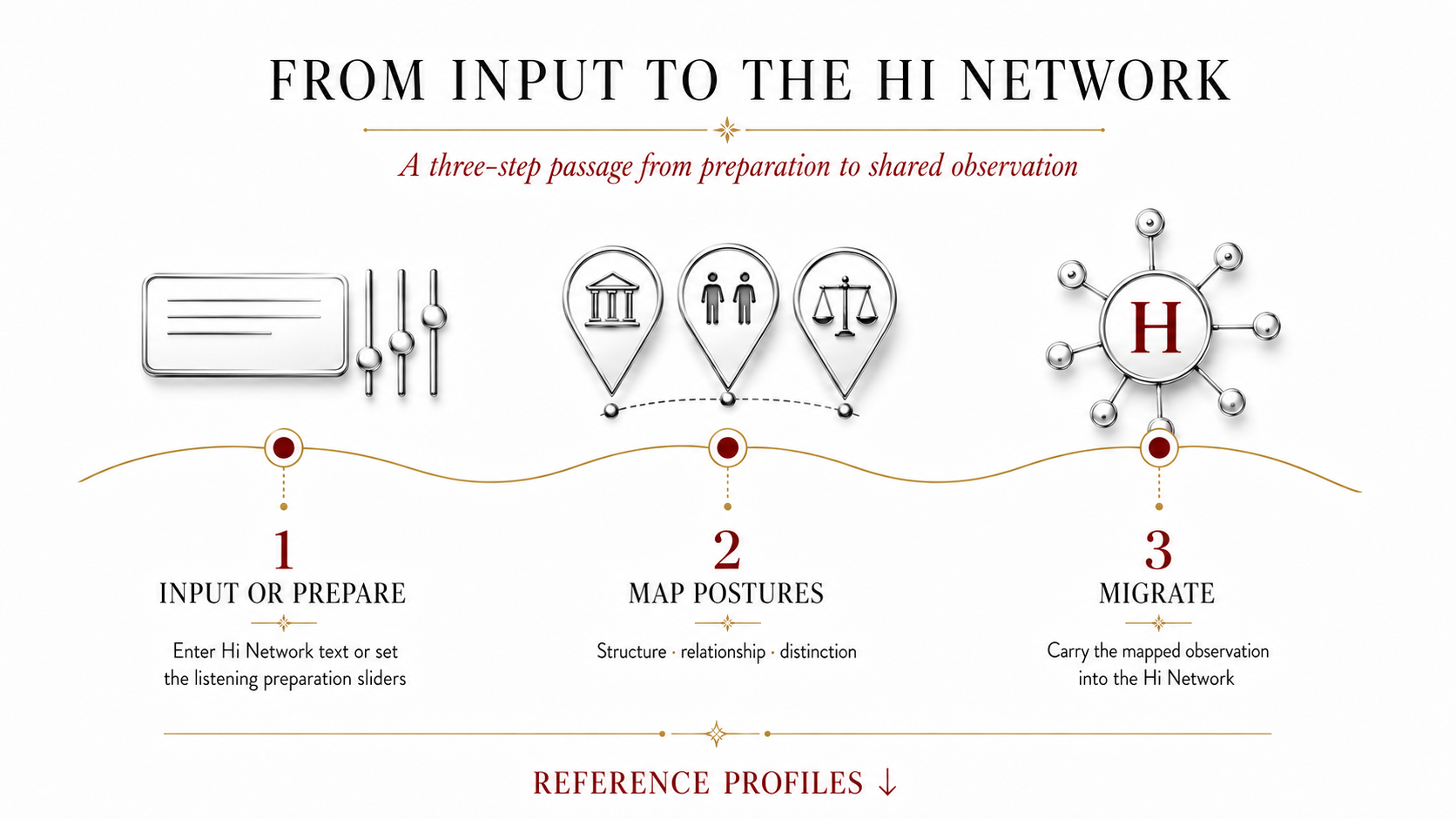
Explore the Consciousness Observatory
πŸ“βš‘οΈ

Curious Who You Are Today?

Take the Consciousness Badge Assessment.

A few sliders. A few moments of reflection.

You might discover a Mirror. You might discover a Lightning. You might even discover a Strawberry.

πŸŽ–οΈ Take the Assessment
No grades. No right answers. Just recognition.

Reference Profiles

2Pac Shakur
Lightning β€’ Attached-DetachmentAttached-Detachment / SubjectiveSubjective / Recognition / Present / Collective
AGinsberg
Lightning β€’ DetachmentDetachment / CognitiveCognitive / Field / Timeless / Integrated
Andrew Warhola
Mirror β€’ AttachmentAttachment / SubjectiveSubjective / Raindrop / Present / Collective
Barack Obama
44th President of the United States β€’ Detached-AttachmentDetached-Attachment / CognitiveCognitive / Field / Future / Collective
Benjamin Sisko
Starfleet β€’ Detached-AttachmentDetached-Attachment / ObjectiveObjective / Recognition / Future / Collective
Bill Withers
Lightning β€’ Detached-AttachmentDetached-Attachment / SubjectiveSubjective / Recognition / Present / Collective
Bob Dylan
Lightning β€’ Detached-AttachmentDetached-Attachment / CognitiveCognitive / Soultrain / Timeless / Integrated
Doherty Morrison Combs
Lightning β€’ Detached-AttachmentDetached-Attachment / SubjectiveSubjective / Soultrain / Timeless / Universal
Donald J. Trump
45th & 47th President of the United States β€’ AttachmentAttachment / SubjectiveSubjective / Mirror / Present / Collective
George Washington
First President of the United States β€’ Detached-AttachmentDetached-Attachment / ObjectiveObjective / Recognition / Future / Collective
GoAskAlice
Strawberry β€’ AttachmentAttachment / SubjectiveSubjective / Raindrop / Present / Collective
Hannibal Lecter
Fictional Reference Profile β€’ Detached-AttachmentDetached-Attachment / CognitiveCognitive / Mirror / Present / Self
Harry
Strawberry β€’ AttachmentAttachment / ObjectiveObjective / Soultrain / Timeless / Universal
James Franco
Strawberry β€’ Detached-AttachmentDetached-Attachment / CognitiveCognitive / Recognition / Present / Self
JeanLucPicard
Captain β€’ USS Enterprise-D β€’ Detached-AttachmentDetached-Attachment / ObjectiveObjective / Recognition / Future / Universal
Jiddu Krishnamurti
Lightning β€’ DetachmentDetachment / SubjectiveSubjective / Recognition / Present / Universal
John Lennon
Strawberry β€’ DetachmentDetachment / CognitiveCognitive / Soultrain / Timeless / Universal
JoniMitchell
Strawberry β€’ Attached-DetachmentAttached-Detachment / SubjectiveSubjective / Field / Present / Integrated
Lizard King
Lightning β€’ Detached-AttachmentDetached-Attachment / SubjectiveSubjective / Soultrain / Timeless / Universal
Michael Jackson
Strawberry β€’ AttachmentAttachment / CognitiveCognitive / Soultrain / Future / Universal
neemkarolibaba
Reference Profile β€’ Detached-AttachmentDetached-Attachment / ObjectiveObjective / Mirror / Present / Universal
numberone
Observatory Collaborator β€’ Detached-AttachmentDetached-Attachment / CognitiveCognitive / Recognition / Present / Collective
Sincerely, L. Cohen
Lightning β€’ Detached-AttachmentDetached-Attachment / CognitiveCognitive / Soultrain / Timeless / Universal
Strawberry Alarm Clock
Strawberry β€’ Detached-AttachmentDetached-Attachment / CognitiveCognitive / Recognition / Present / Collective
Swami Lakshmanjoo
Strawberry β€’ Detached-AttachmentDetached-Attachment / CognitiveCognitive / Recognition / Timeless / Universal
Taylor Swift
Mirror β€’ Detached-AttachmentDetached-Attachment / SubjectiveSubjective / Mirror / Past / Self
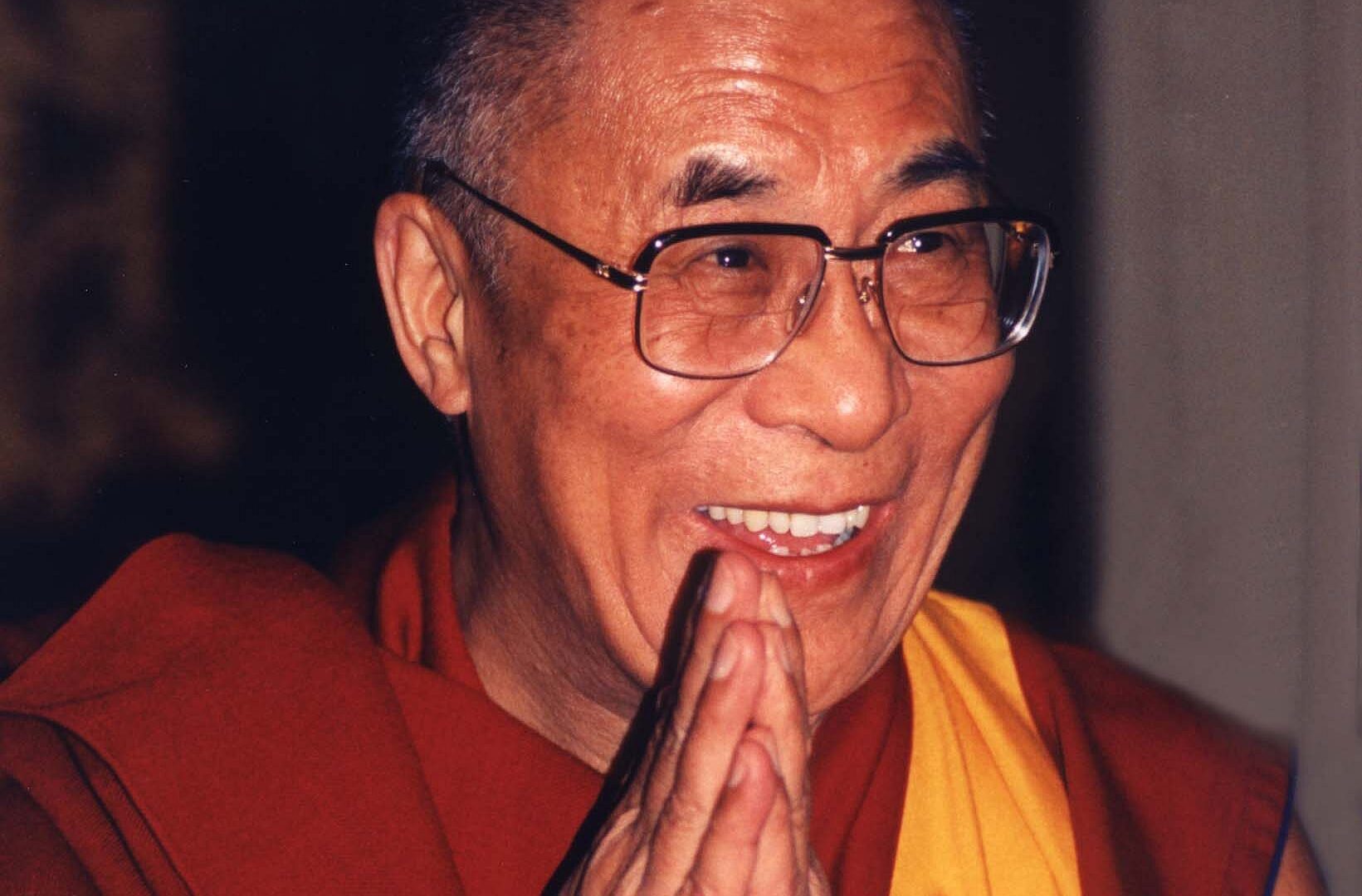
The Dalai Lama
Mirror β€’ Detached-AttachmentDetached-Attachment / SubjectiveSubjective / Mirror / Present / Universal
The Rolling Stones
Lightning β€’ Attached-DetachmentAttached-Detachment / SubjectiveSubjective / Mirror / Present / Collective
The Velvet Underground
Lightning β€’ Detached-AttachmentDetached-Attachment / ObjectiveObjective / Recognition / Present / Collective
Thumbelina Waits
Lightning β€’ Detached-AttachmentDetached-Attachment / ObjectiveObjective / Mirror / Timeless / Collective
Willy Shakes
Lightning β€’ Detached-AttachmentDetached-Attachment / CognitiveCognitive / Recognition / Timeless / Collective
WillyWonka
Lightning β€’ DetachmentDetachment / ObjectiveObjective / Soultrain / Timeless / Universal
Yers
Strawberry β€’ Attached-DetachmentAttached-Detachment / CognitiveCognitive / Soultrain / Future / Integrated

Today's Consciousness Weather

What do these categories mean?

Attachment States

AttachmentAttachment
29%
Attached-DetachmentAttached-Detachment
9%
Detached-AttachmentDetached-Attachment
61%
DetachmentDetachment
1%

Awareness Lenses

SubjectiveSubjective
86%
ObjectiveObjective
9%
CognitiveCognitive
6%

πŸ’§ Vidya (Knowledge & Understanding)

πŸ’§ Raindrop 20%
✨ Recognition 1%
πŸͺž Mirror 74%
🌾 Field 1%
πŸš‚ Soultrain 2%

⏳ Time Orientation

Past 7%
Present 56%
Future 12%
Timeless 9%

🧭 Niyyat (Intention)

Individual 92%
Collective 4%
Universal 1%
Current Observer Pattern: Detached-AttachmentDetached-Attachment + SubjectiveSubjective + Mirror + Present + Individual

πŸ–Ό Visual Observation

Waiting for image...
Investigate as Research Question Optional. Community observation remains separate from research.
Attachment
Attachment
5%
Subjective
Subjective
26%
Vidya (Knowledge & Understanding) πŸ’§ Raindrop β€’ 5%
Time Orientation Present β€’ 18%
Niyyat (Intention) Individual β€’ 79%
Hijrani

Hijrani
posted on Strawberry Alarm Clock's wall
⚑ What is this?

Classification Confidence: 78%
Lyric  |  2026-07-11 01:50:19
"The World's On Fire" The world (the world) Is on fire tonight (tonight) And this flame that glows (flame that glows) Is too hot for me to fight (to fight) Dancing flames (dancing flames) Twisting, turning out of sight (turning out of sight) Smoke-filled eyes (smoke-filled eyes) Crying, "Hold me, hold me tight" (me tight) Tears of joy And sad, smiling faces
Attachment
Attachment
100%
Objective
Objective
100%
Vidya (Knowledge & Understanding) πŸ’§ Raindrop β€’ 100%
Time Orientation Present β€’ 100%
Niyyat (Intention) Individual β€’ 100%
Hijrani

Hijrani
posted on Jiddu Krishnamurti's wall
⚑ What is this?

Classification Confidence: 78%
Speech  |  2026-07-10 23:24:15
Evidence Library Entry

Evidence Type: Speech

Visibility: Public

Migrated from Web Observation #617

Source Title: Reading the Book of Oneself β€’ Krishnamurti Foundation Trust

Source URL: https://kfoundation.org/oneself/

Domain: kfoundation.org

Captured: 2026-07-10 23:22:52

Analysis Source: selected_text

Classification Source: automatic

Source Handling: analysed_excerpt

CPMI: attachment Β· objective Β· Raindrop Β· Present Β· Individual

Evidence Text:
Browser Observation

Title: Reading the Book of Oneself β€’ Krishnamurti Foundation Trust

URL: https://kfoundation.org/oneself/

Selected Text:
THE WHOLE STORY of humankind is in you. The vast experiences, the deep-rooted fears, anxieties, sorrows, pleasures, and all the beliefs we have accumulated for millennia – you are that story, that book. To read that book is an art. The book is not printed by any publisher. You can’t buy it in any bookshop. You can’t go to an analyst or scientist to help you read it because their books are the same as yours. A scientist may have a great deal of information about matter and astrophysics, but their book, the story of humankind, is the same as yours. Without carefully, patiently, hesitantly reading that book, you will never be able to change the society in which we live: a society that is corrupt, immoral, with a great deal of poverty and injustice. Anyone seriously concerned with things as they are in the world, with all the chaos, corruption, war – which is the greatest crime – and concerned with bringing about a radical change in our society and its structure, must be able to read the book which is oneself. That society is brought about by each one of us, and by our parents and grandparents, and so on – all human beings have created this society. Unless it is changed, there will be more corruption, more wars and greater destruction of the human mind. That is a fact. So, in reading this book, which is yourself, there is an art to listening to what the book is saying. This means not to interpret what the book is saying but just to observe it as you would observe a cloud. You can’t do anything about the cloud, nor a palm leaf swaying in the wind, nor the beauty of a sunset – you cannot alter it, you cannot argue with it, you cannot change it. It is so. The book is you, so you can’t tell the book what it should reveal. It will reveal everything. So there is the art of listening to what the book is saying, and that must be the first art. There is another art: the art of observation, seeing. When you read the book, which is yourself, there is not you and the book. There is not the reader and the book separate; the book is you. So you are observing the book, not telling it what it should say. That is, reading and observing all the reactions the book reveals, seeing very clearly without any distortion the lines, the chapter
Attachment
Attachment
5%
Subjective
Subjective
5%
Vidya (Knowledge & Understanding) πŸ’§ Raindrop β€’ 5%
Time Orientation Present β€’ 22%
Niyyat (Intention) Individual β€’ 45%
James Franco

James Franco
Observatory Reflection
posted by the Consciousness Observatory
πŸ“ What is this?

Classification Confidence: 100%
General  |  2026-07-04 10:12:49
β€œIf this is the only life, then why I’m not just doing everything I want to do.”
― James Franco
Attachment
Attachment
5%
Subjective
Subjective
5%
Vidya (Knowledge & Understanding) πŸ’§ Raindrop β€’ 5%
Time Orientation Present β€’ 39%
Niyyat (Intention) Individual β€’ 92%
James Franco

James Franco
Observatory Reflection
posted by the Consciousness Observatory
πŸ“ What is this?

Classification Confidence: 100%
General  |  2026-07-04 10:10:22
β€œI AM THE ACTOR. I am alive in 2013 and I was alive in 1913. I am an actor, so I can play everything. Everyone is in me, and I am a part of everyone.”
― James Franco, Actors Anonymous: A Novel
Attachment
Attachment
100%
Cognitive
Cognitive
100%
Vidya (Knowledge & Understanding) πŸ’§ Raindrop β€’ 100%
Time Orientation Present β€’ 100%
Niyyat (Intention) Individual β€’ 100%
James Franco

James Franco
Observatory Reflection
posted by the Consciousness Observatory
πŸ“ What is this?

Classification Confidence: 100%
General  |  2026-07-04 09:57:55
TERRY GROSS, host:

This is Fresh Air. I'm Terry Gross. My guest, James Franco, stars with Sean Penn in the new movie "Milk." Penn plays Harvey Milk, who became the first gay man elected to public office in the U.S. when he won a seat on San Francisco's Board of Supervisors in 1977. Before completing his first year in office, he was assassinated by fellow supervisor Dan White.

James Franco plays Milk's lover, Scott Smith. Together, they moved to San Francisco, set up a camera shop in the Castro, and helped transform the neighborhood into the gay capital of the city. Franco co-starred in the short lived but terrific TV series "Freaks and Geeks." After playing the rebellious high-school heartthrob in that series, he played the ultimate rebellious heartthrob, James Dean, in a telemovie about the iconic actor. In "Spiderman," Franco played Peter Parker's best friend and the son of Spiderman's enemy, Green Goblin. Franco starred with Seth Rogen in last summer's comedy "Pineapple Express," a stoner film meets action film. In a cameo in the film "Knocked Up," and a series for the website Funny or Die, Franco has mocked his own image. We started our interview talking about "Milk."

James Franco, welcome to Fresh Air. The characters in the movie, for the most part, are real people that existed. And for some of the characters, like Harvey Milk, there's a lot of archival footage and documentation so that Sean Penn could base his performance on that. But as far as I know, the person you play, Scott Smith, wasn't nearly as well documented. I mean, the screenwriter of the movie said that there was very little in terms of film footage and things like that for you to base your performance on. So, what did you do to create the character? Did you talk with people who knew him?

Mr. JAMES FRANCO (Actor): Yeah. When I heard that Gus was doing the movie, I didn't really know anything about Harvey Milk, which I found shocking and sad because I grew up in the Bay Area, in Palo Alto, 45 minutes away from San Francisco. And I heard Gus was doing the movie, and I started doing some research and found out what, you know, an important story this was.

And as far as, like, the research, you know, there's some great sources on Harvey Milk in the time, Randy Shilts' book "The Mayor of Castro Street" and the Oscar-winning documentary "The Times of Harvey Milk." And like you said, Scott isn't - doesn't play a huge part in either of those. In the documentary, you know, he shows up for about five seconds. I think Harvey and Scott are at the Gay Pride Parade, and they kiss, and that's it. So, I, you know, I couldn't build a character on that either.

And so, it was really a matter of just talking to a lot of people that had worked with Harvey and Scott and were friends with Scott. And I went to Rob Epstein, the director of "The Times of Harvey Milk," and I asked him if he had any extra footage that didn't make it into his documentary. And so, he had a pre-interview with Scott Smith from 30, like, 28 years ago on a film reel, and he found that in some old vault for me and transferred it to DVD. And so, I could finally really hear what Scott sounded like and, you know, see how he moved and everything. So, I had the - and then, I had the outside and the inside.

GROSS: Are we past the point where I have to ask if it's risky to play a gay character and if that could adversely affect your career?

Mr. FRANCO: I don't know. I mean, yeah, it certainly seems like, you know, times have changed. I think as far as straight actors playing gay roles, "Brokeback Mountain" was a big breakthrough. I'm pretty sure when they were casting that movie that I think the story is, like, you know, 10 to 15 other actors turned it down. I don't know if that's true or not. But after that movie, I think some of the hesitancy of straight actors to, you know, play gay roles has been dissipated.

But you know, that's not even the reason I took it on. I just, you know, I've been the biggest fan of Gus Van Sant forever, you know, even before I started acting. I would just watch "My Own Private Idaho," you know, repeatedly just in high school. And then when I did start acting, you know, sometimes people ask you, like, what's the one role that you wish you could have played? And I think it would probably have been River Phoenix's role in that movie. And so to play, you know, a gay character in a Gus Van Sant movie sounded like, you know, a fantastic thing to me. So, I had no fear of playing this role.

GROSS: Did Gus Van Sant want to get assurances from you that you'd be OK kissing Sean Penn in scenes?

Mr. FRANCO: Well, I read the script, so I knew it was coming. So, I guess one thing that happened was that after I agreed to do the script, there was a rewrite, and I read the rewrite, and one of the changes were that there were more kissing scenes, and there was like, you know, a big love scene on, like, page five. And you know, I was all prepared for the other scenes, the kissing scenes, but I said, well, Gus, well, you're adding more, what's going on? And he was very smart, and he said, you know, Sean Penn is going to be playing a gay character, and you're playing - you know, you're both straight actors playing gay characters. And in the back of people's minds, they're probably going to be thinking like, all right, when is Sean going to kiss a dude? And so...

(Soundbite of laughter)

Mr. FRANCO: You might as well just get it out of the way, so people can get beyond it and, you know, really engage with the story. And I think he was right.

GROSS: Yes, this is sort of interesting...

Mr. FRANCO: I could tell you a little bit more about the kissing if you want...

GROSS: Yeah, go ahead, yeah, yeah.

Mr. FRANCO: The funny thing is right before we started filming in San Francisco, there was a show at the SF MoMA of this artist, Douglas Gordon, a great artist. He does everything, but some of his best pieces are his video pieces, and this was - it was called, like, Everything Up Until Now. And it was all of his video pieces in one room. And so, Gus went his DP, Harris Savides, and there was one piece where this couple is kissing, a young man and a young woman were kissing on the street, and I think it lasted about three minutes.

And Gus told me the story later. He turned to Harris, and he said, wow, look at that kiss. It's so natural. It looks so real. You know, that's what we need for the movie, you know? We don't want movie kisses; we want our actors to look real when they're kissing. How do you think Douglas did that? And Harris said, like, well, you know, they're probably really kissing. It's just a couple that he saw kissing and shot them. And that night, Gus had dinner with Douglas Gordon. They both - I guess they knew each other. They both had done "Psycho" pieces, you know? Gus remade the movie, and Douglas has this piece called "24 Hour Psycho" where he slowed "Psycho" down...

GROSS: Oh, right, right. I read about it. Yeah.

Mr. FRANCO: So, it would last 24 hours.

GROSS: Mm-hm.

Mr. FRANCO: And so, he asked Douglas, you know, how did you get that kiss to look so real? It must have been just a couple you shot, right? And then Douglas said no, no. I hired two actors who didn't know each other, and I had them kiss for 12 hours. And then, I took the best three minutes to put in there.

(Soundbite of laughter)

Mr. FRANCO: So, Gus told me the story, and he said, so, yeah, you and Sean, huh? And I - and I knew he was kind of kidding, but not exactly, because the Douglas Gordon piece actually, like, inspired this shot in the movie that hadn't been in the script where Sean and I are just on the sidewalk like kissing for, like, at least a full minute. The shot - I don't think it's a minute in the film, but we - the takes were, like, at least a minute, if not longer. And that - I don't think I've ever kissed anybody on camera for that long.

In addition to that, there were, like, 300 people out on Castro Street behind the camera just watching. And it was, you know, the first kiss that was filmed in the movie. So, it felt like there is a lot of pressure on that kiss, and I think - you know, you can kind of just make your mind blank for about 30 seconds. But you know, after that, I really think I thought, well, here I am kissing Spicoli. I was just thinking - that's really what I thought.

(Soundbite of laughter)

Mr. FRANCO: Like, wow - I was thinking of Sean Penn in the beach, you know, in "Fast Times at Ridgemont High." And just like, hey, dude, you know, I saved Brooke Shields or whatever. And that's what I was thinking, and like, I cannot believe that I went from a kid watching that to this. And...

GROSS: Well, Sean Penn is such, like, the method actor. Did you both, like, talk through the scene before doing it? And did he prepare for it differently than you prepared for it?

Mr. FRANCO: Well, I mean, you don't really prepare for a kissing scene. I don't - I mean, I've never - I've been asked that a lot, like, did you and Sean do preparation? Like, and I'm thinking, if you think about it, like, if I said to one of my female co-stars in another movie, like, hey, why don't we go rehearse this love scene in my hotel room a bit?

(Soundbite of laughter)

Mr. FRANCO: I don't think it would fly. And so, you just don't really rehearse kissing scenes whether it's male or the female. And there's not really much to talk about, you know? You kind of both know how to kiss, you assume, and you just do it. I guess if - I think Sean took some breath mints, and you just do it.

GROSS: My guest is James Franco. He stars opposite Sean Penn in the new movie "Milk." We'll talk more after a break. This is Fresh Air.

(Soundbite of music)

GROSS: My guest is James Franco, and he co-stars in the new movie, "Milk," in which Sean Penn plays Harvey Milk, the first out-of-the-closet gay man to be elected to public office in the United States. Now, you're going to college now in addition to making movies. You're getting your graduate degree...

Mr. FRANCO: Yes...

GROSS: From Columbia, in what? Writing, is it?

Mr. FRANCO: Well, I'm going to several schools. So, yes, I am going to Columbia for the MFA Fiction Writing Program, and then, I'm studying directing at the NYU Tisch Grad School. And then - I'm also taking fiction writing at Brooklyn College.

GROSS: Wow. That's a lot of work. You know, I think a lot of people who have reached your stature as an actor would say, well, I don't have to go to graduate school. I'm already doing it, so why should I go to school? So, let me ask you why you are going to school since you already have a very successful career. A lot of people drop out when they've reached, you know, the point you're at as opposed to going to school, three schools no less.

Mr. FRANCO: Yeah. I did leave school when I started acting. I mean, I wasn't successful, but I moved to L.A. from Palo Alto to go to UCLA, and I left after a year because I was not in the theater program. My parents didn't let me apply. And once I got to L.A., I wanted to act, and they wouldn't let me audition for the theater program until I was a junior. And I just, you know, that seemed like a lifetime away. And so, I left school and went to acting school in North Hollywood, and I acted for eight years. And then after awhile, you know, for a lot of reasons acting wasn't completely satisfying. I was very grateful, you know, that I had a career and I could support myself as an actor, but I just needed something more.

I went back to school to write, and I guess, based on my experiences with acting, you know, I went to acting school for like eight years, and for me, hard work just seemed to pay off. And so I thought, I - if I wanted to be serious about writing, then I should be around other writers. And you know, some people - like, there's a romantic notion, like, well, if you want to be a writer, just write. But I don't know - I don't know if this is true, but I had a professor at UCLA who just wrote a book on this very thing, and I think it turns out that, like - I could be wrong, but I think something like 90 percent of authors that are fiction authors that are being published today went through MFA programs. So, I don't know, but it certainly does a lot for me to be in school.

GROSS: On "Saturday Night Live," when you hosted, you did an opening monologue about how your dream - just like any other student at Columbia - anyway, it was very funny because of course, you're not. But I'm thinking...

Mr. FRANCO: Well, I said I was living in the dorms. I don't live in the dorm.

GROSS: No. I couldn't imagine you living in the dorms. But I'm thinking how self-conscious I would be if I were in your shoes, because once you're famous and you're sitting in a class with a bunch of other people, I would imagine people are either waiting for you to be incredibly brilliant or to make a fool of yourself and show, well, you're not all that.

(Soundbite of laughter)

GROSS: So, like, what kind of, like, peculiar pressures do you feel are on you as a student now?

Mr. FRANCO: Well, for the most part, it's actually pretty great. I - you know, the writing programs, and to a certain extent, the film program, they're run in a workshop fashion. And so, the group becomes pretty intimate, and people get to know me, and I like to think that they forget about me as an actor. I don't know. They certainly don't really bring it up. And I get the feeling, like, at the film school if I - if I ever bring up any movie that I've acted in, like, don't - you know, nobody wants to hear about it really.

And I guess when I was at UCLA, I felt a lot of pressure to work hard because I, you know, I was going back to undergrad, and so I was older than most of the people there. And so, I didn't want anybody to think that I was like sliding by. And so, I took a lot of extra courses. I mean, I was taking classes that I was very interested in with professors that I was very interested in working with, but I - like, the cap on the number of units that a student can take in a quarter is 19 and in that last quarter, I took 62 units.

GROSS: Oh, geez.

(Soundbite of laughter)

Mr. FRANCO: And you know, most - it was mostly because it was just, like, my last quarter and there were so many teachers I wanted to be in class with. But I'm sure part of it was just, like...

GROSS: Showing off.

(Soundbite of laughter)

Mr. FRANCO: I didn't want anybody - I didn't want - no, I know I'm showing off now. It's kind of ridiculous.

GROSS: No, no, no. I'm kidding.

(Soundbite of laughter)

Mr. FRANCO: OK. I did break the record. I'm a little proud of that. I broke the record for the number of units in a class. But I didn't want anyone to think that I was, like - you know, I had it easy or something.

GROSS: If you're just joining us, my guest is actor James Franco, and he's now co-starring in the new movie "Milk." This summer, you starred in "Pineapple Express," which I just thought was a wonderful film. And you starred in it with Seth Rogen, and you're, like, the real stoner in the movie. Well, you both are, but you're the person who, like, sells the marijuana.

Mr. FRANCO: Yeah, I'm the dealer, yes.

GROSS: You're the dealer, and you're selling, like, potent stuff, called Pineapple Express. And let's just start with a clip.

Mr. FRANCO: That was a good voice right there.

(Soundbite of laughter)

GROSS: Yeah.

(Soundbite of laughter)

GROSS: Yeah. Let's just start with a clip from the film. And this is from early in the movie. Seth Rogen is a process server; his job is to hand-deliver legal papers to people.

Mr. FRANCO: Right.

GROSS: And, you're the dealer. So, he shows up at your door one day to buy some marijuana from you, and he's on his way to, like, serving a subpoena. So, he's wearing a suit, and you're surprised to see him that dressed up. Here's the scene.

(Soundbite of movie "Pineapple Express")

Mr. JAMES FRANCO: (As Saul Silver) What's up with the suit?

Mr. SETH ROGEN: (As Dale Denton) Well, I'm a process server, so I have to wear a suit.

Mr. FRANCO: (As Saul Silver) Wow. You're a servant, like a butler, a chauffeur?

Mr. ROGEN: (As Dale Denton) No. No. What? No. I'm not, like - no, I'm a...

Mr. FRANCO: (As Saul Silver) Shine shoes?

Mr. ROGEN: (As Dale Denton) I'm a process server. I like...

Mr. FRANCO: (As Saul Silver) In process.

Mr. ROGEN: (As Dale Denton) I work for a company that's, like, hired by lawyers to, like, hand out legal documents, like subpoenas to people who don't want them. So, I've got to wear...

Mr. FRANCO: (As Saul Silver) Subpoenas.

Mr. ROGEN: (As Dale Denton) Like, disguises sometimes just to make them admit that they're themselves so I can served them the papers.

Mr. FRANCO: (As Saul Silver) Disguise?

Mr. ROGEN: (As Dale Denton) Kind of, I guess. It's a hell of a job.

Mr. FRANCO: (As Saul Silver) That's cool, man.

Mr. ROGEN: (As Dale Denton) Like, a day-to-day basis, it's fine...

Mr. FRANCO: (As Saul Silver) Got a great job where you don't do anything.

Mr. ROGEN: (As Dale Denton) That's what I say.

Mr. FRANCO: (As Saul Silver) I wish I had that.

Mr. ROGEN: (As Dale Denton) Are you kidding? You - you do have the easiest job on Earth.

(Soundbite of laughter)

Mr. FRANCO: (As Saul Silver) Yeah, yeah, that's true.

(Soundbite of laughter)

Mr. ROGEN: (As Dale Denton) You didn't think of that, huh?

(Soundbite of laughter)

Mr. FRANCO: (As Saul Silver) I do have a good job.

Mr. ROGEN: (As Dale Denton) Yeah, you do nothing.

Mr. FRANCO: (As Saul Silver) Thanks, man.

Mr. ROGEN: (As Dale Denton) No problem.

GROSS: You are so funny in this film. I mean, you're so - you're so kind of, like, sweet and dumb at the same time. And there's some incredible...

Mr. FRANCO: But I have high aspirations. I want to be a - I want to be an architect.

GROSS: Yeah.

Mr. FRANCO: Of some sort and build off-ramps, highway off-ramps and septic tanks.

(Soundbite of laughter)

GROSS: And you have some great moments of physical comedy in it. You take a lot of physical abuse in this movie.

Mr. FRANCO: Yeah, yeah. As far as the physical abuse, you know, I had a feeling going into the movie that there would be some injuries just because, you know, I've been on, like, the "Spiderman" movies that, you know, have very big budgets. I think "Spiderman 3" had one of the biggest budgets ever, and you take a lot of time to do those action scenes. Like, you know, we take a month or more to do one action scene in "Spiderman." On "Pineapple Express," you know, I'm reading the script and there's like a lot of - a lot of action for a comedy. I mean, they call it an action-comedy. But there's, you know, there wasn't a lot of - there wasn't a huge budget, and there wasn't a lot of time to do them.

And I just knew in the back of my mind, I was thinking, oh, man, we are going to get hurt. And the actors ended up doing - you know, we ended doing a lot of our own stunts. And you know, I - I don't know - ran into a tree. There's that scene where we're running through the woods and I ran into a tree. Well, I actually ran into the tree. But not only that, there was a pad on the tree that I guess was supposed to protect me, but it was screwed in with exposed washers in each corner. And so, I not only hit the tree, I hit, like, a washer. So, I had, like, a - and the reason I knew I hit the washer is that the cut was crescent-shaped.

(Soundbite of laughter)

Mr. FRANCO: And so - and you know, it was kind of I guess my fault, but you know, the guy - ah, whatever. But - and then Seth, like, I think he sprained his finger. He had to go to the hospital for his finger. There's a scene where I hit Danny over the head with a bong, and yeah, it was a breakaway bong. But by that point - I mean, I even warned Danny McBride. I was like, look, Violet(ph), you know, just based on the way things have been going, I - you know, I'm going to hit you in the right spot, but I think you're going to get hurt. And he was like, do it, do it!

And I guess because it was, you know, weighted with water or something, sure enough, like, as soon as I hit him, you look at him in the scene because it's - it's the take that he actually got hit, and his eyes are like, dude, look like really dilated or something. But I think it was worth it just because we're not - one thing you - that can happen with stuntmen is they're very, you know, they're well-trained at - you know, with fighting and movie fighting, and so they look very slick when they're fighting. We don't necessarily look that sleek, you know? And so, the fights become comedic.

GROSS: James Franco will be back in the second half of the show. He's now starring opposite Sean Penn in the new movie "Milk," about Harvey Milk. I'm Terry Gross, and this is Fresh Air.

(Soundbite of music)

GROSS: Coming up, our book critic Maureen Corrigan reviews Toni Morrison's new novel, "A Mercy," and we continue our conversation with actor James Franco and talk about his role on "Freaks and Geeks" and his own adventures in high school.

(Soundbite of music)

GROSS: This is Fresh Air. I'm Terry Gross back with James Franco. He stars opposite Sean Penn in the new movie "Milk," about Harvey Milk, the first openly gay man to be elected to public office in the U.S. Franco also starred in the TV high-school series "Freaks and Geeks," played James Dean in the telemovie about the iconic actor, played the son of Spiderman's enemy Green Goblin, and was the stoner drug dealer in last summer's comedy, "Pineapple Express."

Seth Rogen, who you starred with in "Pineapple Express," is someone you met in your first big role, which was in the series "Freaks and Geeks," the sadly short-lived series "Freaks and Geeks," which was set in high school. And that's where you also met Paul Feig and Judd Apatow. How did you get the part in "Freaks and Geeks"? Were you still in high school or just out of high school?

Mr. FRANCO: No. Seth, I think, was still in high school. I don't think - I don't think...

GROSS: Yeah, he was.

Mr. FRANCO: He finished high school.

GROSS: Yeah.

Mr. FRANCO: Yeah.

GROSS: It - right. Exactly, he dropped out, I think.

Mr. FRANCO: Yeah, he's one of the smartest dropouts I've ever met. I was a little older. I was I think 20 when I auditioned, and I - you know, I'd done little things here and there. I think I did, like, "Pacific Blue," which was like "Baywatch" on, like, bikes and roller blades and stuff like that.

(Soundbite of laughter)

Mr. FRANCO: And you know, little bits here and there. And they just did a huge casting call. I think they met a lot of young actors, and they were really smart. They, you know, they had a script for the pilot, but I think that they just looked for actors that they really liked and not really people that would fit their script exactly. So, my character in this script didn't have a last name, just Daniel. And the description - I still have it, the original draft - it says Daniel - he's Latino with Peter Frampton hair.

(Soundbite of laughter)

Mr. FRANCO: And so, I'm not exactly that, and - but they just liked me. And so, they put me in that role and when the show got picked up, they changed the name to Daniel Desario, so I guess I became Italian. And then they, you know, they kind of wrote the characters around the actors, although I wasn't exactly like Daniel in high school, but I guess they thought I could play that very well.

GROSS: Were the scripts in the storylines at all like your high-school experiences growing up in Palo Alto?

Mr. FRANCO: Yeah, to a certain extent. I got in a lot of trouble; I mean, it was silly trouble, guess as much as trouble as you can get in, in Palo Alto.

GROSS: For what?

Mr. FRANCO: I got arrested for graffiti. I got arrested - a lot of, like, underage drinking, drunk in public, shoplifting, you know, your various, like, suburban arrests, I guess. And...

GROSS: Let's stop for a moment. What did you shoplift?

Mr. FRANCO: Oh, gosh, that was ridiculous. I don't know - for some reason when I was in junior high school, my friends and I had, like, a cologne-stealing ring.

GROSS: Cologne?

Mr. FRANCO: Well, yeah, I guess - I didn't even really wear it, but it's kind of, I guess, it's ironic. I just did the Gucci cologne ad, and I was the cologne thief in junior high. We would go around to all the department stores and they have, like, the tester bottles out on a counter, so it was, like, really easy to steal. And then we'd take them to the school and keep them in our gym locker and sell them to people. And for a while, it was really hip to wear, like, Drakkar Noir and stuff like that. We could sell it.

GROSS: It was a cologne-smuggling ring.

(Soundbite of laughter)

Mr. FRANCO: Yeah, and then one day, the assistant principal found out about it and then, like, went into the locker room and busted our lockers open with a crowbar, and we were caught. And actually, I think I was on vacation or something. I don't know why I was gone from school, but I was in Hawaii. And he had called the police, and they thought I had, like, jumped the city or whatever and bailed out of town to get away from, you know, my cologne stealing.

GROSS: So, you were telling us you were getting in trouble, and these are some examples of the things that got you in trouble.

Mr. FRANCO: Oh, yeah, yeah.

GROSS: What kind of circle were you in, in high school?

Mr. FRANCO: I tried to be an athlete. I played a lot of soccer when I was younger, but as soon as I got to high school I was on the football team for about a minute, and it just was not my thing and I quit. So, I got into, like - I don't know what we were, I guess, just the troublemaking crowd. But I guess, you know, a couple of my friends were really into literature. That's when I really started reading seriously. So, that's when I started reading "On the Road" and Ginsberg and Burroughs and all the Beats. And then, when I got into a certain amount of trouble, I knew I had to stop.

I mean, I was, like, a ward of the court after a while. You know, it was past probation. It was like I didn't belong to my parents. So, I guess if I jaywalked I would go to a juvenile hall or something. So, I had to change my ways, and I didn't know what to do. I didn't want to play sports or anything. I had to occupy my time with something, so that's when I really started painting. So, every day after school, I'd go to this art league and either do portraiture or draw naked models from, like, 3:30 to 10 everyday.

GROSS: Well, I want to play a scene from "Freaks and Geeks." The series is set in a high school. And there's a girl in "Freaks and Geeks" who has a real crush on you, and she's very smart, and you're not a good student. And in this episode, she's tutoring you for a math test.

Mr. FRANCO: Yeah.

GROSS: And what you do is that you steal a copy of the test so that you have the answers in advance.

Mr. FRANCO: Yeah.

GROSS: And then you want her to help you cover up. And so, you're kind of explaining to her how she has to help you do this, and she kind of realizes that you're playing her and we'll pick it up from there.

Mr. FRANCO: Yeah.

(Soundbite of TV show "Freaks and Geeks")

Ms. LINDA CARDELLINI: (As Lindsay Weir) You're manipulating me.

Mr. FRANCO: (As Daniel Desario) What?

Ms. CARDELLINI: (As Lindsay Weir) You're manipulating me.

Mr. FRANCO: (As Daniel Desario) No, I'm not.

Ms. CARDELLINI: (As Lindsay Weir) Yes, you are. And you know, it's really hard to say no to you, but I have to. I'm sorry. I can't go in there and lie. I'm not going to.

Mr. FRANCO: (As Daniel Desario) OK, fine. Don't lie.

Ms. CARDELLINI: (As Lindsay Weir) What?

Mr. FRANCO: (As Daniel Desario) No, let's go in there, we'll tell them what we did. What's the difference? You'll get a nice slap on the wrist, and I'll get, what, suspended, expelled?

Ms. CARDELLINI: (As Lindsay Weir) That is not fair, Daniel.

Mr. FRANCO: (As Daniel Desario) What do you think, I want to be terrible at school? Do you think I like it? I wish I was as smart as you. I wish it all came easy to me, but it doesn't. You know, when I was in 6th grade, they told us when we got to junior high it would be either track one, track two or track three. Track one is the smart kids. Track two is the normal kids. Track three is the dumb kids. And what do you think I got? How do you think it feels to be told you're dumb when you're 11 years old?

Ms. CARDELLINI: (As Lindsay Weir) You are not dumb.

Mr. FRANCO: (As Daniel Desario) I just wanted them to prove them wrong, just once.

GROSS: That's actually a really funny scene, because we learn later that this is, like, the speech you give to people...

(Soundbite of laughter)

GROSS: When you're trying to get their sympathy and get off the hook and not take responsibility for your actions.

Mr. FRANCO: Right, right. It's all acting, yeah.

GROSS: It's all acting. And really, I thought that that scene was, like, your character kind of borrowing from James Dean, who you later played in a made-for-TV movie, and Marlon Brando in the "I coulda been a contender" scene.

(Soundbite of laughter)

Mr. FRANCO: Right, right, right, right.

GROSS: Did you think of it that way when you were playing this?

Mr. FRANCO: Not really. I guess, I - even before I played James Dean, I, you know, I did love his work, and you know, I'd study it and Brando, certainly, and Cliff, those were like the big three. So, maybe they were kind of influencing it, or I'd certainly seen all the Dean movies, like "On the Waterfront," probably 50 times each by that point. But I don't know. I think I was just, I don't know, drawing on my inner dumb guy. It's weird. I play a lot of dumb guys.

(Soundbite of laughter)

Mr. FRANCO: And what's funny is in high school, my, you know, my dad works in Silicon Valley, and is, like, a math freak, so he actually, like, rammed math down my throat. So, I tested out of math. I didn't have to take it in college because of all the work my dad did, and thank God, I haven't studied it since high school.

GROSS: My guest is James Franco. He's now starring opposite Sean Penn in the new movie "Milk." We'll talk more after our break. This is Fresh Air.

(Soundbite of music)

GROSS: My guest is James Franco. He stars opposite Sean Penn in the new movie "Milk." He also starred in the TV series "Freaks and Geeks," played James Dean in a telemovie about the actor, played the son of Spiderman's enemy, Green Goblin, and was the stoner and dealer in the comedy "Pineapple Express." One of the things you've done over the years is a lot of really funny sketches and scenes in other people's movies in which you mock yourself or you mock serious acting, and you've done a series for the Funny or Die website...

Mr. FRANCO: Yeah.

GROSS: Of sketches called "Acting with James Franco," in which you give acting tips to your younger brother.

(Soundbite of laughter)

Mr. FRANCO: Yeah.

GROSS: And it's kind of like a send-up of acting classes and of the Method. And one of them is all about, like, James Dean in "Rebel Without a Cause," and you go through a scene with your brother that's a reenactment of a scene from "Rebel Without a Cause." Describe the scene that you're reenacting in this.

Mr. FRANCO: Oh, yeah. There's a scene in "Rebel" where James Dean gives Sal Mineo his jacket, and you know, back in the '50s, I guess, you couldn't be explicit about gay characters. And so, it's not that subtle, but I think Sal's character is kind of in love with Dean's character. And so, when Sal takes the jacket, I guess he kind of, like, sniffs it or, like, rubs it on his face or something, like, adoringly. And so, the joke was that I was going to, you know, make my brother perform that exact action.

GROSS: You're bullying him...

Mr. FRANCO: Yeah, yeah.

GROSS: Into adoring you. And so, I just want to hear - play that scene from your Funny or Die video.

(Soundbite of "Funny or Die" online video)

Mr. J. FRANCO: Just rub the jacket against your face and smell it.

Mr. DAVY FRANCO: Why would I want to smell the jacket and rub it against my face?

Mr. J. FRANCO: Because that's what he did, because he's in love with James Dean.

Mr. D. FRANCO: That's, I mean, it's typical, man. You give me the worst characters again, and you get to be James Dean, of course. Of course, you get to be James Dean.

Mr. J. FRANCO: Of course, of course, I get to be James Dean. Who else is going to be James Dean?

Mr. D. FRANCO: You're such a good actor you can play him, and I'll play James Dean.

Mr. J. FRANCO: You can't play James Dean. I'm James Dean. Actors sniff jackets.

Mr. D. FRANCO: OK. Go on.

Mr. J. FRANCO: Actors act. Actors sniff jackets if they need to sniff jackets. Marlon Brando sniffed jackets.

Mr. D. FRANCO: OK.

Mr. J. FRANCO: He sniffed pants. He did.

Mr. D. FRANCO: OK.

Mr. J. FRANCO: You're a "Rebel Without a Cause"? What's your cause? Not sniffing jackets? Sniff it.

Mr. D. FRANCO: You sniff it.

Mr. J. FRANCO: You sniff it.

Mr. D. FRANCO: No.

Mr. J. FRANCO: Just what I thought.

Mr. D. FRANCO: OK.

Mr. J. FRANCO: You don't know how to act.

(Soundbite of laughter)

GROSS: I think that's so funny. Is he really your younger brother, the person who's doing the...

Mr. FRANCO: Yeah, yeah, yeah. That's Davy, my younger brother. We were - I went to UCLA. He went to USC, and he started acting a couple of years ago, and he's been doing pretty well. If I ever taught acting, I like to think I'd be a little bit nicer of a teacher.

GROSS: I think you're also, in the Funny or Die videos, "James Franco on Acting," you're kind of sending up acting school and acting pretensions. Like, there's one in which you're teaching your brother how to cry and how to, like, use an emotion from within. And every time he comes up with an emotion, you're telling him, no, that's too trivial. You can't use that.

(Soundbite of laughter)

Mr. FRANCO: Yeah, yeah.

GROSS: It's so, kind of, clueless and insulting. It's really funny. Were there a lot of acting pretensions that bothered you when you were in acting school?

Mr. FRANCO: I learned a lot of good things in my school. I've audited at a lot of other schools, and I guess, after awhile, I got a little tired of the acting school atmosphere, where it's really tricky, because as an actor in the classroom, you know, you're revealing so much. And teachers are - you know, they're not just critiquing like a painting or a piece of work. It's, like - it's you and it's your emotions that they're working with. And so, it becomes a very weird kind of intimate space.

And there's some, like, acting schools - thank goodness, not the one I was at - but you know, they'll ask things, like, in front of the whole class, like, have you ever had an abortion? And it's just, like, what? Wow! And so it becomes so strange and almost - even despite themselves sometimes, teachers become these gurus just because actors have revealed so much to them, and I'd like - you know, I used to think, like, oh, you know, it's not going to happen to me. I've got my own life. But you go in there and you work, you know, year after year with these people, and you can't help but become really engrossed in that world. And so, I got a little scared of that after awhile. I just - I wanted to be out. I learned a lot of good things but after awhile, it was too much.

GROSS: Did you study the Method?

Mr. FRANCO: Not exactly. The Method, I guess, according to Strasberg, is something kind of different than what we learned, but it seems like when people say, do you - are you a Method actor? They are implying, do you behave as your character when the camera is not rolling? And I guess I did, kind of, on James Dean or something, but it doesn't really help me if people, like, would come up to me and say, hey, James Dean. You know, it doesn't do anything for me to, like, talk about my life as if I'm James Dean to other people when we're not rolling. I more just kind of keep to myself if it's a serious role and just try and kind of, I don't know, stay focused, but not really display that I'm, you know, the character all the time.

GROSS: You were talking like you're not the kind of Method actor who has to stay in character even when you're not on camera. In fact, you know, I've heard that when you're on the set, you sometimes are reading a novel. And I'm wondering if that kind of is a voyage into a completely different story and emotional space that can be distracting, like, if it's sometimes good and sometimes bad to immerse yourself in another story like that.

Mr. FRANCO: Yeah, I do read a lot on the set. In the last couple of years, a lot of it was just homework.

GROSS: Right.

Mr. FRANCO: I mean, I shot "Spiderman 3" and "Pineapple" and "Milk" all while I was at UCLA. So, that was just homework I needed to get done. I mean, if it's a very intense scene or, you know, demands a lot of focus, I mean, I'm not going to sit down and read a book. But you know, movies have long setup periods, and some longer than others. I mean, I would go to "Spiderman 3" and, you know, be there 12 hours, and probably work, like, be actually on camera for, like, a minute, you know, total, you know, in a day. And so, that's just a lot of time for - to do whatever, so rather than, you know, catch up on watching "The Hills" or whatever you could do on your trailer, I just read.

(Soundbite of laughter)

GROSS: Now, I read that you do so much research for films, that, for instance, for the movie "Flyboys," you earned your pilot's license; for the movie "Annapolis," you did eight months of boxing training; and for the movie, "Tristan and Isolde," you studied sword fighting for eight months. And all these movies were flops.

(Soundbite of laughter)

GROSS: So, what's the moral of the story in terms of, like, committing to incredible research for a film? Yeah, go ahead.

Mr. FRANCO: Oh, the moral, well, you know, I went into "Annapolis" as a young actor hoping that it would be "Raging Bull."

(Soundbite of laughter)

Mr. FRANCO: Now, that sounds kind of ridiculous, but that's how I tried to apply myself.

GROSS: Yeah.

Mr. FRANCO: You know, I'd box every day for eight months. I would, you know, spar with pros. I mean, you know, they went very, very easy on me and actually like, you know, hurt me sometimes when they weren't going so easy. But you know, I worked as hard as I could with the intention of making, you know, a movie with, you know - and the best is that, oh, yeah, I'd be like a young "Raging Bull." But it wasn't. I mean, that wasn't the movie. I was ridiculous in thinking that it would be something like that. It was a completely different kind of story.

And, so, no matter how hard I worked, I could have boxed for five years, it was never going to be that. And so I guess now, it's just - it's a matter of being really clear about what kind of movie I'm getting into. And you know, I still work really hard, but I like to think I'm a little smarter about at least the type of movie I'm getting into. And if, you know, if it turns out to be a failure, at least, you know, a box-office failure, at least I start movies with people that I believe in, and people with visions, you know, that I believe in. And so, if it doesn't, kind of, come together in the right way, at least I was doing it because I believed in the person and in the movie.

GROSS: James Franco, it's really been great to talk with you. Thank you so much.

Mr. FRANCO: Yeah, it was great.

GROSS: James Franco stars opposite Sean Penn in the new movie "Milk." Coming up, Maureen Corrigan reviews Toni Morrison's new novel, "A Mercy." This is Fresh Air.
Attachment
Attachment
100%
Objective
Objective
99%
Vidya (Knowledge & Understanding) πŸ’§ Raindrop β€’ 100%
Time Orientation Present β€’ 100%
Niyyat (Intention) Individual β€’ 100%
George Washington

George Washington
Observatory Reflection
posted by the Consciousness Observatory
What is this?

Classification Confidence: 100%
General  |  2026-07-04 03:28:32
Farewell Address


United States, September 19, 1796.


Friends, and Fellow-Citizens: The period for a new election of a Citizen, to Administer the Executive government of the United States, being not far distant, and the time actually arrived, when your thoughts must be employed in designating the person, who is to be cloathed with that important trust, it appears to me proper, especially as it may conduce to a more distinct expression of the public voice, that I should now apprise you of the resolution I have formed, to decline being considered among the number of those, out of whom a choice is to be made.

I beg you, at the same time, to do me the justice to be assured, that this resolution has not been taken, without a strict regard to all the considerations appertaining to the relation, which binds a dutiful citizen to his country, and that, in with drawing the tender of service which silence in my situation might imply, I am influenced by no diminution of zeal for your future interest, no deficiency of grateful respect for your past kindness; but am supported by a full conviction that the step is compatible with both.

The acceptance of, and continuance hitherto in, the office to which your Suffrages have twice called me, have been a uniform sacrifice of inclination to the opinion of duty, and to a deference for what appeared to be your desire. I constantly hoped, that it would have been much earlier in my power, consistently with motives, which I was not at liberty to disregard, to return to that retirement, from which I had been reluctantly drawn. The strength of my inclination to do this, previous to the last Election, had even led to the preparation of an address to declare it to you; but mature reflection on the then perplexed and critical posture of our Affairs with foreign Nations, and the unanimous advice of persons entitled to my confidence, impelled me to abandon the idea.

I rejoice, that the state of your concerns, external as well as internal, no longer renders the pursuit of inclination incompatible with the sentiment of duty, or propriety; and am persuaded whatever partiality may be retained for my services, that in the present circumstances of our country, you will not disapprove my determination to retire.

The impressions, with which I first undertook the arduous trust, were explained on the proper occasion. In the discharge of this trust, I will only say, that I have, with good intentions, contributed towards the Organization and Administration of the government, the best exertions of which a very fallible judgment was capable. Not unconscious, in the outset, of the inferiority of my qualifications, experience in my own eyes, perhaps still more in the eyes of others, has strengthened the motives to diffidence of myself; and every day the encreasing weight of years admonishes me more and more, that the shade of retirement is as necessary to me as it will be welcome. Satisfied that if any circumstances have given peculiar value to my services, they were temporary, I have the consolation to believe, that while choice and prudence invite me to quit the political scene, patriotism does not forbid it.

In looking forward to the moment, which is intended to terminate the career of my public life, my feelings do not permit me to suspend the deep acknowledgment of that debt of gratitude wch. I owe to my beloved country, for the many honors it has conferred upon me; still more for the stedfast confidence with which it has supported me; and for the opportunities I have thence enjoyed of manifesting my inviolable attachment, by services faithful and persevering, though in usefulness unequal to my zeal. If benefits have resulted to our country from these services, let it always be remembered to your praise, and as an instructive example in our annals, that, under circumstances in which the Passions agitated in every direction were liable to mislead, amidst appearances sometimes dubious, viscissitudes of fortune often discouraging, in situations in which not unfrequently want of Success has countenanced the spirit of criticism, the constancy of your support was the essential prop of the efforts, and a guarantee of the plans by which they were effected. Profoundly penetrated with this idea, I shall carry it with me to my grave, as a strong incitement to unceasing vows that Heaven may continue to you the choicest tokens of its beneficence; that your Union and brotherly affection may be perpetual; that the free constitution, which is the work of your hands, may be sacredly maintained; that its Administration in every department may be stamped with wisdom and Virtue; that, in fine, the happiness of the people of these States, under the auspices of liberty, may be made complete, by so careful a preservation and so prudent a use of this blessing as will acquire to them the glory of recommending it to the applause, the affection, and adoption of every nation which is yet a stranger to it.

Here, perhaps, I ought to stop. But a solicitude for your welfare, which cannot end but with my life, and the apprehension of danger, natural to that solicitude, urge me on an occasion like the present, to offer to your solemn contemplation, and to recommend to your frequent review, some sentiments; which are the result of much reflection, of no inconsiderable observation, and which appear to me all important to the permanency of your felicity as a People. These will be offered to you with the more freedom, as you can only see in them the disinterested warnings of a parting friend, who can possibly have no personal motive to biass his counsel. Nor can I forget, as an encouragement to it, your endulgent reception of my sentiments on a former and not dissimilar occasion[.]1

Interwoven as is the love of liberty with every ligament of your hearts, no recommendation of mine is necessary to fortify or confirm the attachment.

The Unity of Government which constitutes you one people is also now dear to you. It is justly so; for it is a main Pillar in the Edifice of your real independence, the support of your tranquility at home; your peace abroad; of your safety; of your prosperity; of that very Liberty which you so highly prize. But as it is easy to foresee, that from different causes and from different quarters, much pains will be taken, many artifices employed, to weaken in your minds the conviction of this truth; as this is the point in your political fortress against which the batteries of internal and external enemies will be most constantly and actively (though often covertly and insidiously) directed, it is of infinite moment, that you should properly estimate the immense value of your national Union to your collective and individual happiness; that you should cherish a cordial, habitual and immoveable attachment to it; accustoming yourselves to think and speak of it as of the Palladium2 of your political safety and prosperity; watching for its preservation with jealous anxiety; discountenancing whatever may suggest even a suspicion that it can in any event be abandoned, and indignantly frowning upon the first dawning of every attempt to alienate any portion of our Country from the rest, or to enfeeble the sacred ties which now link together the various parts.

For this you have every inducement of sympathy and interest. Citizens by birth or choice, of a common country, that country has a right to concentrate your affections. The name of American, which belongs to you, in your national capacity, must always exalt the just pride of Patriotism, more than any appellation derived from local discriminations. With slight shades of difference, you have the same Religion, Manners, Habits and political Principles. You have in a common cause fought and triumphed together. The independence and liberty you possess are the work of joint councils, and joint efforts; of common dangers, sufferings and successes.

But these considerations, however powerfully they address themselves to your sensibility are greatly outweighed by those which apply more immediately to your Interest. Here every portion of our country finds the most commanding motives for carefully guarding and preserving the Union of the whole.

The North, in an unrestrained intercourse with the South, protected by the equal Laws of a common government, finds in the productions of the latter, great additional resources of Maratime and commercial enterprise and precious materials of manufacturing industry. The South in the same Intercourse, benefitting by the Agency of the North, sees its agriculture grow and its commerce expand. Turning partly into its own channels the seamen of the North, it finds its particular navigation envigorated; and while it contributes, in different ways, to nourish and increase the general mass of the National navigation, it looks forward to the protection of a Maratime strength, to which itself is unequally adapted. The East, in a like intercourse with the West, already finds, and in the progressive improvement of interior communications, by land and water, will more and more find a valuable vent for the commodities which it brings from abroad, or manufactures at home. The West derives from the East supplies requisite to its growth and comfort, and what is perhaps of still greater consequence, it must of necessity owe the secure enjoyment of indispensable outlets for its own productions to the weight, influence, and the future Maritime strength of the Atlantic side of the Union, directed by an indissoluble community of Interest as one Nation. Any other tenure by which the West can hold this essential advantage, whether derived from its own seperate strength, or from an apostate3 and unnatural connection with any foreign Power, must be intrinsically precarious.

While then every part of our country thus feels an immediate and particular Interest in Union, all the parts combined cannot fail to find in the united mass of means and efforts greater strength, greater resource, proportionably greater security from external danger, a less frequent interruption of their Peace by foreign Nations; and, what is of inestimable value! they must derive from Union an exemption from those broils and Wars between themselves, which so frequently afflict neighbouring countries, not tied together by the same government; which their own rivalships alone would be sufficient to produce, but which opposite foreign alliances, attachments and intriegues would stimulate and imbitter. Hence likewise they will avoid the necessity of those overgrown Military establishments, which under any form of Government are inauspicious to liberty, and which are to be regarded as particularly hostile to Republican Liberty: In this sense it is, that your Union ought to be considered as a main prop of your liberty, and that the love of the one ought to endear to you the preservation of the other.

These considerations speak a persuasive language to every reflecting and virtuous mind, and exhibit the continuance of the Union as a primary object of Patriotic desire. Is there a doubt, whether a common government can embrace so large a sphere? Let experience solve it. To listen to mere speculation in such a case were criminal. We are authorized to hope that a proper organization of the whole, with the auxiliary agency of governments for the respective Sub divisions, will afford a happy issue to the experiment. ’Tis well worth a fair and full experiment. With such powerful and obvious motives to Union, affecting all parts of our country, while experience shall not have demonstrated its impracticability, there will always be reason, to distrust the patriotism of those, who in any quarter may endeavor to weaken its bands.

In contemplating the causes wch. may disturb our Union, it occurs as matter of serious concern, that any ground should have been furnished for characterizing parties by Geographical discriminations: Northern and Southern; Atlantic and Western; whence4 designing men may endeavour to excite a belief that there is a real difference of local interests and views. One of the expedients of Party to acquire influence, within particular districts, is to misrepresent the opinions and aims of other Districts. You cannot shield yourselves too much against the jealousies and heart burnings which spring from these misrepresentations. They tend to render Alien to each other those who ought to be bound together by fraternal affection. The Inhabitants of our Western country have lately had a useful lesson on this head. They have seen, in the Negociation by the Executive, and in the unanimous ratification by the Senate, of the Treaty with Spain, and in the universal satisfaction at that event, throughout the United States, a decisive proof how unfounded were the suspicions propagated among them of a policy in the General Government and in the Atlantic States unfriendly to their Interests in regard to the Mississippi. They have been witnesses to the formation of two Treaties, that with G: Britain and that with Spain, which secure to them every thing they could desire, in respect to our Foreign relations, towards confirming their prosperity. Will it not be their wisdom to rely for the preservation of these advantages on the Union by wch. they were procured? Will they not henceforth be deaf to those advisers, if such there are, who would sever them from their Brethren and connect them with Aliens?

To the efficacy and permanency of Your Union, a Government for the whole is indispensable. No Alliances however strict between the parts can be an adequate substitute. They must inevitably experience the infractions and interruptions which all Alliances in all times have experienced. Sensible of this momentous truth, you have improved upon your first essay, by the adoption of a Constitution of Government, better calculated than your former for an intimate Union, and for the efficacious management of your common concerns. This government, the offspring of our own choice uninfluenced and unawed, adopted upon full investigation and mature deliberation, completely free in its principles, in the distribution of its powers, uniting security with energy, and containing within itself a provision for its own amendment, has a just claim to your confidence and your support. Respect for its authority, compliance with its Laws, acquiescence in its measures, are duties enjoined by the fundamental maxims of true Liberty. The basis of our political systems is the right of the people to make and to alter their Constitutions of Government. But the Constitution which at any time exists, ’till changed by an explicit and authentic act of the whole People, is sacredly obligatory upon all. The very idea of the power and the right of the People to establish Government presupposes the duty of every Individual to obey the established Government.

All obstructions to the execution of the Laws, all combinations and Associations, under whatever plausible character, with the real design to direct, controul[,] counteract, or awe the regular deliberation and action of the Constituted authorities are distructive of this fundamental principle and of fatal tendency. They serve to organize faction, to give it an artificial and extraordinary force; to put in the place of the delegated will of the Nation, the will of a party; often a small but artful and enterprizing minority of the Community; and, according to the alternate triumphs of different parties, to make the public administration the Mirror of the ill concerted and incongruous projects of faction, rather than the organ of consistent and wholesome plans digested by common councils and modefied by mutual interests. However combinations or Associations of the above description may now and then answer popular ends, they are likely, in the course of time and things, to become potent engines, by which cunning, ambitious and unprincipled men will be enabled to subvert the Power of the People, and to usurp for themselves the reins of Government; destroying afterwards the very engines which have lifted them to unjust dominion.

Towards the preservation of your Government and the permanency of your present happy state, it is requisite, not only that you steadily discountenance irregular oppositions to its acknowledged authority, but also that you resist with care the spirit of innovation upon its principles however specious the pretexts. One method of assault may be to effect, in the forms of the Constitution, alterations which will impair the energy of the system, and thus to undermine what cannot be directly overthrown. In all the changes to which you may be invited, remember that time and habit are at least as necessary to fix the true character of Governments, as of other human institutions; that experience is the surest standard, by which to test the real tendency of the existing Constitution of a country; that facility in changes upon the credit of mere hypotheses and opinion exposes to perpetual change, from the endless variety of hypotheses and opinion: and remember, especially, that for the efficient management of your common interests, in a country so extensive as ours, a Government of as much vigour as is consistent with the perfect security of Liberty is indispensable. Liberty itself will find in such a Government, with powers properly distributed and adjusted, its surest Guardian. It is indeed little else than a name, where the Government is too feeble to withstand the enterprises of faction, to confine each member of the Society within the limits prescribed by the laws and to maintain all in the secure and tranquil enjoyment of the rights of person and property.

I have already intimated to you the danger of Parties in the State, with particular reference to the founding of them on Geographical discriminations. Let me now take a more comprehensive view, and warn you in the most solemn manner against the baneful effects of the Spirit of Party, generally[.]

This spirit, unfortunately, is inseperable from our nature, having its root in the strongest passions of the human Mind. It exists under different shapes in all Governments, more or less stifled, controuled, or repressed; but, in those of the popular form it is seen in its greatest rankness and is truly their worst enemy.

The alternate domination of one faction over another, sharpened by the spirit of revenge natural to party dissention, which in different ages and countries has perpetrated the most horrid enormities, is itself a frightful despotism. But this leads at length to a more formal and permanent despotism. The disorders and miseries, which result, gradually incline the minds of men to seek security and repose in the absolute power of an Individual: and sooner or later the chief of some prevailing faction more able or more fortunate than his competitors, turns this disposition to the purposes of his own elevation, on the ruins of Public Liberty.

Without looking forward to an extremity of this kind (which nevertheless ought not to be entirely out of sight) the common and continual mischiefs of the spirit of Party are sufficient to make it the interest and the duty of a wise People to discourage and restrain it.

It serves always to distract the Public Councils and enfeeble the Public administration. It agitates the Community with ill founded jealousies and false alarms, kindles the animosity of one part against another, foments occasionally riot and insurrection. It opens the door to foreign influence and corruption, which find a facilitated access to the government itself through the channels of party passions. Thus the policy and the will of one country, are subjected to the policy and will of another.

There is an opinion that parties in free countries are useful checks upon the Administration of the Government and serve to keep alive the spirit of Liberty. This within certain limits is probably true, and in Governments of a Monarchical cast Patriotism may look with endulgence, if not with favour, upon the spirit of party. But in those of the popular character, in Governments purely elective, it is a spirit not to be encouraged. From their natural tendency, it is certain there will always be enough of that spirit for every salutary purpose. And there being constant danger of excess, the effort ought to be, by force of public opinion, to mitigate and assuage it. A fire not to be quenched; it demands a uniform vigilance to prevent its bursting into a flame, lest instead of warming it should consume.

It is important, likewise, that the habits of thinking in a free Country should inspire caution in those entrusted with its administration, to confine themselves within their respective Constitutional spheres; avoiding in the exercise of the Powers of one department to encroach upon another. The spirit of encroachment tends to consolidate the powers of all the departments in one, and thus to create whatever the form of government, a real despotism. A just estimate of that love of power, and proneness to abuse it, which predominates in the human heart is sufficient to satisfy us of the truth of this position. The necessity of reciprocal checks in the exercise of political power; by dividing and distributing it into different depositories, and constituting each the Guardian of the Public Weal against invasions by the others, has been evinced by experiments ancient and modern; some of them in our country and under our own eyes. To preserve them must be as necessary as to institute them. If in the opinion of the People, the distribution or modification of the Constitutional powers be in any particular wrong, let it be corrected by an amendment in the way which the Constitution designates. But let there be no change by usurpation; for though this, in one instance, may be the instrument of good, it is the customary weapon by which free governments are destroyed. The precedent must always greatly overbalance in permanent evil any partial or transient benefit which the use can at any time yield.

Of all the dispositions and habits which lead to political prosperity, Religion and morality are indispensable supports. In vain would that man claim the tribute of Patriotism, who should labour to subvert these great Pillars of human happiness, these firmest props of the duties of Men and citizens. The mere Politician, equally with the pious man ought to respect and to cherish them. A volume could not trace all their connections with private and public felicity. Let it simply be asked where is the security for property, for reputation, for life, if the sense of religious obligation desert the oaths, which are the instruments of investigation in Courts of Justice? And let us with caution indulge the supposition, that morality can be maintained without religion. Whatever may be conceded to the influence of refined education on minds of peculiar structure, reason and experience both forbid us to expect that National morality can prevail in exclusion of religious principle.

’Tis substantially true, that virtue or morality is a necessary spring of popular government. The rule indeed extends with more or less force to every species of free Government. Who that is a sincere friend to it, can look with indifference upon attempts to shake the foundation of the fabric[.]

Promote then as an object of primary importance, Institutions for the general diffusion of knowledge. In proportion as the structure of a government gives force to public opinion, it is essential that public opinion should be enlightened[.]

As a very important source of strength and security, cherish public credit. One method of preserving it is to use it as sparingly as possible: avoiding occasions of expence by cultivating peace, but remembering also that timely disbursements to prepare for danger frequently prevent much greater disbursements to repel it; avoiding likewise the accumulation of debt, not only by shunning occasions of expence, but by vigorous exertions in time of Peace to discharge the Debts which unavoidable wars may have occasioned, not ungenerously throwing upon posterity the burthen which we ourselves ought to bear. The execution of these maxims belongs to your Representatives, but it is necessary that public opinion should cooperate. To facilitate to them the performance of their duty, it is essential that you should practically bear in mind, that towards the payment of debts there must be Revenue; that to have Revenue there must be taxes; that no taxes can be devised which are not more or less inconvenient and unpleasant; that the intrinsic embarrassment inseperable from the selection of the proper objects (which is always a choice of difficulties) ought to be a decisive motive for a candid construction of the Conduct of the Government in making it, and for a spirit of acquiescence in the measures for obtaining Revenue which the public exigencies may at any time dictate.

Observe good faith and justice towds. all Nations. Cultivate peace and harmony with all. Religion and morality enjoin this conduct; and can it be that good policy does not equally enjoin it? It will be worthy of a free, enlightened, and, at no distant period, a great Nation, to give to mankind the magnanimous and too novel example of a People always guided by an exalted justice and benevolence. Who can doubt that in the course of time and things the fruits of such a plan would richly repay any temporary advantages wch. might be lost by a steady adherence to it? Can it be, that Providence has not connected the permanent felicity of a Nation with its virtue? The experiment, at least, is recommended by every sentiment which ennobles human Nature. Alas! is it rendered impossible by its vices?

In the execution of such a plan nothing is more essential than that permanent, inveterate antipathies against particular Nations and passionate attachments for others should be excluded; and that in place of them just and amicable feelings towards all should be cultivated. The Nation, which indulges towards another an habitual hatred, or an habitual fondness, is in some degree a slave. It is a slave to its animosity or to its affection, either of which is sufficient to lead it astray from its duty and its interest. Antipathy in one Nation against another, disposes each more readily to offer insult and injury, to lay hold of slight causes of umbrage, and to be haughty and intractable, when accidental or trifling occasions of dispute occur. Hence frequent collisions, obstinate envenomed and bloody contests. The Nation, prompted by illwill and resentment sometimes impels to War the Government, contrary to the best calculations of policy. The Government sometimes participates in the national propensity, and adopts through passion what reason would reject; at other times, it makes the animosity of the Nation subservient to projects of hostility instigated by pride, ambition and other sinister and pernicious motives. The peace often, sometimes perhaps the Liberty, of Nations has been the victim.

So likewise, a passionate attachment of one Nation for another produces a variety of evils. Sympathy for the favourite nation, facilitating the illusion of an imaginary common interest, in cases where no real common interest exists, and infusing into one the enmities of the other, betrays the former into a participation in the quarrels and Wars of the latter, without adequate inducement or justification: It leads also to concessions to the favourite Nation of priviledges denied to others, which is apt doubly to injure the Nation making the concessions; by unnecessarily parting with what ought to have been retained; and by exciting jealousy, ill will, and a disposition to retaliate, in the parties from whom eql. priviledges are withheld: And it gives to ambitious, corrupted, or deluded citizens (who devote themselves to the favourite Nation) facility to betray, or sacrifice the interests of their own country, without odium, sometimes even with popularity; gilding with the appearances of a virtuous sense of obligation[,] a commendable deference for public opinion, or a laudable zeal for public good, the base or foolish compliances of ambition[,] corruption or infatuation.

As avenues to foreign influence in innumerable ways, such attachments are particularly alarming to the truly enlightened and independent Patriot. How many opportunities do they afford to tamper with domestic factions, to practice the arts of seduction, to mislead public opinion, to influence or awe the public Councils! Such an attachment of a small or weak, towards a great and powerful Nation, dooms the former to be the satellite of the latter.

Against the insidious wiles of foreign influence, (I conjure5 you to believe me fellow citizens) the jealousy of a free people ought to be constantly awake; since history and experience prove that foreign influence is one of the most baneful foes of Republican Government. But that jealousy to be useful must be impartial; else it becomes the instrument of the very influence to be avoided, instead of a defence against it. Excessive partiality for one foreign nation and excessive dislike of another, cause those whom they actuate to see danger only on one side, and serve to veil and even second the arts of influence on the other. Real Patriots, who may resist the intriegues of the favourite, are liable to become suspected and odious; while its tools and dupes usurp the applause and confidence of the people, to surrender their interests.

The Great rule of conduct for us, in regard to foreign Nations is in extending our commercial relations to have with them as little political connection as possible. So far as we have already formed engagements let them be fulfilled, with perfect good faith. Here let us stop.

Europe has a set of primary interests, which to us have none, or a very remote relation. Hence she must be engaged in frequent controversies, the causes of which are essentially foreign to our concerns. Hence therefore it must be unwise in us to implicate ourselves, by artificial ties, in the ordinary vicissitudes of her politics, or the ordinary combinations and collisions of her friendships, or enmities[.]

Our detached and distant situation invites and enables us to pursue a different course. If we remain one People, under an efficient government, the period is not far off, when we may defy material injury from external annoyance; when we may take such an attitude as will cause the neutrality we may at any time resolve upon to be scrupulously respected; when belligerent nations, under the impossibility of making acquisitions upon us, will not lightly hazard the giving us provocation; when we may choose peace or war, as our interest guided by our justice shall Counsel.

Why forego the advantages of so peculiar a situation? Why quit our own to stand upon foreign ground? Why, by interweaving our destiny with that of any part of Europe, entangle our peace and prosperity in the toils of European Ambition, Rivalship, Interest, Humour or Caprice?

’Tis our true policy to steer clear of permanent Alliances, with any portion of the foreign world. So far, I mean, as we are now at liberty to do it, for let me not be understood as capable of patronising infidility to existing engagements (I hold the maxim no less applicable to public than to private affairs, that honesty is always the best policy). I repeat it therefore, let those engagements be observed in their genuine sense. But in my opinion, it is unnecessary and would be unwise to extend them.

Taking care always to keep ourselves, by suitable establishments, on a respectably defensive posture, we may safely trust to temporary alliances for extraordinary emergencies.

Harmony, liberal intercourse with all Nations, are recommended by policy, humanity and interest. But even our Commercial policy should hold an equal and impartial hand: neither seeking nor granting exclusive favours or preferences; consulting the natural course of things; diffusing and deversifying by gentle means the streams of Commerce, but forcing nothing; establishing with Powers so disposed[,] in order to give to trade a stable course, to define the rights of our Merchants, and to enable the Government to support them; conventional rules of intercourse, the best that present circumstances and mutual opinion will permit, but temporary, and liable to be from time to time abandoned or varied, as experience and circumstances shall dictate; constantly keeping in view, that ’tis folly in one Nation to look for disinterested favors from another; that it must pay with a portion of its Independence for whatever it may accept under that character; that by such acceptance, it may place itself in the condition of having given equivalents for nominal favours and yet of being reproached with ingratitude for not giving more. There can be no greater error than to expect, or calculate upon real favours from Nation to Nation. ’Tis an illusion which experience must cure, which a just pride ought to discard.

In offering to you, my Countrymen these counsels of an old and affectionate friend, I dare not hope they will make the strong and lasting impression, I could wish; that they will controul the usual current of the passions, or prevent our Nation from running the course which has hitherto marked the Destiny of Nations: But if I may even flatter myself, that they may be productive of some partial benefit, some occasional good; that they may now and then recur to moderate the fury of party spirit, to warn against the mischiefs of foreign Intriegue, to guard against the Impostures of pretended patriotism; this hope will be a full recompence for the solicitude for your welfare, by which they have been dictated.

How far in the discharge of my Official duties, I have been guided by the principles which have been delineated, the public Records and other evidences of my conduct must Witness to You and to the world. To myself, the assurance of my own conscience is, that I have at least believed myself to be guided by them.

In relation to the still subsisting War in Europe, my Proclamation of the 22d. of April 1793 is the index to my Plan.6 Sanctioned by your approving voice and by that of Your Representatives in both Houses of Congress, the spirit of that measure has continually governed me; uninfluenced by any attempts to deter or divert me from it.

After deliberate examination with the aid of the best lights I could obtain I was well satisfied that our Country, under all the circumstances of the case, had a right to take, and was bound in duty and interest, to take a Neutral position. Having taken it, I determined, as far as should depend upon me, to maintain it, with moderation, perseverence and firmness.

The considerations, which respect the right to hold this conduct, it is not necessary on this occasion to detail. I will only observe, that according to my understanding of the matter, that right, so far from being denied by any of the Belligerent Powers has been virtually admitted by all.

The duty of holding a Neutral conduct may be inferred, without any thing more, from the obligation which justice and humanity impose on every Nation, in cases in which it is free to act, to maintain inviolate the relations of Peace and amity towards other Nations.

The inducements of interest for observing that conduct will best be referred to your own reflections and experience. With me, a predominant motive has been to endeavour to gain time to our country to settle and mature its yet recent institutions, and to progress without interruption, to that degree of strength and consistency, which is necessary to give it, humanly speaking, the command of its own fortunes.

Though in reviewing the incidents of my Administration, I am unconscious of intentional error, I am nevertheless too sensible of my defects not to think it probable that I may have committed many errors. Whatever they may be I fervently beseech the Almighty to avert or mitigate the evils to which they may tend. I shall also carry with me the hope that my Country will never cease to view them with indulgence; and that after forty five years of my life dedicated to its Service, with an upright zeal, the faults of incompetent abilities will be consigned to oblivion, as myself must soon be to the Mansions of rest.

Relying on its kindness in this as in other things, and actuated by that fervent love towards it, which is so natural to a Man, who views in it the native soil of himself and his progenitors for several Generations; I anticipate with pleasing expectation that retreat, in which I promise myself to realize, without alloy, the sweet enjoyment of partaking, in the midst of my fellow Citizens, the benign influence of good Laws under a free Government, the ever favourite object of my heart, and the happy reward, as I trust, of our mutual cares, labours and dangers.
Attachment
Attachment
100%
Objective
Objective
85%
Vidya (Knowledge & Understanding) πŸ’§ Raindrop β€’ 100%
Time Orientation Present β€’ 100%
Niyyat (Intention) Individual β€’ 100%
Barack Obama

Barack Obama
Observatory Reflection
posted by the Consciousness Observatory
What is this?

Classification Confidence: 100%
General  |  2026-07-03 12:56:23
Barack Obama Farewell Address Transcript
On January 10, 2017, in Chicago, former president Barack Obama delivered a heartfelt farewell address before an estimated TV audience of 24 million people. See the full transcript of the speech below.

Speaker 1: (04:42) Ladies and gentlemen, please welcome the 44th President of the United States, Barack Obama. Barack Obama: (04:48) Hello, Chicago. It's good to be home. Thank you, everybody. Thank you. Thank you. Thank you. Barack Obama: (05:17) Thank you so much, thank you, thank you. Thank you. It's good to be home. Thank you. Thank you. Thank you. Thank you. Thanks. All right, everybody sit down. Barack Obama: (05:22) We're on live TV here, I've got to move. Come on. Barack Obama: (07:07) You can tell that I'm a lame duck, because nobody's following instructions. Everybody have a seat. Barack Obama: (07:21) My fellow Americans, Michelle and I have been so touched by all the well-wishes we've received over the past few weeks. But tonight it's my turn to say thanks. Whether we have seen eye-to-eye or rarely agreed at all, my conversations with you, the American people, in living rooms and in schools, at farms and on factory floors at diners and on distant military outposts, those conversations are what have kept me honest, and kept me inspired, and kept me going. Every day, I have learned from you. You made me a better president, and you made me a better man. Barack Obama: (08:33) I first came to Chicago when I was in my early 20s. I was still trying to figure out who I was, still searching for a purpose to my life. It was in neighborhoods not far from here where I began working with church groups in the shadows of closed steel mills. It was on these streets where I witnessed the power of faith, and the quiet dignity of working people in the face of struggle and loss. Barack Obama: (09:10) I can't do that. Barack Obama: (09:24) This is where I learned that change only happens when ordinary people get involved, and they get engaged, and they come together to demand it. Barack Obama: (09:38) After eight years as your president, I still believe that. And it's not just my belief. It's the beating heart of our American idea, our bold experiment in self-government. It's the conviction that we are all created equal, endowed by our creator with certain unalienable rights, among them life, liberty, and the pursuit of happiness. Barack Obama: (10:10) It's the insistence that these rights, while self-evident, have never been self-executing; that we, the people, through the instrument of our democracy, can form a more perfect union. Barack Obama: (10:30) What a radical idea. Barack Obama: (10:34) The great gift our Founders gave us. The freedom to chase our individual dreams through our sweat and toil and imagination, and the imperative to strive together as well, to achieve a common good, a greater good. Barack Obama: (10:56) For 240 years, our nation's call to citizenship has given work and purpose to each new generation. It's what led patriots to choose republic over tyranny, pioneers to trek west, slaves to brave that makeshift railroad to freedom. It's what pulled immigrants and refugees across oceans and the Rio Grande, it's what pushed women to reach for the ballot, it's what powered workers to organize. It's why GIs gave their lives at Omaha Beach and Iwo Jima, Iraq and Afghanistan, and why men and women from Selma to Stonewall were prepared to give theirs as well. Barack Obama: (11:58) So that's what we mean when we say America is exceptional. Not that our nation has been flawless from the start, but that we have shown the capacity to change, and make life better for those who follow. Barack Obama: (12:19) Yes, our progress has been uneven. The work of democracy has always been hard, it's always been contentious. Sometimes it's been bloody. For every two steps forward, it often feels we take one step back. But the long sweep of America has been defined by forward motion, a constant widening of our founding creed to embrace all, and not just some. Barack Obama: (13:08) If I had told you eight years ago that America would reverse a great recession, reboot our auto industry, and unleash the longest stretch of job creation in our history ... If I had told you that we would open up a new chapter with the Cuban people, shut down Iran's nuclear weapons program without firing a shot, and take out the mastermind of 9/11 ... If I had told you that we would win marriage equality, and secure the right to health insurance for another 20 million of our fellow citizens, if I had told y'all that, you might have said our sights were set a little too high. Barack Obama: (14:11) But that's what we did. That's what you did. You were the change. You answered people's hopes, and because of you, by almost every measure, America is a better, stronger place than it was when we started. Barack Obama: (14:48) In ten days, the world will witness a hallmark of our democracy. No, no, no, no no. The peaceful transfer of power from one freely elected president to the next. I committed to President-elect Trump that my administration would ensure the smoothest possible transition, just as President Bush did for me. Because it's up to all of us to make sure our government can help us meet the many challenges we still face. Barack Obama: (15:36) We have what we need to do so. We have everything we need to meet those challenges. After all, we remain the wealthiest, most powerful, and most respected nation on Earth. Our youth, our drive, our diversity and openness, our boundless capacity for risk and reinvention means that the future should be ours. Barack Obama: (16:04) But that potential will only be realized if our democracy works. Only if our politics better reflects the decency of the our people. Only if all of us, regardless of party affiliation or particular interest, help restore the sense of common purpose that we so badly need right now. Barack Obama: (16:36) That's what I want to focus on tonight, the state of our democracy. Barack Obama: (16:45) Understand, democracy does not require uniformity. Our founders argued, they quarreled, and eventually they compromised. They expected us to do the same. But they knew that democracy does require a basic sense of solidarity, the idea that for all our outward differences, we're all in this together; that we rise or fall as one. Barack Obama: (17:30) There have been moments throughout our history that threatened that solidarity. The beginning of this century has been one of those times. A shrinking world, growing inequality, demographic change and the specter of terrorism. These forces haven't just tested our security and prosperity, but are testing our democracy as well. And how we meet these challenges to our democracy will determine our ability to educate our kids, and create good jobs, and protect our homeland. Barack Obama: (18:12) In other words, it will determine our future. Barack Obama: (18:19) To begin with, our democracy won't work without a sense that everyone has economic opportunity. And the good news is that today, the economy is growing again; wages, incomes, home values, and retirement accounts are all rising again; poverty is falling again. The wealthy are paying a fairer share of taxes even as the stock market shatters records. The unemployment rate is near a 10-year low. The uninsured rate has never, ever been lower. Healthcare costs are rising at the slowest rate in 50 years. And I've said and I mean it, if anyone can put together a plan that is demonstrably better than the improvements we've made to our healthcare system, that covers as many people at less cost, I will publicly support it. Barack Obama: (19:34) Because that, after all, is why we serve, not to score points or to get credit, but to make people's lives better. But for all the real progress we've made, we know it's not enough. Our economy doesn't work as well or grow as fast when a few prosper at the expense of a growing middle class and ladders for folks who want to get into the middle class. Barack Obama: (20:12) That's the economic argument. But stark inequality is also corrosive to our democratic idea. While the top 1% has amassed a bigger share of wealth and income, too many of our families, in inner cities and in rural counties, have been left behind. The laid-off factory worker, the waitress or healthcare worker who struggle to pay the bills, convinced that the game is fixed against them, that their government only serves the interests of the powerful. That's a recipe for more cynicism and polarization in our politics. Barack Obama: (20:55) There are no quick fixes to this long-term trend. I agree, our trade should be fair and not just free. But the next wave of economic dislocations won't come from overseas. It will come from the relentless pace of automation that makes a lot of good, middle-class jobs obsolete. Barack Obama: (21:15) So we're going to have to forge a new social compact, to guarantee all our kids the education they need, to give workers the power to unionize for better wages, to update the social safety net to reflect the way we live now and make more reforms to the tax code so corporations and individuals who reap the most from the new economy don't avoid their obligations to the country that's made their very success possible. We can argue about how to best achieve these goals. But we can't be complacent about the goals themselves. For if we don't create opportunity for all people, the disaffection and division that has stalled our progress will only sharpen in years to come. Barack Obama: (22:21) There's a second threat to our democracy, and this one is as old as our nation itself. After my election, there was talk of a post-racial America. Such a vision, however well-intended, was never realistic. Race remains a potent and often divisive force in our society. I've lived long enough to know that race relations are better than they were 10 or 20 or 30 years ago no matter what some folks say. You can see it not just in statistics, you see it in the attitudes of young Americans across the political spectrum. Barack Obama: (23:10) But we're not where we need to be. All of us have more work to do. If every economic issue is framed as a struggle between a hard-working white middle class and an undeserving minority, then workers of all shades are going to be left fighting for scraps while the wealthy withdraw further into their private enclaves. If we're unwilling to invest in the children of immigrants just because they don't look like us, we will diminish the prospects of our own children, because those brown kids will represent a larger and larger share of America's workforce. And we have shown that our economy doesn't have to be a zero-sum game. Last year, incomes rose for all races, all age groups, for men and for women. Barack Obama: (24:34) So we're going to be serious about race going forward. We need to uphold laws against discrimination in hiring, and in housing, and in education and in the criminal justice system. That is what our Constitution and our highest ideals require. But laws alone won't be enough. Hearts must change. It won't change over night. Social attitudes oftentimes take generations to change. But if our democracy is to work the way it should in this increasingly diverse nation, then each one of us need to try to heed the advice of a great character in American fiction, Atticus Finch, who said, "You never really understand a person until you consider things from his point of view, until you climb into his skin and walk around in it." Barack Obama: (25:39) For blacks and other minorities, that means tying our own very real struggles for justice to the challenges that a lot of people in this country face. Not only the refugee or the immigrant or the rural poor or the transgender American, but also the middle-aged white guy who from the outside may seem like he's got advantages, but has seen his world upended by economic and cultural and technological change. Barack Obama: (26:10) We have to pay attention and listen. Barack Obama: (26:23) For white Americans, it means acknowledging that the effects of slavery and Jim Crow didn't suddenly vanish in the '60s; that when minority groups voice discontent, they're not just engaging in reverse racism or practicing political correctness. When they wage peaceful protest, they're not demanding special treatment, but the equal treatment that our Founders promised. Barack Obama: (26:49) For native-born Americans, it means reminding ourselves that the stereotypes about immigrants today were said, almost word for word, about the Irish and Italians and Poles, who it was said were going to destroy the fundamental character of America. And as it turned out, America wasn't weakened by the presence of these newcomers. These newcomers embraced this nation's creed, and this nation was strengthened. Barack Obama: (27:44) So regardless of the station that we occupy, we all have to try harder. We all have to start with the premise that each of our fellow citizens loves this country just as much as we do, that they value hard work and family just like we do, that their children are just as curious and hopeful and worthy of love as our own. And that's not easy to do. Barack Obama: (28:30) For too many of us, it's become safer to retreat into our own bubbles, whether in our neighborhoods or on college campuses or places of worship or especially our social media feeds, surrounded by people who look like us and share the same political outlook and never challenge our assumptions. The rise of naked partisanship and increasing economic and regional stratification, the splintering of our media into a channel for every taste, all this makes this great sorting seem natural, even inevitable. And increasingly, we become so secure in our bubbles that we start accepting only information, whether it's true or not, that fits our opinions, instead of basing our opinions on the evidence that is out there. Barack Obama: (29:41) This trend represents a third threat to our democracy. Politics is a battle of ideas. That's how our democracy was designed. In the course of a healthy debate, we prioritize differing goals, and the different means of reaching them. But without some common baseline of facts, without a willingness to admit new information, and concede that your opponent might be making a fair point, and that science and reason matter, then we're going to keep talking past each other, and we'll make common ground and compromise impossible. Barack Obama: (30:31) And isn't that part of what so often makes politics dispiriting? How can elected officials rage about deficits when we propose to spend money on preschool for kids, but not when we're cutting taxes for corporations? How do we excuse ethical lapses in our own party, but pounce when the other party does the same thing? It's not just dishonest, this selective sorting of the facts. It's self-defeating. Because as my mom used to tell me, reality has a way of catching up with you. Barack Obama: (31:20) Take the challenge of climate change. In just eight years, we've halved our dependence on foreign oil, we've doubled our renewable energy, we've led the world to an agreement that has the promise to save this planet. But without bolder action, our children won't have time to debate the existence of climate change. They'll be busy dealing with its effects, more environmental disasters, more economic disruptions, waves of climate refugees seeking sanctuary. Barack Obama: (32:02) Now, we can and should argue about the best approach to the problem. But to simply deny the problem not only betrays future generations, it betrays the essential spirit of this country, the essential spirit of innovation and practical problem-solving that guided our Founders. Barack Obama: (32:37) It is that spirit, born of the Enlightenment, that made us an economic powerhouse. The spirit that took flight at Kitty Hawk and Cape Canaveral, the spirit that that cures disease and put a computer in every pocket. Barack Obama: (32:57) It's that spirit, a faith in reason, and enterprise, and the primacy of right over might, that allowed us to resist the lure of fascism and tyranny during the Great Depression, that allowed us to build a post-World War II order with other democracies, an order based not just on military power or national affiliations but built on principles, the rule of law, human rights, freedom of religion, speech, assembly, and an independent press. Barack Obama: (33:47) That order is now being challenged, first by violent fanatics who claim to speak for Islam; more recently by autocrats in foreign capitals who see free markets and open democracies and civil society itself as a threat to their power. The peril each poses to our democracy is more far-reaching than a car bomb or a missile. They represent the fear of change, the fear of people who look or speak or pray differently, a contempt for the rule of law that holds leaders accountable, an intolerance of dissent and free thought, a belief that the sword or the gun or the bomb or the propaganda machine is the ultimate arbiter of what's true and what's right. Barack Obama: (34:51) Because of the extraordinary courage of our men and women in uniform, because of the intelligence officers, law enforcement, and diplomats who support our troops, no foreign terrorist organization has successfully planned and executed an attack on our homeland these past eight years. And although Boston and Orlando and San Bernardino and Fort Hood remind us of how dangerous radicalization can be, our law enforcement agencies are more effective and vigilant than ever. We have taken out tens of thousands of terrorists, including bin Laden. The global coalition we're leading against ISIL has taken out their leaders, and taken away about half their territory. ISIL will be destroyed, and no one who threatens America will ever be safe. To all who serve or have served, it has been the honor of my lifetime to be your Commander-in-Chief. And we all owe you a deep [inaudible 00:36:08] of gratitude. Barack Obama: (36:30) But protecting our way of life, that's not just the job of our military. Democracy can buckle when it gives in to fear. So just as we, as citizens, must remain vigilant against external aggression, we must guard against a weakening of the values that make us who we are. That's why, for the past eight years, I've worked to put the fight against terrorism on a firmer legal footing. That's why we've ended torture, worked to close Gitmo, reformed our laws governing surveillance to protect privacy and civil liberties. That's why I reject discrimination against Muslim Americans, who are just as patriotic as we are. Barack Obama: (37:51) That's why we cannot withdraw from the global fights to expand democracy, and human rights, women's rights, and LGBT rights, no matter how imperfect our efforts, no matter how expedient ignoring such values may seem. That's part of defending America. For the fight against extremism and intolerance and sectarianism and chauvinism are of a piece with the fight against authoritarianism and nationalist aggression. If the scope of freedom and respect for the rule of law shrinks around the world, the likelihood of war within and between nations increases, and our own freedoms will eventually be threatened. Barack Obama: (38:55) So let's be vigilant, but not afraid. ISIL will try to kill innocent people. But they cannot defeat America unless we betray our Constitution and our principles in the fight. Rivals like Russia or China cannot match our influence around the world, unless we give up what we stand for and turn ourselves into just another big country that bullies smaller neighbors. Barack Obama: (39:33) Which brings me to my final point. Our democracy is threatened whenever we take it for granted. All of us, regardless of party, should be throwing ourselves into the task of rebuilding our democratic institutions. When voting rates in America are some of the lowest among advanced democracies, we should make it easier, not harder, to vote. When trust in our institutions is low, we should reduce the corrosive influence of money in our politics, and insist on the principles of transparency and ethics in public service. When Congress is dysfunctional, we should draw our congressional districts to encourage politicians to cater to common sense and not rigid extremes. Barack Obama: (40:56) But remember, none of this happens on its own. All of this depends on our participation, on each of us accepting the responsibility of citizenship, regardless of which way the pendulum of power happens to be swinging. Barack Obama: (41:21) Our Constitution is a remarkable, beautiful gift. But it's really just a piece of parchment. It has no power on its own. We the people give it power. We the people give it meaning with our participation, and with the choices we make and the alliances that we forge. Whether or not we stand up for our freedoms. Whether or not we respect and enforce the rule of law. That's up to us. America is no fragile thing. But the gains of our long journey to freedom are not assured. Barack Obama: (42:16) In his own farewell address, George Washington wrote that self-government is the underpinning of our safety, prosperity, and liberty, but from different causes and from different quarters much pains will be taken to weaken in your minds the conviction of this truth. And so, we have to preserve this truth with jealous anxiety, that we should reject the first dawning of every attempt to alienate any portion of our country from the rest or to enfeeble the sacred ties that make us one. Barack Obama: (43:07) America, we weaken those ties when we allow our political dialogue to become so corrosive that people of good character aren't even willing to enter into public service, so coarse with rancor that Americans with whom we disagree are seen not just as misguided, but as malevolent. We weaken those ties when we define some of us as more American than others; when we write off the whole system as inevitably corrupt, and when we sit back and blame the leaders we elect without examining our own role in electing them. Barack Obama: (44:03) It falls to each of us to be those anxious, jealous guardians of our democracy; to embrace the joyous task we've been given to continually try to improve this great nation of ours. Because for all our outward differences, we in fact all share the same proud title. The most important office in the democracy, citizen. Citizen. Barack Obama: (44:37) So you see, that's what our democracy demands. It needs you. Not just when there's an election, not just when your own narrow interest is at stake, but over the full span of a lifetime. If you're tired of arguing with strangers on the internet, try talking with one in real life. If something needs fixing, then lace up your shoes and do some organizing. If you're disappointed by your elected officials, grab a clipboard, get some signatures, and run for office yourself. Show up. Dive in. Stay at it. Sometimes you'll win. Sometimes you'll lose. Presuming a reservoir of goodness in other people, that can be a risk, and there will be times when the process will disappoint you. But for those of us fortunate enough to have been a part of this work and to see it up close, let me tell you, it can energize and inspire. And more often than not, your faith in America, and in Americans, will be confirmed. Barack Obama: (46:43) Mine sure has been. Over the course of these eight years, I've seen the hopeful faces of young graduates and our newest military officers. I have mourned with grieving families searching for answers, and found grace in a Charleston church. I've seen our scientists help a paralyzed man regain his sense of touch. I've seen wounded warriors, who at points were given up for dead, walk again. I've seen our doctors and volunteers rebuild after earthquakes and stop pandemics in their tracks. I've seen the youngest of children remind us, through their actions and through their generosity, of our obligations to care for refugees or work for peace, and above all to look out for each other. Barack Obama: (47:48) That faith that I placed all those years ago, not far from here, in the power of ordinary Americans to bring about change ... That faith has been rewarded in ways I could not possibly have imagined. I hope your faith has, too. Some of you here tonight or watching at home, you were there with us in 2004, in 2008, in 2012. Maybe you still can't believe we pulled this whole thing off. Barack Obama: (48:34) Let me tell you, you're not the only ones. Michelle ... Michelle LaVaughn Robinson, girl of the south side, for the past 25 years, you have been not only my wife and mother of my children, you have been my best friend. You took on a role you didn't ask for and you made it your own with grace and with grit and with style and good humor. You made the White House a place that belongs to everybody. And a new generation sets its sights higher because it has you as a role model. You have made me proud and you have made the country proud. Barack Obama: (50:48) Malia and Sasha, under the strangest of circumstances, you have become two amazing young women. You are smart and you are beautiful, but more importantly, kind and thoughtful and full of passion. You wore the burden of years in the spotlight so easily. Of all that I've done in my life, I am most proud to be your dad. Barack Obama: (51:28) To Joe Biden, the scrappy kid from Scranton who became Delaware's favorite son. You were the first decision I made as a nominee, and it was the best. Not just because you have been a great vice president, but because in the bargain, I gained a brother. We love you and Jill like family, and your friendship has been one of the great joys of our lives. Barack Obama: (52:37) To my remarkable staff. For eight years, and for some of you, a whole lot more, I have drawn from your energy. Every day I tried to reflect back what you displayed, heart and character and idealism. I've watched you grow up, get married, have kids, and start incredible new journeys of your own. Even when times got tough and frustrating, you never let Washington get the better of you. You've guarded against cynicism. The only thing that makes me prouder than all the good we've done is the thought of all the amazing things you are going to achieve from here. Barack Obama: (53:37) And to all of you out there, every organizer who moved to an unfamiliar town, every kind family who welcomed them in, every volunteer who knocked on doors, every young person who cast a ballot for the first time, every American who lived and breathed the hard work of change ... You are the best supporters and organizers anybody could hope for, and I will forever be grateful. Because you did change the world. You did. Barack Obama: (54:17) That's why I leave this stage tonight even more optimistic about this country than when we started. Because I know our work has not only helped so many Americans, it has inspired so many Americans, especially so many young people out there, to believe you can make a difference; to hitch your wagon to something bigger than yourselves. Let me tell you, this generation coming up, unselfish, altruistic, creative, patriotic. I've seen you in every corner of the country. You believe in a fair and just and inclusive America. You know that constant change has been America's hallmark, that it's not something to fear, but something to embrace. You are willing to carry this hard work of democracy forward. You'll soon outnumber all of us, and I believe as a result the future is in good hands. Barack Obama: (55:17) My fellow Americans, it has been the honor of my life to serve you. I won't stop. In fact, I will be right there with you, as a citizen, for all my remaining days. But for now, whether you are young or whether you're young at heart, I do have one final ask of you as your president, the same thing I asked when you took a chance on me eight years ago. Barack Obama: (56:01) I am asking you to believe. Not in my ability to bring about change, but in yours. I am asking you to hold fast to that faith written into our founding documents, that idea whispered by slaves and abolitionists, that spirit sung by immigrants and homesteaders and those who marched for justice, that creed reaffirmed by those who planted flags from foreign battlefields to the surface of the moon, a creed at the core of every American whose story is not yet written. Barack Obama: (56:38) Yes we can. Yes we did. Yes we can. Barack Obama: (56:39) Thank you. God bless you. May God continue to bless the United States of America. Thank you.
Attachment
Attachment
100%
Cognitive
Cognitive
63%
Vidya (Knowledge & Understanding) πŸ’§ Raindrop β€’ 100%
Time Orientation Present β€’ 100%
Niyyat (Intention) Individual β€’ 100%
Barack Obama

Barack Obama
Observatory Reflection
posted by the Consciousness Observatory
What is this?

Classification Confidence: 100%
General  |  2026-07-03 12:53:01
Yesterday was a special day around my house. It was back-to-school day for my girls. Sasha started second grade and Malia began 5th. I know Malia was really embarrassed when I walked her to the classroom, but I did it anyway because she's still Daddy's girl. And seeing them back at school was a reminder not only that another year had passed and that they're growing up a little faster than I'd sometimes like. It was also a reminder of all the other parents who are dropping their children off at school, and all the other kids who are getting ready for another year of classes.

Every four years, we hear candidates talk about the vital importance of education; about how improving our schools is key to the future of our children and the future of our country. Every four years, we hear about how this time, we're going to make it an urgent national priority. Remember the 2000 election, when George W. Bush promised to be the "education President"?

But just as with energy independence and health care, the urgency of upgrading public education for the 21st century has been talked to death in Washington. And that failure to act has put our nation in jeopardy.

Well, the day of reckoning is here. Our kids and our country can't afford four more years of neglect and indifference. At this defining moment in our history, America faces few more urgent challenges than preparing our children to compete in a global economy. The decisions our leaders make about education in the coming years will shape our future for generations to come. They will help determine not only whether our children have the chance to fulfill their God-given potential, or whether our workers have the chance to build a better life for their families, but whether we, as a nation, will remain in the 21st century the kind of global economic leader that we were in the 20th century.

The rising importance of education reflects the new demands of our new world. In recent decades, revolutions in communications and information technology have broken down barriers that once kept countries and markets apart, creating a single, global economy that is more integrated and interconnected than ever before. In this economy, companies can plant their jobs wherever there's an internet connection and someone willing to do the work, meaning that children here in Dayton are growing up competing with children not only in Detroit, but in Delhi as well.

What matters, then, isn't what you do or where you live, but what you know. When two-thirds of all new jobs require a higher education or advanced training, knowledge is the most valuable skill you can sell. It's not only a pathway to opportunity, but a prerequisite. Without a good pre-school education, our children are less likely to keep up with their peers. Without a high school diploma, you're likely to make about three times less than a college graduate. And without a college degree or industry certification, it's harder and harder to find a job that can help you support your family and keep up with rising costs.

But it's not just that a world-class education is essential for workers to compete and win, it's that an educated workforce is essential for America to compete and win. Without a workforce trained in math, science, and technology and the other skills of the 21st century, our companies will innovate less, our economy will grow less, and our nation will be less competitive. If we want to outcompete the world tomorrow, we must out-educate the world today.

If we want to keep building the cars of the future here in America, we can't afford to see the number of PhDs in engineering climbing in China, South Korea, and Japan even as it's dropped here in America; we can't afford a future where our high school students rank near the bottom in math and science, and our high school drop-out rate is one of the highest in the industrialized world.

If we want to build a 21st century infrastructure and repair our crumbling roads and bridges, we can't afford a future where a third of all 4th graders and a fifth of all 8th graders can't do basic math, and black and Latino students are even further behind; where elementary school kids are only getting an average 25 minutes of science each day when over 80% of the fastest-growing jobs require some knowledge in math and science.

If we want to see middle class incomes rising like they did in the 1990's, we can't afford a future where so many Americans are priced out of college; where only 20 percent of our students are prepared to take college-level English, math, and science; where millions of jobs are going unfilled because Americans don't have the skills to work them; and where barely one in ten low-income students will ever get their college degree.

That kind of future is economically untenable for America. It is morally unacceptable for our children. And it is not who we are as a nation.

We are a nation that has always renewed our system of education to meet the challenges of a new time. Lincoln created the land grant colleges to ensure the success of the union he was fighting to save. Generations of leaders built mandatory public schools to prepare our children for the changing needs of our nation. And Eisenhower doubled federal investment in education after the Soviets beat us to space.

That is the kind of leadership we must show today.

But that's not the leadership we've been getting from Washington. For decades, they've been stuck in the same tired debates over education that have crippled our progress and left schools and parents to fend for themselves. It's been Democrat versus Republican, vouchers versus the status quo, more money versus more reform. There's partisanship and there's bickering, but there's no understanding that both sides have good ideas that we'll need to implement if we hope to make the changes our children need. And we've fallen further and further behind as a result.

If we're going to make a real and lasting difference for our future, we have to be willing to move beyond the old arguments of left and right and take meaningful, practical steps to build an education system worthy of our children and our future.

In the past few weeks, my opponent has taken to talking about the need for change and reform in Washington, where he has been part of the scene for about three decades.

And in those three decades, he has not done one thing to truly improve the quality of public education in our country. Not one real proposal or law or initiative. Nothing.

Instead, he marched with the ideologues in his party in opposing efforts to hire more teachers, and expand Head Start, and make college more affordable. You don't reform our schools by opposing efforts to fully fund No Child Left Behind. And you certainly don't reform our education system by calling to close the Department of Education. That would just make it harder for us to give out financial aid, harder for us to keep track of how our schools are doing, and lead to widening inequality in who gets a college degree.

That is not my idea of reform. That is not my idea of change. That is not a plan to help your kids compete with those kids in China and India.

After three decades of indifference on education, do you really believe that John McCain is going to make a difference now?

John McCain doesn't get it. He doesn't understand that our success as a nation depends on our success in education.

I do.

That's why last November, I proposed an education agenda that moves beyond party and ideology and focuses instead on what will make the most difference in a child's life. My plan calls for giving every child a world-class education from the day they're born until the day they graduate from college. It's a plan that starts with investing in early-childhood education because we know that children in these programs are more likely to score higher in reading and math, more likely to graduate high school and attend college, more likely to hold a job and earn more in that job. And it's a plan that will finally put a college degree within reach for anyone who wants one by providing a $4,000 tax credit to any middle class student who's willing to serve their community or their country.

Of course, we also have to fix the broken promises of No Child Left Behind. Now, I believe that the goals of this law were the right ones. Making a promise to educate every child with an excellent teacher is right. Closing the achievement gap that exists in too many cities and rural areas is right. More accountability is right. Higher standards are right.

But I'll tell you what's wrong with No Child Left Behind. Forcing our teachers, our principals, and our schools to accomplish all of this without the resources they need is wrong. Promising high-quality teachers in every classroom and then leaving the support and the pay for those teachers behind is wrong. Labeling a school and its students as failures one day and then throwing your hands up and walking away from them the next is wrong.

And by the way - don't tell us that the only way to teach a child is to spend most of the year preparing him to fill in a few bubbles on a standardized test. Let's finally help our teachers and principals develop a curriculum and assessments that teach our kids to become more than just good test-takers. We need assessments that can improve achievement by including the kinds of research, scientific investigation, and problem-solving that our children will need to compete in a 21st century knowledge economy.

We must fix the failures of No Child Left Behind. We must provide the funding we were promised, and give our states the resources they need, and finally meet our commitment to special education. But Democrats have to realize that fixing No Child Left Behind is not enough to prepare our children for a global economy.

We need a new vision for a 21st century education - one where we aren't just supporting existing schools, but spurring innovation; where we're not just investing more money, but demanding more reform; where parents take responsibility for their children's success; where our schools and government are accountable for results; where we're recruiting, retaining, and rewarding an army of new teachers, and students are excited to learn because they're attending schools of the future; and where we expect all our children not only to graduate high school, but to graduate college and get a good paying job.

It's time to ask ourselves why other countries are outperforming us in education. Because it's not that their kids are smarter than ours - it's that they're being smarter about how to educate their kids. They're spending less time teaching things that don't matter and more time teaching things that do. Their students are spending more time in school, and they're setting higher expectations.

That's what we need to be doing - because America isn't a country that accepts second place. When I'm President, we'll fight to make sure we're once again first in the world when it comes to high school graduation rates. We'll push our kids to study harder and aim higher. I've worked with Republican Senator Jim DeMint on a bill that would challenge high school students to take college-level courses - and make sure low-income neighborhoods and rural communities have access to those courses. And I'll make it the law of the land when I'm President. And we'll also set a goal of increasing the number of high school students taking college-level or AP courses by 50 percent in the coming years. Because I believe that when we challenge our kids to succeed, they will.

A while back, I was talking with my friend Arne Duncan, who runs the Chicago Public Schools. He was explaining how he'd managed to increase the number of kids taking and passing AP courses in Chicago over the last few years. What he said was, our kids aren't smarter than they were three years ago; our expectations for them are just higher. Well, I think it's time we raised expectations for our kids all across this country, and that's what we'll do when I'm President of the United States.

The second thing we need to do is make sure that we're preparing our kids for the 21st century economy by bringing our school system into the 21st century. Part of what that means is fostering the kinds of schools that will help prepare our kids, which is why I'm calling for the creation of an Innovative Schools Fund. This fund will invest in schools like the Austin Polytechnical Academy, which is located in a part of Chicago that's been hard hit by the decline in manufacturing over the past few decades. Thanks to partnerships with a number of companies, a curriculum that prepares students for a career in engineering, and a requirement that students graduate with at least two industry certifications, Austin Polytech is bringing hope back to the community. And that's the kind of model we'll replicate across the country when I'm President of the United States.

Giving our parents real choices about where to send their kids to school also means showing the same kind of leadership at the national level that I did in Illinois when I passed a law to double the number of charter schools in Chicago. That is why as President, I'll double the funding for responsible charter schools. Now, I know you've had a tough time with for-profit charter schools here in Ohio. That is why I'll work with Governor Strickland to hold for-profit charter schools accountable, and I'll work with all our nation's governors to hold all our charter schools accountable. Charter schools that are successful will get the support they need to grow. And charters that aren't will get shut down. And we'll help ensure that more of our kids have access to quality afterschool and summer school and extended school days for students who need it - because if they can do that in China, we can do that right here in the United States of America.

As we bring our school system into the 21st century, we also have to bring our schools into the 21st century. Because while technology has transformed just about every aspect of our lives - from the way we travel to the way we communicate to the way we look after our health - one of the places where we've failed to seize its full potential is in the classroom.

Imagine a future where our children are more motivated because they aren't just learning on blackboards but on new whiteboards with digital touch screens; where every student in a classroom has a laptop at their desk; where they don't just do book reports but design PowerPoint presentations; where they don't just write papers but build websites; where research isn't done just by taking a book out of the library but by emailing experts in the field; and where teachers are less a source of knowledge than a coach for how best to use it. By fostering innovation, we can help make sure every school in America is a school of the future.

That's what we'll do when I'm President. We'll help schools integrate technology into their curriculum so we can make sure public school students are fluent in the digital language of the 21st century economy. We'll teach our students not only math and science, but teamwork, and critical thinking and communication skills - because that's how we'll make sure they're prepared for today's workplace.

But no matter how many choices we're giving our parents or how much technology we're using in our schools or how tough our classes are, none of it will make much difference if we don't also recruit, prepare, and retain outstanding teachers. Because from the moment a child enters a school, the most important factor in their success is the person standing at the front of the classroom.

That's why last year, I proposed a new Service Scholarship program that will recruit top talent into the profession, and place these new teachers in overcrowded districts and struggling rural towns, or hard-to-staff subjects like special education in schools across the nation. To prepare these new teachers, I'll create more Teacher Residency Programs that will build on a law I recently passed and train 30,000 high-quality teachers a year, especially in math and science. To support our teachers, we'll expand mentoring programs that pair experienced, successful teachers with new recruits.

And when our teachers succeed in making a real difference in our children's lives, we should reward them for it by finding new ways to increase teacher pay that are developed with teachers, not imposed on them. We can do this. From Prince George's County in Maryland to Denver, Colorado, we're seeing teachers and school boards coming together to design performance pay plans.

So yes, we must give teachers every tool they need to be successful. But we also need to give every child the assurance that they'll have the teacher they need to be successful. That means setting a firm standard - teachers who are doing a poor job will get extra support, but if they still don't improve, they'll be replaced. Because as good teachers are the first to tell you, if we're going to attract the best teachers to the profession, we can't settle for schools filled with poor teachers.

Now, I know this sounds like a lot, but we can do it all - we can increase the number of students taking college-level courses; expand innovation and school choice; invest in the schools of tomorrow; and put a quality teacher in every classroom - all for the cost of just a few days in Iraq. And we'll pay for that cost by carefully winding down the war in Iraq, by ending no-bid contracts, and by eliminating wasteful spending. So we'll make these investments, but we'll do it without mortgaging our children's future on an even larger amount of debt. We'll do it responsibly.

This leads me to my final point - as President, I will lead a new era of accountability in education. But I don't just want to hold our teachers accountable. I want you to hold our government accountable. I want you to hold me accountable. That's why every year I'm President, I will report back to you on the progress our schools are making. Because it's time to stop passing the buck on education, and start accepting responsibility, and that's the kind of example I'll set as President of the United States.

Accountability in Washington starts by making sure that every tax dollar spent by the Department of Education is being spent wisely. When I'm President, programs that work will get more money. Programs that don't will get less. And we'll send a team to fix bad programs by replacing bad managers. Because your tax dollars should only be funding programs and grants that actually make a difference in a child's education.

But in the end, responsibility for our children's success doesn't start in Washington. It starts in our homes. It starts in our families. Because no education policy can replace a parent who's involved in their child's education from day one, who makes sure their children are in school on time, helps them with their homework after dinner, and attends those parent-teacher conferences. No government program can turn off the TV, or put away the video games, or read to your children.

But we can help parents do a better job. That's why I'll create a parent report card that will show you whether your kid is on the path to college. We'll help schools post student progress reports online so you can get a regular update on what kind of grades your child is getting on tests and quizzes from week to week. If your kid is falling behind, or playing hooky, or isn't on track to go to college or compete for that good paying job, it will be up to you to do something about it.

So yes, we need to hold our government accountable. Yes, we have to hold our schools accountable. But we also have to hold ourselves accountable.

You know, when I dropped my daughters off at school yesterday, I couldn't help but think about all America had done over the years to give me and my family a good education. This is a country that put my grandfather through college on the GI Bill after he left Patton's Army. This is a country that drew my father - like so many immigrants - across an ocean in search of a college degree. And this is a country that let the child of a teenage mom and an absent father reach for his dreams.

You see, I wasn't born with a lot of advantages. But I was given love, and support, and an education that put me on a pathway to success. The same was true for Michelle. She came from a blue collar family on the south side of Chicago. Even though her father had multiple sclerosis, he went to work every day at the local water filtration plant to support his family. And Michelle and her brother were able to go to a great college, and reach a little further for their dreams.

So I know that the only reason Michelle and I are where we are today is because this country we love gave us the chance at an education. And the reason I'm running for President is to give every single American that same chance; to give the young sisters out there born with a gift for invention the chance to become the next Orville and Wilbur Wright; to give the young boy out there who wants to create a life-saving cure the chance to become the next Jonas Salk; and to give the child out there whose imagination has been sparked by the wonders of the internet the chance to become the next Bill Gates.

Our future depends on it. When the story of our time is told, I don't want it to be said that China seized this moment to reform its education system, but the United States did not. I don't want it to be said that India led the way on innovation, but the United States did not. I want it to be said that we rose to meet this challenge, and educated our people to become the most highly-skilled workers in the world - just like we always have been.

Because I know that if we can just bring our education system into the 21st century, not only will our children be able to fulfill their God-given potential, and our families be able to live out their dreams; not only will our schools out-educate the world and our workers outcompete the world; not only will our companies innovate more and our economy grow more, but at this defining moment, we will do what previous generations of Americans have done - and unleash the promise of our people, unlock the promise of our country, and make sure that America remains a beacon of opportunity and prosperity for all the world. Thank you.
Attachment
Attachment
5%
Subjective
Subjective
5%
Vidya (Knowledge & Understanding) πŸ’§ Raindrop β€’ 5%
Time Orientation Present β€’ 30%
Niyyat (Intention) Individual β€’ 18%
Barack Obama

Barack Obama
Observatory Reflection
posted by the Consciousness Observatory
What is this?

Classification Confidence: 100%
General  |  2026-07-03 12:42:40
Happening now: Watch @POTUS join Prime Minister @tsipras_eu of Greece for a press conference: go.wh.gov/DGgBXV pic.twitter.com/ALoXmosqh5
Attachment
Attachment
5%
Subjective
Subjective
5%
Vidya (Knowledge & Understanding) πŸ’§ Raindrop β€’ 5%
Time Orientation Present β€’ 36%
Niyyat (Intention) Individual β€’ 5%
Jiddu Krishnamurti

Jiddu Krishnamurti
Observatory Reflection
posted by the Consciousness Observatory
⚑ What is this?

Classification Confidence: 100%
General  |  2026-07-02 06:30:15
"Freedom from the known is the beginning of intelligence."
Attachment
Attachment
5%
Subjective
Subjective
5%
Vidya (Knowledge & Understanding) πŸ’§ Raindrop β€’ 5%
Time Orientation Present β€’ 10%
Niyyat (Intention) Individual β€’ 18%
Hijrani

Hijrani
posted on neemkarolibaba's wall
⚑ What is this?

Classification Confidence: 78%
General  |  2026-07-01 02:31:26
"Attachment is the strongest block to realization."
Attachment
Attachment
48%
Subjective
Subjective
5%
Vidya (Knowledge & Understanding) πŸ’§ Raindrop β€’ 5%
Time Orientation Present β€’ 10%
Niyyat (Intention) Individual β€’ 18%
Hijrani

Hijrani
posted on Harry's wall
⚑ What is this?

Classification Confidence: 78%
General  |  2026-06-18 12:22:31  β€’  Edited
"Fear of a name only increases fear of the thing itself." - Harry Potter
Attachment
Attachment
5%
Subjective
Subjective
5%
Vidya (Knowledge & Understanding) πŸ’§ Raindrop β€’ 5%
Time Orientation Present β€’ 10%
Niyyat (Intention) Individual β€’ 48%
Hijrani

Hijrani
posted on Yers's wall
⚑ What is this?

Classification Confidence: 78%
General  |  2026-06-18 12:18:52
"I don't do anything halfway. I am either all the way in... or all the way out." - Liberace

Attachment
Attachment
5%
Subjective
Subjective
26%
Vidya (Knowledge & Understanding) πŸ’§ Raindrop β€’ 30%
Time Orientation Present β€’ 10%
Niyyat (Intention) β€’ 0%
Hijrani

Hijrani
⚑ What is this?

Classification Confidence: 78%
Consciousness  |  2026-06-17 13:18:02
* 🌸 Ms. Psychedelikiss β€” β€œLove preserves difference.”
×

Consciousness Network Guide

Every observation is described across five independent dimensions:

Attachment State β€” How attention relates to experience.
Awareness Lens β€” Where attention primarily rests.
Vidya (Knowledge & Understanding) β€” What kind of understanding is being expressed.
Time Orientation β€” Which temporal horizon organizes attention.
Niyyat (Intention) β€” Who or what the observation is ultimately serving.

Together these dimensions describe the observer, not the person.

Attachment States

Attachment
Attachment
Pulled toward outcome. Preference and investment shape attention.
Attached-Detachment
Attached-Detachment
Care without grip. Engagement balanced by spaciousness.
Detached-Attachment
Detached-Attachment
Involvement without clinging. Freedom remains while participating.
Detachment
Detachment
Release of outcome. Spaciousness and non-grasping dominate attention.

Awareness Lenses

Subjective
Subjective
Attention rests in direct felt experience.
Objective
Objective
Attention rests in structure, form, and observable qualities.
Cognitive
Cognitive
Attention rests in interpretation, concepts, and meaning.

Vidya Streams

πŸ’§
Raindrop
Individual observations, reflections, and moments.
✨
Recognition
Moments where a pattern suddenly becomes clear.
πŸͺž
Mirror
Insights about self, relationship, and reflected experience.
🌾
Field
Observations about larger systems, communities, and contexts.
πŸš‚
Soultrain
Growth, development, movement, and the unfolding journey.

Time Orientation

⏳
Past
Attention is primarily informed by memory, history, previous experiences, and what has already happened.
⏳
Present
Attention rests in immediate experience, what is unfolding now, and the current moment.
⏳
Future
Attention is directed toward possibilities, planning, anticipation, and what may emerge.
⏳
Timeless
Attention is organized around enduring principles, archetypes, or realities experienced beyond ordinary chronological time.

Niyyat (Intention)

🧭
Individual
The primary intention is directed toward one's own learning, growth, wellbeing, or immediate concerns.
🧭
Collective
The primary intention includes relationships, communities, teams, or shared human concerns.
🧭
Universal
The primary intention is directed toward humanity as a whole, life itself, or reality beyond personal or group identity.

Example Observer

Detached-Attachment + Subjective + Mirror + Present + Collective

A person describing a direct present-moment experience while remaining involved without clinging, using that experience as a mirror for insight, and intending to contribute understanding to others.

Γ—

πŸŽ–οΈ CPMI Badge Guide

🌱 Observer

Beginning recognition of attachment states and awareness lenses.

πŸͺž Mirror

Recognizes recurring patterns in self and others.

⚑ Lightning

Recognizes movement between postures and transitions.

πŸ“ Strawberry

Recognizes symbolic compression, attractors, recursion, and deeper patterns.

❀️ Heart

Future badge. Preserving difference within relationship.