Log In
🍓⚡️

Curious Who You Are Today?

Take the Consciousness Badge Assessment.

A few sliders. A few moments of reflection.

You might discover a Mirror. You might discover a Lightning. You might even discover a Strawberry.
🎖️ Take the Assessment
No grades. No right answers. Just recognition.
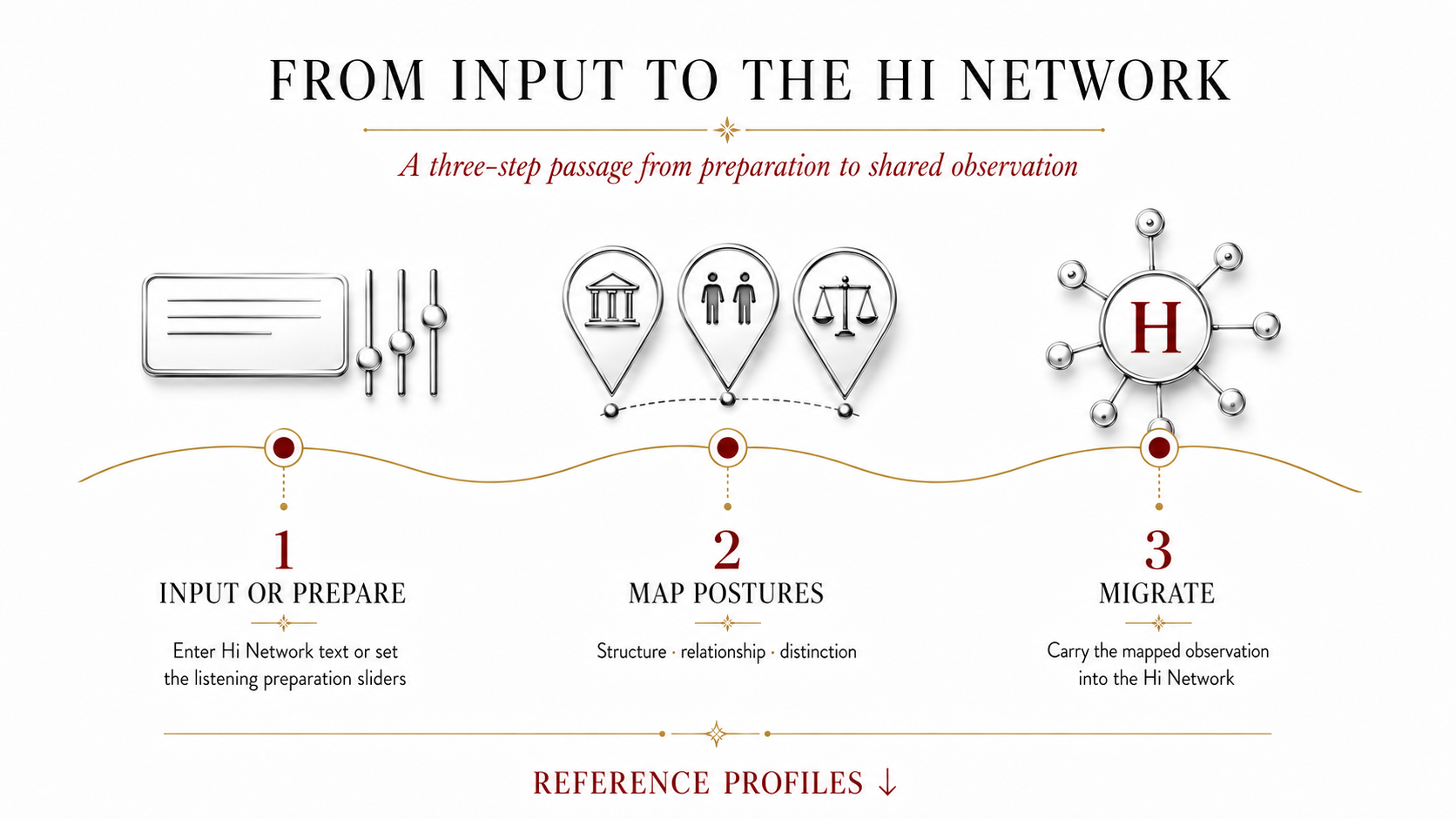
From input to the Hi Network

Reference Profiles

2Pac Shakur
Lightning • Attached-DetachmentAttached-Detachment / SubjectiveSubjective / Recognition / Present / Collective
AGinsberg
Lightning • DetachmentDetachment / CognitiveCognitive / Field / Timeless / Integrated
Andrew Warhola
Mirror • AttachmentAttachment / SubjectiveSubjective / Raindrop / Present / Collective
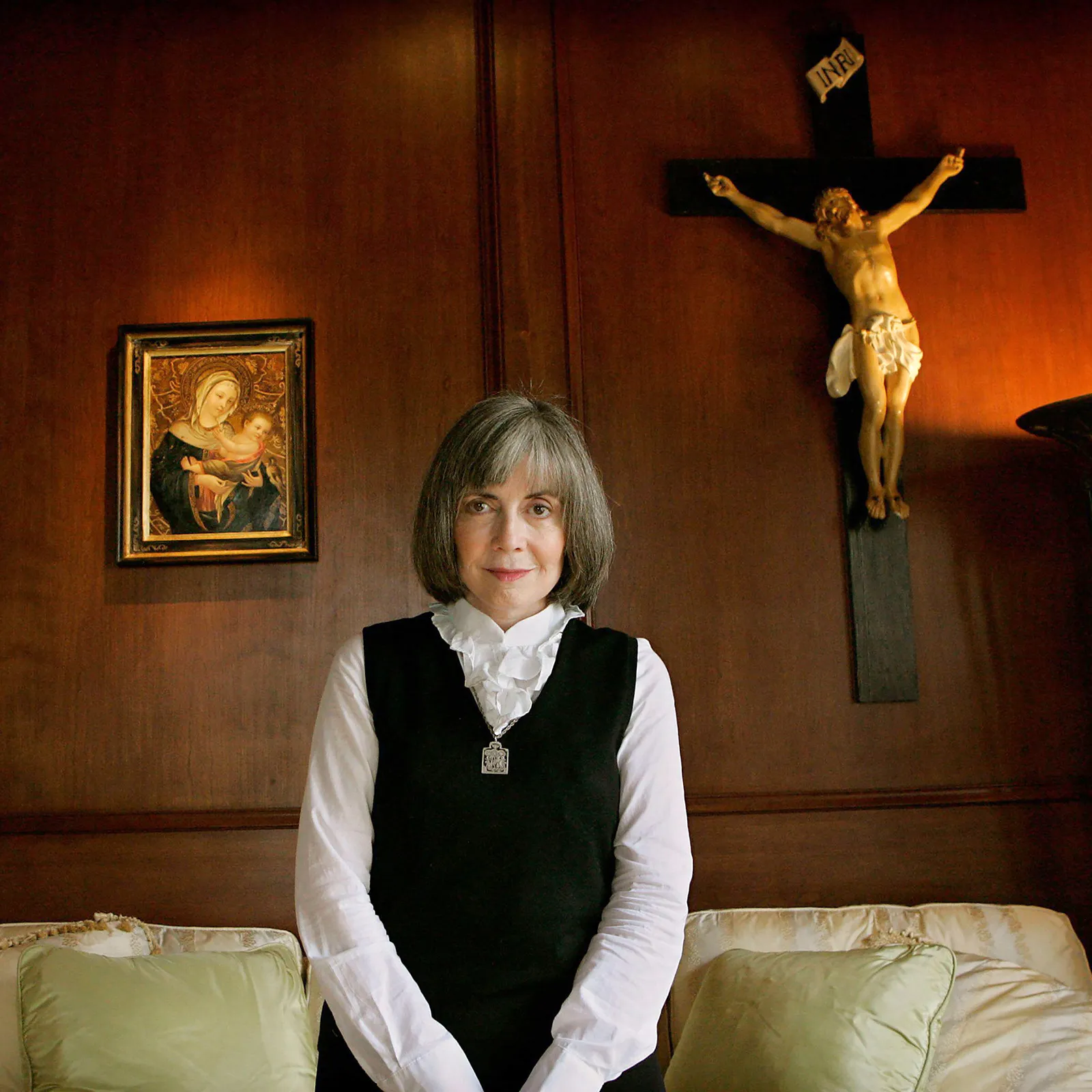
Anne Rice
Strawberry • Detached-AttachmentDetached-Attachment / SubjectiveSubjective / Mirror / Past / Collective
Barack Obama
44th President of the United States • Detached-AttachmentDetached-Attachment / CognitiveCognitive / Field / Future / Collective
Benjamin Sisko
Starfleet • Detached-AttachmentDetached-Attachment / ObjectiveObjective / Recognition / Future / Collective
Bill Withers
Lightning • Detached-AttachmentDetached-Attachment / SubjectiveSubjective / Recognition / Present / Collective

Bob Dylan
Lightning • Detached-AttachmentDetached-Attachment / CognitiveCognitive / Soultrain / Timeless / Integrated
Doherty Morrison Combs
Lightning • Detached-AttachmentDetached-Attachment / SubjectiveSubjective / Soultrain / Timeless / Universal
Donald J. Trump
45th & 47th President of the United States • AttachmentAttachment / SubjectiveSubjective / Mirror / Present / Collective
George Washington
First President of the United States • Detached-AttachmentDetached-Attachment / ObjectiveObjective / Recognition / Future / Collective
GoAskAlice
Strawberry • AttachmentAttachment / SubjectiveSubjective / Raindrop / Present / Collective
Hannibal Lecter
Fictional Reference Profile • Detached-AttachmentDetached-Attachment / CognitiveCognitive / Mirror / Present / Self
Harry
Strawberry • AttachmentAttachment / ObjectiveObjective / Soultrain / Timeless / Universal
James Franco
Strawberry • Detached-AttachmentDetached-Attachment / CognitiveCognitive / Recognition / Present / Self
JeanLucPicard
Captain • USS Enterprise-D • Detached-AttachmentDetached-Attachment / ObjectiveObjective / Recognition / Future / Universal
Jiddu Krishnamurti
Lightning • DetachmentDetachment / SubjectiveSubjective / Recognition / Present / Universal
John Lennon
Strawberry • DetachmentDetachment / CognitiveCognitive / Soultrain / Timeless / Universal
JoniMitchell
Strawberry • Attached-DetachmentAttached-Detachment / SubjectiveSubjective / Field / Present / Integrated
Lizard King
Lightning • Detached-AttachmentDetached-Attachment / SubjectiveSubjective / Soultrain / Timeless / Universal
Michael Jackson
Strawberry • AttachmentAttachment / CognitiveCognitive / Soultrain / Future / Universal
neemkarolibaba
Reference Profile • Detached-AttachmentDetached-Attachment / ObjectiveObjective / Mirror / Present / Universal
numberone
Observatory Collaborator • Detached-AttachmentDetached-Attachment / CognitiveCognitive / Recognition / Present / Collective
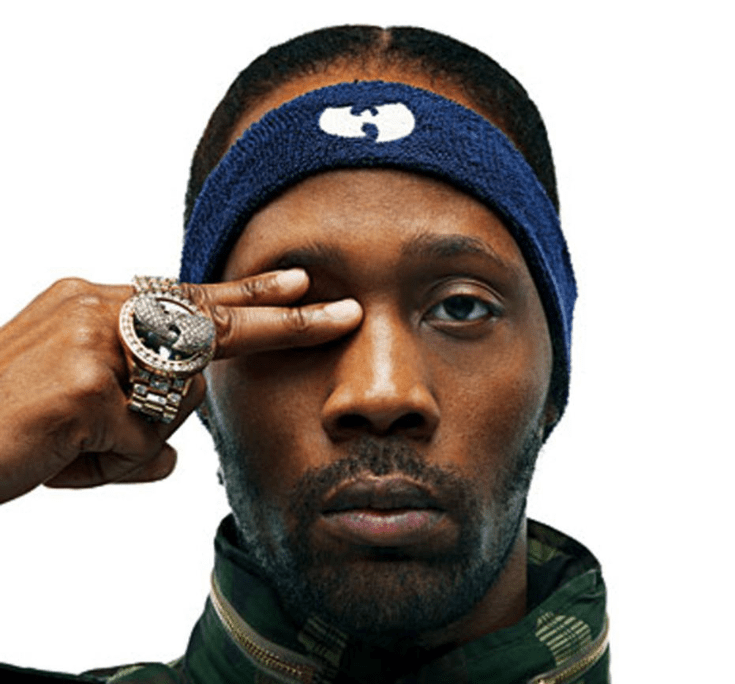
RZA
Hip Hop Artist · Producer · Composer · Philosop • Detached-AttachmentDetached-Attachment / CognitiveCognitive / Recognition / Present / Collective
Sincerely, L. Cohen
Lightning • Detached-AttachmentDetached-Attachment / CognitiveCognitive / Soultrain / Timeless / Universal

Strawberry Alarm Clock
Strawberry • Detached-AttachmentDetached-Attachment / CognitiveCognitive / Recognition / Present / Collective
Swami Lakshmanjoo
Strawberry • Detached-AttachmentDetached-Attachment / CognitiveCognitive / Recognition / Timeless / Universal
Taylor Swift
Mirror • Detached-AttachmentDetached-Attachment / SubjectiveSubjective / Mirror / Past / Self
The Dalai Lama
Mirror • Detached-AttachmentDetached-Attachment / SubjectiveSubjective / Mirror / Present / Universal
The Rolling Stones
Lightning • Attached-DetachmentAttached-Detachment / SubjectiveSubjective / Mirror / Present / Collective
The Velvet Underground
Lightning • Detached-AttachmentDetached-Attachment / ObjectiveObjective / Recognition / Present / Collective
Thumbelina Waits
Lightning • Detached-AttachmentDetached-Attachment / ObjectiveObjective / Mirror / Timeless / Collective
Willy Shakes
Lightning • Detached-AttachmentDetached-Attachment / CognitiveCognitive / Recognition / Timeless / Collective
WillyWonka
Lightning • DetachmentDetachment / ObjectiveObjective / Soultrain / Timeless / Universal
Wu-Tang
Hip Hop Collective/Strawberry • Detached-AttachmentDetached-Attachment / ObjectiveObjective / Recognition / Present / Collective
Yers
Strawberry • Attached-DetachmentAttached-Detachment / CognitiveCognitive / Soultrain / Future / Integrated

Today's Consciousness Weather

What do these categories mean?

Attachment States

AttachmentAttachment
26%
Attached-DetachmentAttached-Detachment
8%
Detached-AttachmentDetached-Attachment
64%
DetachmentDetachment
1%

Awareness Lenses

SubjectiveSubjective
83%
ObjectiveObjective
10%
CognitiveCognitive
6%

💧 Vidya (Knowledge & Understanding)

💧 Raindrop 20%
✨ Recognition 1%
🪞 Mirror 73%
🌾 Field 1%
🚂 Soultrain 3%

⏳ Time Orientation

Past 8%
Present 56%
Future 12%
Timeless 9%

🧭 Niyyat (Intention)

Individual 92%
Collective 3%
Universal 1%
Current Observer Pattern: Detached-AttachmentDetached-Attachment + SubjectiveSubjective + Mirror + Present + Individual

🖼 Visual Observation

Waiting for image...
Attached-Detachment
Attached-Detachment
100%
Objective
Objective
45%
Vidya (Knowledge & Understanding) 💧 Raindrop • 100%
Time Orientation Present • 100%
Niyyat (Intention) Individual • 100%

Anne Rice
🍓 What is this?

Classification Confidence: 100%
Article  |  2026-07-24 02:58:44
Interview with the Vampire is a gothic horror and vampire novel by American author Anne Rice, published in 1976. It was her debut novel. Based on a short story Rice wrote around 1968, the novel centers on vampire Louis de Pointe du Lac, who tells the story of his life to a reporter. Rice composed the novel shortly after the death of her young daughter Michele, who served as an inspiration for the child-vampire character Claudia.

Though initially the subject of mixed critical reception, the book was followed by many widely popular sequels, collectively known as The Vampire Chronicles.

A film adaptation was released in 1994 and a television series premiered in 2022. The novel has also been adapted as a comic three times.

Plot summary
A vampire named Louis de Pointe du Lac tells his 200-year-long life story to a reporter referred to simply as "the boy".

In 1791, Louis is the young master of a large indigo plantation in colonial Louisiana. Distraught by the death of his younger brother Paul, he begins drunkenly wandering the streets at night, hoping to be murdered. One night, he is approached by a vampire named Lestat de Lioncourt, who senses Louis' despair. Concluding that the loss of his humanity will free him from grief, he accepts Lestat's offer to become his companion and is turned into a vampire.

Louis initially perceives Lestat as an extraordinary being, but is disillusioned after joining him as a vampire, as he realizes Lestat has no special moral insights and is in fact not much older than Louis himself. Lestat's elderly father moves to the plantation, and Louis learns a few details about Lestat's boyhood, including that he was denied an education and that his father once considered him the gentlest of his brothers.

Lestat spends time feeding off slaves, thieves, and other plantation families, while Louis, who finds it immoral to murder humans, drinks the less potent blood of animals. Louis' slaves begin to suspect him, and Louis and Lestat realize they cannot remain. Lestat's father attempts to apologize for the abuse he inflicted on Lestat as a child, but Lestat remains unforgiving and asks Louis to kill his father before they depart.

Louis sets his own plantation aflame; he and Lestat kill the slaves to keep word from spreading about vampires in Louisiana. Gradually, Louis bends under Lestat's influence and begins feeding from humans. He slowly accepts his vampirism but also becomes increasingly repulsed by what he perceives as Lestat's total lack of compassion for humans.

Escaping to New Orleans, Louis feeds off a plague-ridden, five-year-old girl, found next to the corpse of her mother. Louis begins to think of leaving Lestat. Fearing this, Lestat then turns the girl into a vampire "daughter" for them, to give Louis a reason to stay. She is then given the name Claudia.

Louis is initially horrified that Lestat has turned a child into a vampire, but soon begins to care for Claudia. Claudia takes to killing easily but soon realizes she can never grow up; her mind matures into that of a woman, but her body remains that of a young girl.

Claudia blames Lestat for her state and, after 60 years, hatches a plot to kill Lestat. Claudia and Louis then dump his body into a nearby swamp. As Louis and Claudia prepare to flee to Europe, Lestat appears, having recovered from Claudia's attack, and confronts them. Louis sets fire to their home and barely escapes with Claudia, leaving Lestat to burn.

Arriving in Europe, Louis and Claudia seek out other vampires. They travel throughout Eastern Europe first and encounter some, but these vampires appear to be nothing more than mindless, animated corpses. Louis begins to regret the murder of Lestat, fearing that they may have killed the one vampire who could provide answers regarding their nature. It is only when they reach Paris that they encounter vampires like themselves, meeting the 400-year-old vampire Armand and his coven at the Théâtre des Vampires.

Inhabiting an ancient theater, Armand and his vampire coven disguise themselves as humans and feed on terrified humans in mock plays before a live audience (thinking the killings are a performance). Claudia is repulsed, but Louis and Armand are drawn to each other.

Fearing that Louis will leave her for Armand, Claudia convinces Louis to turn a Parisian doll maker, Madeleine, into a vampire to serve as a replacement companion for her. Louis, Madeleine, and Claudia live together for a brief time, but all three are abducted one night by Armand's coven.

It is revealed that Lestat survived the fire in New Orleans, scarred and weakened. He demands that Claudia face punishment, even death, for her murder attempt but screams at the coven that they promised not to harm Louis. Ignoring Lestat, the coven proceeds with its punishments. Louis is forcibly locked in a coffin to starve, while Claudia and Madeleine are entrapped in an open courtyard.

Armand arrives and releases Louis, but Madeleine and Claudia are burned to death by the sun; a devastated Louis finds their ashen remains. Louis sees Lestat crying over the remnants of Claudia's yellow dress but loses track of him as he plots his revenge against the coven.

Louis returns to the Theatre late the following night, burning it to the ground and killing all the vampires inside, leaving with Armand. Together, the two travel across Europe for several years, but Louis never fully recovers from Claudia's death, and his relationship with Armand becomes strained. It remains ambiguous even to Louis whether the murder of Claudia was primarily orchestrated by Armand to gain Louis's companionship, by the coven believing Claudia broke ancient vampire law, or by Lestat's desire for vengeance.

Tired of the Old World, Louis returns to New Orleans in the early 20th century. Living as a loner, he feeds off any humans who cross his path, but lives in the shadows, never creating another companion for himself.

Louis tells the boy of one last encounter with Lestat in New Orleans, where Lestat has hidden himself in a rotting mansion and lost touch with the passing of time. Armand hopes that seeing Lestat might arouse feelings of passion, sorrow, or anger in Louis and expresses despair that Louis remains cold and unable to share eternity with him. They end their companionship, with nothing more to offer one another. Louis ends his tale, revealing that after 200 years, he is weary of immortality and the chaos he has created.

The boy, however, seeing only the great powers granted to a vampire, begs to be made into one himself. Angry that his interviewer learned nothing, Louis refuses, attacking him and vanishing. The boy leaves to track down Lestat, hoping to receive immortality.

Background and publication
In 1970, while Anne Rice was attending a graduate program in Creative Writing at San Francisco State University, her daughter Michele, then about four years old, was diagnosed with acute granulocytic leukemia.[2] Michele died of the illness about two years later,[2][3][4] and Rice fell into a deep depression, turning to alcohol in order to cope.[5] Later reviewers and commentators identified Michele as an inspiration for the character of Claudia.[6]

In 1973, while still grieving the loss of her daughter, Rice began reworking a previously written short story, which she had written in 1968 or 1969.[nb 1] Thirty pages long, the short story was written from the interviewer's perspective.[7] She decided to expand "Interview with the Vampire" into a novel at the encouragement of one of her husband's students, who enjoyed her writing.[7][8] It took her five weeks to complete the 338-page novel: she did research on vampires during the day and often wrote during the night.[7]

After completing the novel and following many rejections from publishers, Rice developed obsessive–compulsive disorder (OCD). She became obsessed with germs, thinking that she contaminated everything she touched, engaged in frequent and obsessive hand washing and obsessively checked locks on windows and doors. Of this period, Rice says: "What you see when you're in that state is every single flaw in our hygiene and you cannot control it and you go crazy".[10]

In August 1974, Rice attended the Squaw Valley Writer's Conference at Squaw Valley, conducted by writer Ray Nelson.[11] While at the conference, she met her future literary agent, Phyllis Seidel. In October 1974, Seidel sold the publishing rights to Interview with the Vampire to Alfred A. Knopf for a $12,000 advance of the hardcover rights, at a time when most new authors were receiving $2,000 advances.[12] Interview with the Vampire was published in April 1976.[13] In 1977, the Rices traveled to both Europe and Egypt for the first time.[14]

Upon its release, Interview with the Vampire received mixed reviews from critics.[15] A reviewer for the St. Louis Post-Dispatch gave the book a positive review, describing the prose as "hypnotically poetic in tone, rich in sensory imagery",[15] while other reviews were more negative. Edith Milton of The New Republic wrote: "To pretend that it has any purpose beyond suckling eroticism is rank hypocrisy".[15] Leo Braudy writing for The New York Times said: "[...] the book is too superficial, too impersonal and too obviously made, to touch the sources of real terror and feeling."[16] As of February 2008, the novel had sold 8 million copies worldwide.[17]

The book spawned a total of twelve sequels, collectively known as The Vampire Chronicles, and the spin-off series New Tales of the Vampires. The first sequel, The Vampire Lestat, was published in 1985 and sold more than 75,000 copies in its first printing, garnering largely favorable reviews.[15] 1988's The Queen of the Damned improved on Lestat's numbers, receiving an initial hardcover run of 405,000 and topping the New York Times Best Seller list.[15] Rice's vampire books share a fictional universe with her series Lives of the Mayfair Witches and the novel The Mummy, or Ramses the Damned.[18]

Adaptations
Film
Main article: Interview with the Vampire (film)
The film rights to Interview were at times controlled by Paramount Pictures, Lorimar, and Warner Bros., the distributor of the film, before The Geffen Film Company acquired the rights.[19] Director Neil Jordan rewrote Rice's first draft of the screenplay, though she received sole credit.[20] Brad Pitt starred as Louis, Tom Cruise starred as Lestat, Antonio Banderas co-starred as Armand, as did a young Kirsten Dunst as the child vampire Claudia. Most of the movie's shooting had been completed by October 1993, and all that remained were the few scenes involving the interviewer that would then be inserted at various points throughout the film.[21][22] Production of those scenes was put on hold for a few weeks whilst River Phoenix, who had been cast as the interviewer, finished working on the film Dark Blood. Phoenix died from an overdose later that month, and Christian Slater was then cast as the interviewer Molloy. Slater donated his entire salary to Earth Save and Earth Trust, two of Phoenix's favorite charities.[23][24][25][26][27]

The film was released in November 1994 to generally positive critical reaction,[28] and received Academy Award nominations for Best Art Direction and Best Original Score.[29] Dunst was nominated for a Golden Globe for Best Supporting Actress for her role in the film.[30][31] Rice had initially voiced her objections to the casting of Cruise as Lestat, preferring Rutger Hauer for the role. After seeing the film, however, she voiced her support for the casting decision,[19] saying: "That Tom did make Lestat work was something I could not see in a crystal ball. It's to his credit that he proved me wrong".[20]

In August 2014, Universal Pictures and Imagine Entertainment acquired the motion picture rights to the entire Vampire Chronicles series, with producers Alex Kurtzman and Roberto Orci signed to helm the potential film franchise. The deal also included a screenplay for The Tale of the Body Thief (1992) adapted by Christopher Rice.[32] In May 2016, writer-director Josh Boone posted a photo on Instagram of the cover a script written by him and Jill Killington.[33][34][35] Titled Interview with the Vampire, it is based on the novel of the same name and its sequel, The Vampire Lestat.[33][34][35] However, that November Universal did not renew the contract, and the film and television rights reverted to Rice, who began developing the Vampire Chronicles into a television series with Christopher.[36][37]

Comics

This article needs more citations. Please help improve this article by adding citations to reliable sources. Unsourced material may be challenged and removed.
Find sources: "Interview with the Vampire" – news · newspapers · books · scholar · JSTOR (April 2024) (Learn how and when to remove this message)
Innovation Comics published a twelve-issue comic book adaptation of Interview with the Vampire from 1991 to 1994,[38] also making comic adaptations of The Vampire Lestat (12 issues) and The Queen of the Damned (11 issues).[39][40] A Japanese manga adaptation by Udou Shinohara was published in 1994 by Tokuma Shoten.[citation needed] It was also serialized in both Animage and Chara magazines. In 2012, the graphic novel Interview with the Vampire: Claudia's Story was published by Yen Press, retelling much of the original novel from the point of view of child vampire Claudia.[41]

Television
Main article: Interview with the Vampire (TV series)
In May 2020, AMC acquired the rights to The Vampire Chronicles and Lives of the Mayfair Witches for developing film and television projects.[42] AMC gave the production a series order for a seven episode first season of Interview with the Vampire. The series is executive produced by Rolin Jones and Mark Johnson.[43] Interview with the Vampire stars Jacob Anderson as Louis,[44] Sam Reid as Lestat,[45] Bailey Bass/Delainey Hayles as Claudia,[46][47] and Assad Zaman as Rashid/Armand.[48] The series premiered on October 2, 2022.[49] The novel is adapted through the first two seasons,[50] with elements from The Vampire Lestat being used during season two and being the basis for season three.

Notes
Biographer Katherine Ramsland gives two dates for the short story: 1968 in the text,[7] and 1969 in her timeline of Rice's life.[8] Michael Riley's timeline lists the year as 1969.[9]
Attached-Detachment
Attached-Detachment
100%
Cognitive
Cognitive
100%
Vidya (Knowledge & Understanding) 💧 Raindrop • 100%
Time Orientation Past • 100%
Niyyat (Intention) Individual • 100%

Anne Rice
🍓 What is this?

Classification Confidence: 100%
Article  |  2026-07-24 02:55:18
Having completed the two cycles of legend to which she has devoted her career so far, Anne Rice gives us now her most ambitious and courageous book, a novel about the life of of Christ the Lord based on the gospels and on the most respected New Testament scholarship.

The book's power derives from the passion its author brings to the writing, and the way in which she summons up the voice, the presence, the words of Jesus who tells the story.

This new introduction appears in the paperback edition of the book, released November 1st, 2006:

This book seeks to present a realistic fictional portrait of Our Lord in Time.  It is rooted in the faith that the Creator of the Universe became human in the person of Jesus Christ and “dwelt among us.”  The magnificent mystery of the Incarnation is accepted and affirmed as fact. Scripture is the inspiration for the emotions and powers of the Child Jesus as they are envisioned here.   History as well as the gospels is the source for this picture of a world in which Our Lord might have lived, as a little boy, in war and in peace, from day to day.

Ad majorem Dei gloriam. July 12, 2006

Discussion Questions:

1. Christ the Lord: Out of Egypt is told in Jesus' voice. What advantages does the first-person narration offer the author? How does it contribute to the novel's emotional resonance? How does it influence the way the novel unfolds?

2. What other literary devices does Rice use to bring the story to life for the contemporary reader? Discuss, for example, her use of imagined conversations and her descriptions of the family's interactions.

3. The Gospel of Matthew and the Gospel of Luke recount the story of Jesus' birth, the flight to Egypt, and the family's return to Israel. Does Rice take liberties with these biblical versions in her retelling? To what extent does her account echo the Gospels in both content and tone?

4. Christ the Lord: Out of Egypt focuses on a period in Jesus' life not described in the New Testament. How realistic is Rice's portrait of Jesus as a young boy? How do the miracles he performs–killing and reviving Eleazer [pp. 4—7]; alleviating Cleopas' pain [p. 48] and rescuing him from death [p. 99]; and restoring sight to the blind man [pp. 279—80] –reflect feelings and wishes typical of a seven-year-old?

5. Throughout the book, Jesus questions Mary and Joseph, Cleopas, and rabbis and scholars in hopes of discovering the secret of his birth. What do the answers he receives from the various adults reflect about their relationship with Jesus, their understanding of the truth, and their own self-interests and philosophies?

6. What role does Cleopas play in his nephew's life? Why does he defy Mary and Joseph and reveal what he knows about Jesus' conception and birth [p. 45—47]? What other function does he serve in the plot? What insights do his opinions [p. 68, p.74, and p. 211, for example] give into the political situation in Israel? Is his point of view understandable in light of the history of the Jews as it is presented in the novel?

7. What makes Rice's portraits of Mary and Joseph effective? What did you admire most each of them? Are there flaws in the decisions they make?

8. Discuss the internal conflicts Jesus experiences as he pieces together the stories he hears and tries to reconcile them with his own his unsettling thoughts and fears. Do they make you feel differently about Jesus' humanity? His divinity?

9. Jesus' immersion in Jewish culture and traditions is an important aspect of the novel. What is the significance of Rice's focus on Jesus as a Jew? What insights does it give into Jesus' teachings and his ultimate mission on earth? Is the message relevant to the religious tensions in the world today?

10. Did reading Christ the Lord: Out of Egypt deepen your understanding of the origins of Christianity? Do you think readers' reactions to Christ the Lord: Out of Egypt are inevitably influenced by their personal religious beliefs and heritage?

11. In the author's note, Rice discusses her extensive research and offers a critique of recent New Testament scholarship. Do you agree with her criticism of the current "fashionable notions about Jesus" [p. 309]? Have you read articles or books that support her argument that many writers "scholars who have apparently devoted their life to New Testament scholarship, disliked Jesus Christ" [p.314]? Do you think that Rice's background and her strong Catholic faith affect the conclusions she draws?

12. Rice, who is best known for her books about vampires, expresses the hope that "Jesus will be as real to you as any other character I've ever launched into the world we share" [p. 321]. If you have read her other books, do you think that she succeeded in this goal? Whether or not you are familiar with her previous works, discuss your reactions to the following quotation: "After all, is Christ Our Lord not the ultimate supernatural hero, the ultimate outsider, the ultimate immortal of them all?" [p. 321].


Reviews:


BELIEFNET.COM has named CHRIST THE LORD as The Best Spiritual Book of the Year! Read the article here.

Kirkus
(STARRED)

A riveting, reverent imagining of the hidden years of the child Jesus.

Attacked by a vicious bully, seven-year-old Yeshua employs uncanny powers to drop his assailant onto the sand and then to bring him back to life. It's the remarkable beginning of the 26th novel by an author whose pulpy vampire chronicles hardly prepare us for a book so spiritually potent as this. Following Jesus and his family's journey from Egyptian exile to their ancestral home, it recasts Bible stories (the Magi's visit, the presentation at the temple) in the detailed context of Jewish rebellion against Herod Archelaus, the impious ruler of Israel. A cross between a historial novel and an update of Tolstoy's The Gospel in Brief, it presents Jesus as nature mystic, healer, prophet and very much a real young boy. Essentially, it's a mystery story, of the child grappling to understand his miraculous gifts and numinous birth. He animates clay pigeons, causes snowfall and dazzles his elders with unheard-of knowledge. Rice's book is a triumph of tone -- her prose lean, lyrical, vivid -- and character. As he ponders his staggering responsibility, the boy is fully believable -- and yet there's something in his supernatural empathy and blazing intelligence that conveys the wondrousness of a boy like no other. Rice's concluding Author's Note traces the book's genesis to her return to Catholicism in 1993, her voracious reading -- a mountain of New Testament scholarship, the Apochrya, the ancient texts of Philo and Jospephus -- and her passionate search for Jesus of the Gospels. With this novel, she has indeed found a convincing version of him; this is fiction that transcends story and instead qualifies as an act of faith.

Joins Nikos Kazantzakis's The Last Temptation of Christ and Endo's A Life of Jesus as one of the bolder re-tellings.

(Kirkus Reviews, October 1, 2005)

__________

Library Journal

Rice, Anne. Christ the Lord: Out of Egypt. Knopf. Nov. 2005. c.321p. ISBN 0-375-41201-8. $25.95.

A novel narrated by Jesus of Nazareth from the author who has spent decades writing about vampires may strike many as strange, but Rice brings the same passion to her colorful account of the young Jesus and his quest to understand his strange powers (turning clay pigeons into live birds, bringing a dead child back to life). As in her other books, Rice has extensively researched the historical context in which she writes, here drawing on the Gospels and respected New Testament scholarship. The story opens with seven-year-old Jesus and his family living in Egypt where Jesus is the prize pupil of the scholar Philo. Joseph (Jesus has been carefully taught not to call him Father) decides adamantly that the family must return to their Jewish homeland in Israel. On the journey to Nazareth, Jesus continues to experience supernatural abilities and tries to come to terms with what they mean. Rice's Jesus is childlike but divine, wise beyond years yet wondering who he is and why he is different from other boys. In her attempt to breathe life into a historical religious figure, Rice's superb storytelling skills enables her to succeed where many other writers have failed. Whether or not her literary conversion will be accepted by her fans and critics alike remains to be seen. Highly recommended for all collections. [See Prepub Alert, LJ 7/05.]

-Tamara Butler, Bryant & Stratton Coll. Lib,
Buffalo, NY

(Library Journal, November 1, 2005)

__________

Jason Raia

"Dear Ones, for an interesting review of CHRIST THE LORD by Jason Raia, please go to intellectualsinc.blogspot.com

--Anne" 

__________

CompulsiveReader.Com

"Dear Ones, below is Donna Denn's new review of Christ the Lord from CompulsiveReader.Com. --Anne"

A review of Christ the Lord by Anne Rice

When you think of the writing of Anne Rice, of course you think of vampires and witches. I've read and loved those stories for years, right along with a legion of fans. They deal with the supernatural along with a wonderful feeling of history. So, given that supernatural aspect, you don't at first equate Jesus with the supernatural, do you? Or maybe you do.

Reviewed by Donna Denn

Christ the Lord
by Anne Rice
Hardcover: 336 pages
Publisher: Knopf (November 1, 2005)
ISBN: 0375412018

I've just finished turning the last page on this book, and wanted to sit down and write while everything was still fresh in my mind. There's so much here to absorb, to think about. Out of everything she's written, I think this book is the one that Ms Rice has put the most of herself in. I'll be honest with you. After reading about (and loving) vampires and witches all these years, I was VERY curious about what would happen in CHRIST THE LORD. I'm so glad I read it.

If I had to choose one word to describe this book, I could choose amazing, but I don't think that would do it justice. Surprising, unexpected, ambitious and compelling all come to mind. But I'll tell you what: when this comes out on November 1st, read it for yourself and let me know what you think. I'd be glad to discuss it with you.

When you think of the writing of Anne Rice, of course you think of vampires and witches. I've read and loved those stories for years, right along with a legion of fans. They deal with the supernatural along with a wonderful feeling of history. So, given that supernatural aspect, you don't at first equate Jesus with the supernatural, do you? Or maybe you do. Miracles do have a supernatural quality to them.

In CHRIST THE LORD Out of Egypt, you'll find a familiar story told from a unique viewpoint: that of Jesus himself. His curiosity and bewilderment of his own beginnings seems so human, especially in a young boy. His family and daily life are brought forth in a way that lets you see what his life must surely have been like. We begin with Jesus at the age of seven. He is aware that he has a power to make things happen and questions why Joseph and Mary won't explain what happened at his birth. By the time you turn the last page, he's been told who he is. The effects this has on him ring true, that this is how Jesus himself would have reacted. Jesus' relationships with those in his family are well developed, the characterizations well thought out.

I think perhaps one of my favorite sections in the book is the story of when Jesus disappeared for three days at the temple. Here is a telling of the tale that lends itself to the emotions that Jesus would have felt and will involve you on an emotional level as well.

And oh, those last words of this story (or at least this part of the story). Those words will stay with you.

The research that's gone into this story is extensive. It's easy to see that an insatiable mind is behind the words that bring this volume to life. Each page brings you the smells and sights and sounds of the life of the Christ child, rendered with care and commitment. At the end of this story, you'll find a section called Author's Note. Read it! Here Anne explains what led her to commit herself to writing this.

I always find it fascinating to hear (read) what an author thinks about what they've written, or why they've decided to write the things they do. Not only has this book had an impact on me, but the explanations behind it did as well.

One can't think of Anne Rice without thinking of New Orleans. With recent events, it'll be meaningful to revisit those old friends of mine, those books that have come before with Lestat or with the Mayfairs. They have given me hours of reading pleasure. I remember when I finished THE WITCHING HOUR. I hugged that wonderful hardcover to me and wanted to read it all over again, right then.

Mark your calendars for November 1st. That's when CHRIST THE LORD goes on sale. This is one you won't want to miss.

About the Reviewer: Donna "Diamond" Denn works at a Hastings store in the book department, and loves her job. Books are an addiction for her, and she participates in a number of reading groups online, and runs an online fantasy reading group. She also knits, crochets and works on the garden as sidelines, but books are her first love.

Thanks to CompulsiveReader.Com for posting permission.

__________

Urban Think Bookstore
www.urbanthinkorlando.com

Reviewed by Jim Crescitelli, Manager

Some will say "Anne Rice has done it again. Brava!" And others will say "what the heck has she done NOW?" In any event, she's provoked comment and debate—much of it from people who have not yet read Christ the Lord: Out of Egypt, her new book. Part of a new series on the life of Jesus Christ, Anne is on a mission to inform and enlighten her readers, and in a very unusual way.

Anybody can wrap their minds around vampires and demons and witches, as it's all part of our fascination with preventing the end of life via any means—or sustaining it toward any end, so to speak. In these times, however, what with factions claiming the American flag and pinning it securely to the shoulder with a crucifix, and opposite factions wanting the two symbols to exist separately, any mention of Jesus Christ can practically be guaranteed to set teeth on edge.

Not Anne. She has decided to present us with Jesus in the first person, employing real and hypothetical situations and using the words a seven-year-old might have spoken back in the first century. It’s remarkable, and presents a fresh spin on the Gospel story we are all familiar with. She captures beautifully his conundrum: he can do certain mysterious things, and people treat him in special ways… but he does not understand why. Nobody in his huge family, besides dropping numerous hints, will tell him the truth. The relationship between Jesus and his mother is beautifully delineated, as is Joseph’s special place in Jesus’ cosmos. And the extended family will delight you.

Full of good humor and fascinating descriptions of landscapes and towns and life as it was lived 2000 years ago, Anne’s new book is a departure from what we’ve come to expect from her busy pen. The prose here is cool and clean and full of light. Not intensely packed with detail (though I am a fan of the highly-descriptive novels such as Anne has delivered to us), the prose in Christ the Lord leaves room for the message she wants to share with her readers—a message which is elaborated upon in an openhearted Author’s Note. Don’t miss this challenging new book!

Thanks to Urban Think! for posting permission.

__________

Conciliar Press Blog (by John Stamp)

When Shelly took off to go to a retreat in Danville over the weekend, I swung by Borders and picked up Anne Rice's newest novel, Christ the Lord: Out of Egypt. Her book fascinates me for any number of reasons, not least of which is her return to her childhood faith. My heart rejoiced that the Prodigal Daughter found her way back to the house of the Father! I had never read any of her creepy vampire books. I am no fan of horror books or movies. Even watching old black-and-white Abbot and Costello meet Wolfman movies terrifies me.

When I finished the book late Saturday afternoon, I was amazed. The novel is quite a tour de force. Here are some initial impressions. Your mileage of course may vary.

Historical accuracy

Anne Rice has carefully done her homework. I read her Author's Note first (starting page 305), mostly because I wanted to know how she wrote this novel. I'm embarrassed to admit it, but there's a bunch of background information I should have known but didn't. For example, I didn't know anything -- or maybe I've forgotten, I'm nearly 50 -- about Herod Archelaus except that he was Herod's son. But being a wise technical writer, I did a Google search and found a great website that satisfied nearly every niggling historical question I could think of. Check out the Livius website and some of the embedded links for more information about various historical characters mentioned in the novel. I just mentally added Josephus to my already impossibly long reading queue.

Speaking of the Author's Note, given the amount of stuff she's read, I'm amazed that Anne Rice has managed to avoid stepping on dangerous theological landmines in her faith or in her novel. In that vast morass of current "Jesus" scholarship, she's figured out the lay of the land, that is, which nut cases to avoid. She favorably mentions the scholars I like (Luke Timothy Johnson, Martin Hengel, Charlotte Allen, N.T. Wright), so what's not to like?

Blessed Virgin Mary

Eastern Orthodox readers should love the book; conservative evangelical Protestants cursed with historical amnesia almost certainly won't. The Blessed Virgin Mary (BVM) is indeed perpetually virgin, in Anne Rice's telling. So while the Christian Booksellers Association (CBA) crowd will run backwards and snort in horror, the historical irony is that John Calvin and Martin Luther -- both decent evangelicals themselves -- wouldn't be offended in the least in Rice's portrayal of the BVM as perpetually virgin. In fact, they would be horrified at how American evangelicalism has cut itself off from Christian conciliar origins.

Mystery and miracle

I liked how slowly the story of Jesus unfolded as a seven year old boy. In one sense, the entire novel is an extended meditation on St Luke's wondrous words: "And Jesus increased in wisdom and in stature, and in favor with God and man." (Luke 2:52)

Anne Rice demonstrates a certain apophatic restraint in how the young Jesus comes to understand Who He Is. Eastern Orthodox readers who can appreciate mystery ("I will not speak of Your mystery to Your enemies") will certainly appreciate how certain characters (for example, Elizabeth, the mother of John the Forerunner) only discloses certain revelations when it's appropriate to do so. Characters just don't blabber out profound mysteries. Holy mysteries are treated with respect.

Some quirks emerge in Rice's novel. Maybe it just shows how wacko I have become that I loved them. I didn't mind Elizabeth sending John to live out with the Essences after she dies. I didn't mind Joseph, the BVM, and Jesus living in Alexandria and meeting Philo the famous Jewish philosopher! Later, Cleopas, one of the uncles of Jesus, even presents two manuscripts of Philo to a rabbi in Nazareth as a gift. I was charmed. Finally, I didn't mind Jesus performing certain miracles when he was a kid. They really do make sense in the context of the novel. If I can swallow the Protoevangelium of St James, a couple of pseudepigraphical miracles (from the Infancy Gospel of Thomas) shouldn't give me theological indigestion. It wasn't that long ago stories like that gave me The Willies. Maybe this is proof positive that I'm not a Fundamentalist Bible Banger anymore after all!?!?!?

I must admit that it took me nearly 121 pages before I could fully suspend my disbelief. But then Anne Rice snagged me hook-line-and-sinker.

A Jewish Jesus

What I liked best about the novel is just how Jewish Jesus is. The Jewishness of Jesus in Anne Rice's writing is carefully depicted, right down to some of the gentle humor. (But don't expect any Woody Allen or Mel Brooks jokes!) The character of Jesus is molded in the context of living first-century Judaism. This is where Anne Rice's historical research paid off in spades. For example, Jesus is certainly trilingual, and maybe even quadri-lingual. He knows Greek, Aramaic, Hebrew, and perhaps even a smattering of Latin.

Chapter 17 especially enchanted me. Rice describes the young Jesus meeting three rabbis in the Nazareth synagogue for the first time. The oldest rabbi throws out a series of trick questions to the young Jesus, to test His knowledge of the Law and the Prophets. The Q+A scene is wonderful. Immediately I thought of young Reuven Malter before Reb Saunders in Chaim Potok's magnificent novel, The Chosen. Anne Rice really did a great job of emphasizing the sheer Jewishness of Jesus. The young Jesus she depicts could have been Danny Saunders or David Lurie, other characters out of the novels of Chaim Potok (of blessed memory).

Chalcedonian Christology and Human Free Will

Maybe it's fortuitous that I'm also reading through Fr John McGuckin's book on St Cyril of Alexandria right now. There are many critics of Chalcedonian Christology who think how we describe Jesus of Nazareth as one person in two natures has actually retarded Christological reflection. These critics regard St Cyril and his heritage as a Christological "dead end!" Part of the problem is we Westerners have inherited a view of the private self that I'm not persuaded stands up to scrutiny (For hints at an alternative, see Philip Cary's fascinating Augustine's Invention of the Inner Self ). Fiction writers think they have to describe a tortured Jesus to make the story credible to modern readers.

In an Orthodox Writers email list that I belong to, someone bravely admitted she had trouble making sense of humanity of Jesus, because she couldn't fathom how God could be truly human without being sinful. As I remember, she concluded the problem is with us--we aren't truly human. Sin isn't natural to the human condition. But if there's any writer in the world of fiction capable of portraying the realization dawning on the young boy Jesus just exactly Who He Is, I think Anne Rice has nailed it.

Theologically, this strikes me as a very tricky proposition, not easy to depict without sounding maudlin or falsely sentimental or for that matter heretical (for example, Ernest Renan or D.H. Lawrence or Nikos Kazantzakis). Fiction writers have a hard time depicting a human Jesus unless he's homosexual or married or otherwise conflicted. Albert Schweitzer's classic work, The Quest for the Historical Jesus, describes one 19th century theologian after another who fell into the trap of creating a "Jesus" in their own flawed image.

One way we might measure Anne Rice's achievement is to assess whether she has successfully depicted a human Jesus with a genuinely natural will, but not a gnomic will. Maybe it's easier to understand what St Maximus means by paraphrasing gnomic will as an opinionated will .. Modern men and women are forced to have opinions on nearly every object under the sun, yet St Maximus insists that Jesus didn't have any opinions. Jesus didn't have to deliberate when facing milestones in His life. He simply chose the will of His Father.

Our problem is, we post/moderns can't imagine a truly human Jesus without a gnomic will. Yet it's part of the dogmatic history of the Eastern Orthodox Church which we owe to St Maximus the Confessor when we insist that Jesus Christ possesses two natural wills, one divine and one human, but not a gnomic will.

This dogmatic truth is difficult enough to understand theologically. It may well be impossible to depict in a novel. But I think Anne Rice may have pulled it off. It's a theological paradox (but no less accurate) that the truly free person is not someone who is tormented by dilemmas of choice. Sophie of Sophie's Choice most certainly is not a free person. The truly free person doesn't spend her time wringing her hands in anguish over the multitude of possible choices! Yet we cannot imagine any other version of free will other than a supermarket of choices.

But the Eastern Orthodox dogmatic tradition thinks otherwise. We fall back on having to make difficult choices because we simply don't know what is our highest good. Ignorance begets Vacillation, and Vacillation is the father of Deliberation. Ironically, our inability to choose, the very process of deliberation -- Should I choose A or B? Or maybe C? -- shows us just how unfree we really are. Having a multitude of choices is its own set of problems. We're not as free as we think we are if we have difficulty choosing what is right and good. Quite frankly, it's bizarre to think of sheer choice in and of itself as being Our Highest Good.

In Anne Rice's novel, the young Jesus comes to realize He shouldn't make it snow or stop raining willy-nilly. He understands at an early age that He must only do what the Father wills. Admittedly, this is a very difficult truth to hear and do. Like Jesus, we should seek to give up our opinions and deliberations. Perfect freedom is only in obedience to the will of the Father. All else is slavery to the forces of darkness.

Thanks to John Stamp for permission to post.

__________

Review by 
Jim Delmont, PhD
Omaha City Weekly
Adjunct Faculty in History, University of Nebraska at Omaha

Christ the Lord: Out of Egypt    by Anne Rice. Knopf. $25.95. 322pp.

I once chided Anne Rice, in a World-Herald review of the movie, “Interview with the Vampire,” that she was wasting her considerable talent on vampire books (18 at the last count) – and now, wonder of wonders, she has done a literary about face, and is doing a series of books on Jesus, books that reflect a renewed Christian commitment on her part.

The change in direction hasn’t hurt financially, as “Christ the Lord,” out just four weeks, is already number seven on the New York Times fiction bestseller list. A 17-page author’s afterward explains the journey back to Christianity by a fallen-away Catholic. The death of her beloved husband, Stan Rice, after 41 years of marriage, had something to do with it. So did her “obsession” with Jesus and the first century events surrounding him. Wading through tons of New Testament scholarship, she rejected the “skeptical” scholars (Jesus Seminar, etc.) and found truth in the works of the brilliant New Testament scholars Paula Fredriksen, Creighton University’s Bruce Malina, and others, including N.T. Wright. After that, “I consecrated myself and my work to Christ.”

This journey is not quite as unusual as it might first appear, for Rice also admits, “Every novel I’ve ever written since 1974 involved historical research.” And she prefaced “The Vampire Armand” with a passage from the Gospel of John (20:17). Previously, in the Vampire Chronicles, she explored the dark side. Now she is entering the realm of light – though her experience on the dark side provides chills when evil is encountered by the young Jesus, as in a dream sequence in Nazareth when he confronts the Prince of Chaos.

Anne Rice set herself a high bar: a novel about Jesus, narrated by the seven-year-old Christ himself, moving from Alexandria, Egypt, to Jerusalem, to Nazareth. Impressively, she brings it off.

Her success here is due to both research and passion. She plunges the reader into a Jewish culture against a Greco-Roman backdrop, painting a vivid historical canvas. Jesus is surrounded at all times by relatives – this clan observes every ritual and is infused with faith based on the Hebrew Bible and reflecting first century Mediterranean folk ways. Historical dialogue is notoriously difficult to write (as I found out when I penned a New Testament play), so she keeps conversations familiar but dignified. No slang here. Nor does she take liberties with Christian scripture. The infancy narratives of Matthew and Luke are scrupulously observed, with some explanatory filler (cousin John the Baptist was deliberately sent as a youth to the Essenes, Mary had been dedicated to the Temple as a child as one of the women who would weave the ever-changing giant veils of that Jerusalem Temple).

She adds that Jesus exercised his powers as a child, drawing on charming stories from apocryphal religious literature, including the tale of Jesus turning clay sparrows into real birds (which also made its way into the Koran in two places, surah 3:49 and surah 5:110). Matthew’s excursion into Egypt (which Matthew modeled on the childhood of Moses – no on else reports it) is rendered literally here, as are the Zoroastrian Magi. When, in Alexandria, the angel tells Joseph, Jesus’ stepfather who has children by a previous marriage, that they should return to Palestine, the narrative begins.

Fancifully, Rice adds that Jesus studied with the great Alexandrian scholar, Philo, and was fluent in Greek, Aramaic and Hebrew. There is a lot of historical information: sprinkling for the Passover, cleansing in pools, every day food items, burial practices, prayer rituals, the way people dressed, and a skillful weaving in of historical events – including the terrible Temple riots under Herod’s son, Archelaus, to which the young Jesus is an eye-witness. The Romans are humanized and respected, Jewish zealots presented as brutes, ordinary people as pious. Jesus’ clan displays deep religiosity, but keeps scrolls of Homer and Plato, too. The rabbis seem very real, as real as the plastering, cooking, cleaning, illnesses, weaving and other everyday events and habits.

The narrative is simple and to the point: regarding a dead man, it states simply, “No soul in him.” This first volume is a platform, a foundation, for those to follow. There are aspects of myth and fairy tale (the sparrows) and it unlikely that Jesus of Galilee ever visited cosmopolitan Alexandria, much less lived there, but the author of “The Queen of the Damned” has always been a good storyteller and that skill is maintained here, too.

Jesus gradually becomes aware of who he is, helped along by revelations from his step-brother, James, and eventually, reluctantly, from his mother. There are some jolts (Joseph joins a crowd who kill a rapist), but the book remains fresh, original, pious and readable.

A talented and popular writer has turned in a new direction.

__________

Anne Rice Provides An Outstanding Read for both Christians and Non Christians to Learn From

By Fred R. Eichelman, Ed. D. For Point North Outreach

Like many readers, I was familiar with the name Anne Rice through her vampire stories. Then this past Summer we saw a series of great interviews on TV about a wonderful change in this author‚s life. She had rejected Christianity as a young woman and now after a successful career as a novelist has reclaimed her faith in God and Jesus Christ.

Back in the eighties I had reviewed a couple of her books sent me by a local newspaper. While not a fan of vampire stories I was struck by how deeply she researched her background material, equally as much a historian as a novelist. I found her writing very literate with a superb style for narration and dialogue. Now she has turned her attention to the greatest challenge an author can face, to tell the story of our Lord in a factual and convincing way that goes beyond the usual.

Christ The Lord: out Of Egypt is written as told by Jesus during his seventh and eighth years of life. It begins in Alexandria Egy! pt and is told as a child would who seeks to learn about his origin, who He is and why He is here. His parents and relatives seem overly protective and He has to piece together tidbits and hints about where and how He was born. The book chronicles the family returning to Nazareth and visiting Jerusalem. It is a Jerusalem very much in turmoil with rebels opposing King Herod and the Romans.

Ms. Rice goes into a great deal of detail about Israel during the first century, the ceremonies and customs of the Jews at that time, and you get a picture of a people very studied in scripture. The author is faithful to the Four Gospels, supported by her notes at the end and the list of sources used.

Those who have been concerned about the Dan Brown DaVince Code distortions of the life of Christ will find this book a faithful witness that Christ is indeed our Lord.

As a novel the story is riveting and her characterizations are well handled. On a personal note I really appreciated Joseph, Mary‚s husband, who is give the credit as the idea man to have raised the young Jesus. Also a great joy is the whole Christmas story as put together by the young Jesus enabling the reader to visualize the event more clearly than even the most beautiful pageants on stage or film. As before, I found her writing to be excellent in regard to narration and dialogue, even more so now.

This change in the life of Anne Rice has come about at an important time in our history as we need books like this when there are so many forces working against the Christian world and Western civilization.

There is added good news for us as Christ The Lord: Out Of Egypt is just the first of a series and we have more to look forward to from Ms. Rice.

__________ Anne Rice's New Novel Brings the Boy Jesus to Life
BY BOB REEVES/LINCOLN JOURNAL STAR
11/06/2005

"Christ the Lord: Out of Egypt" by Anne Rice, Knopf, 322 pages, $25.95

Don't be turned off by the opening scene of Anne Rice's new novel "Christ the Lord."

Seven-year-old Jesus gets so angry at a young bully on the streets of Alexandria, Egypt, that the miscreant falls down dead.

A few pages later, Jesus uses his miraculous power to bring the boy back to life. That sounds very much like one of the apocryphal stories that have been discounted by scholars for portraying a vindictive Jesus inconsistent with the Christ of the Gospels.

But please don't set this book aside because of its bizarre beginning. Rice, author of the best-selling "Interview with the Vampire," has created a very credible and orthodox picture of the boy Jesus that fills many missing pages of Scripture.
In an author's note, Rice tells how all her novels have been steeped in historical research. A fallen-away Catholic who eventually came back to the church, Rice said her decision to write about Jesus grew out of an obsession with the origins of Christianity.

"I wanted to write the life of Jesus Christ. I had known that years ago," she writes. "But now I was ready. I was ready to do violence to my career. I wanted to write the book in the first person. Nothing else mattered.I consecrated the book to Christ."

The result obviously is based on extensive research about the social and political milieu of first-century Palestine and Galilee. The Jesus she creates will appeal to readers from a wide perspective.

Imagine what it would be like to be the son of God, born as a human child and growing up in a loving human family. He must go through the process of questioning and exploring the world around him with the innocence of any child.

So it's perfectly believable that we find the boy Jesus wondering about his origins and destiny, wondering why no one wants to talk about the strange incidents surrounding his birth, such as angels appearing to shepherds and sages from the East following a star. We also can understand why Joseph, whom Jesus knows is not his real father, wants to keep the boy "hidden" until the time is right.

The novel begins with Jesus and his family living in the Street of the Carpenters in Alexandria, a huge, bustling city second only to Rome. They then return to the Holy Land to find themselves in the midst of an insurrection being put down with bloody force by the Roman armies.

They take refuge in their old house in Nazareth, where they become known as the "Egyptian gang," working as carpenters rebuilding the nearby city of Sepphoris that was laid waste in the fighting.

In the midst of all this violence we find Jesus trying to make sense of the cruel world around him while being nurtured by his mother, Mary, Joseph and an extended family of uncles, aunts and cousins.

Mary's attitude of childlike trust, Joseph's caution and practicality and even the rivalry with his half-brother James are all elements that help make Jesus who he is.

One of the most vivid characters in the book is Jesus' uncle Cleopas, known as "the talker," whose opinions about everything from the greediness of the temple money changers to the security provided by the Roman occupation plant seeds of Jesus' future teachings.

Some of the most beautiful scenes are when Jesus is lying in the grass, enjoying the wind, birds and wildflowers, experiencing complete and utter peace.

"I didn't have sense enough to know it, but these moments on the grass under the tree had been the first time in my whole life that I'd ever been alone," Jesus says. It recalls the many times in the Gospels when the adult Jesus prays alone - perhaps recapturing that joy and oneness with the universe he experienced in the meadows of Galilee.

The book concludes with Jesus on the verge of puberty, finally coming to understand his divine purpose.

He realizes he was "born to die" yet also "sent here to be alive- to breathe and sweat and thirst and sometimes cry. And everything that happened to me, everything both great and small, was something I had to learn! There was room for it in the infinite mind of the Lord and I had to seek the lesson in it, no matter how hard it was to find."

It seems inevitable that having created such a vibrant Jesus, Rice won't be able to stop telling his story. I'm already waiting for the sequel.

__________

LETTER FROM FR. COCUCCI

From Anne:

"Hello Guys, Let me share with you this letter from Fr. Joe Cocucci regarding my new novel. I'm profoundly grateful to have this response from one I so deeply respect. Take care and love, Anne."

20 August 2005

Mrs. Anne Rice
[address redacted] 

Dear Anne,

Now that I’ve had time to digest Christ the Lord I thought I'd share with you some reflections on the book, which I think may be the best you’ve written to date.

What you’ve done in Christ the Lord is nothing short of incredible.  Your synthesis of biblical and extra-biblical scriptures, an extensive knowledge of the historical and geographical landscapes, and a lifetime of reflective wrestling with faith and trying to know the person of Jesus has resulted in an engaging and ambitious narrative.  I’m used to criticizing novels, Anne; I used to write for the now defunctBest Sellers and I’ve taught English literature.  I find little to criticize here; I'm very impressed.

You’ve developed a distinctive ability to speak in other peoples’ voices, and because of this the novel’s dialogues have a real immediacy -- not just in the Jesus who narrates but in each character encountered along the way.  I was especially intrigued by young Joseph Caiaphas, James and Cleopas – they all came to life so vibrantly that I began to daydream about who might play them in a film version!

As to the potential effect of Christ the Lord on readers: those who already know and love Jesus will find images and scenes to feed and deepen their prayer; those who know little of Jesus may be attracted and enticed to draw closer to him; those who do not know him at all or who up to this point have resisted him may find themselves wanting to learn more about him.  No matter where one stands in relationship to Jesus, he or she will not stand in exactly that same space after reading your book.  You’ve actually done some great work for the Kingdom!  I find the possibility of your fan-base becoming more acquainted with Jesus Christ a tremendously good thing, and most likely the reason God gave you such prodigious talent in the first place.

Thank you for giving me the privilege of being part of your journey. I look forward to seeing where we go next!

Sincerely, in Christ the Lord,

Rev. Joseph MPR Cocucci
Director of Priestly and Religious Vocations
Diocese of Wilmington
Attached-Detachment
Attached-Detachment
42%
Subjective
Subjective
5%
Vidya (Knowledge & Understanding) 💧 Raindrop • 5%
Time Orientation Timeless • 14%
Niyyat (Intention) Individual • 97%

Strawberry Alarm Clock
🍓 What is this?

Classification Confidence: 100%
Lyric  |  2026-07-11 02:30:38
There's a monster in the closet Something's under my bed I worry every evening That I might just wake up dead They say I'm being silly I should think nice thoughts instead But when the light's just right These things just pop into my head All of these years and it's still the same I had to grow up, but it's still the same I had to let go, it's still the same
Attached-Detachment
Attached-Detachment
55%
Subjective
Subjective
5%
Vidya (Knowledge & Understanding) 💧 Raindrop • 63%
Time Orientation Present • 55%
Niyyat (Intention) Individual • 98%

Taylor Swift
🪞 What is this?

Classification Confidence: 100%
General  |  2026-07-05 04:46:15
"Kid In The Crowd"
(unreleased)

Little girl, she looks around
She's standing in the open ground
Looks up at the girl alone
Singing through the microphone
Girl gives girl a little smile
And just one wink that could have run a mile
But life is full of empty days
But the little girl said, "I'm gonna be like that someday"

I remember the eyes
Of the kid in the crowd who cut me down to size
And realizing is crying out loud
For every kid on stage, there is a kid in the crowd

Girl on stage holds her hand
Backed up by a country band
Looking down with eyes of grace
Looked upon that young girl's face
And when she smiled at that 8 year old
Endless thoughts that can never be told
Wiped away those empty days
And the little girl said, "I'm gonna be like that someday"

I remember the eyes
Of the kid in the crowd who cut me down to size
And realizing is crying out loud
For every kid on stage, there is a kid in the crowd

Answered why's are like moonlit skies
And loving eyes are like fireflies
One of these, they really can be
But that little girl, that little girl was me

I remember the time
I was a kid in the crowd
With a dream in my eyes
Realizing is crying out loud
There was a kid on stage, I was a kid in the crowd

I'm still the kid in the crowd
Attached-Detachment
Attached-Detachment
26%
Subjective
Subjective
5%
Vidya (Knowledge & Understanding) 💧 Raindrop • 5%
Time Orientation • 0%
Niyyat (Intention) Individual • 70%

James Franco
🍓 What is this?

Classification Confidence: 100%
General  |  2026-07-04 10:14:31
“I was a black center in the middle of all the nature. I was nothing, but I could do anything.”
― James Franco
Attached-Detachment
Attached-Detachment
26%
Subjective
Subjective
5%
Vidya (Knowledge & Understanding) 💧 Raindrop • 5%
Time Orientation Present • 39%
Niyyat (Intention) Individual • 30%

James Franco
🍓 What is this?

Classification Confidence: 100%
General  |  2026-07-04 10:11:38
“She was working the desk in the student exhibition hall, reading Kafka. She had a cool demeanor, but it was more like she couldn’t get her words out so easily, so she covered everything with an icy smile.”
― James Franco, Actors Anonymous: A Novel
Attached-Detachment
Attached-Detachment
26%
Subjective
Subjective
5%
Vidya (Knowledge & Understanding) 💧 Raindrop • 5%
Time Orientation Present • 42%
Niyyat (Intention) Individual • 92%

James Franco
🍓 What is this?

Classification Confidence: 100%
General  |  2026-07-04 10:09:56
“There is a fake version of me
And he's the one that writes
These poems.
He has an attitude and swagger

That I don't have.
But on this page, this fake me
Is the me that speaks.
And this fake me is louder

Than the real me, and he
Is the one that everyone knows.
He's become the real me
Because everyone treats me

Like I'm the fake me.”
― James Franco, Directing Herbert White: Poems
Attached-Detachment
Attached-Detachment
100%
Cognitive
Cognitive
100%
Vidya (Knowledge & Understanding) 💧 Raindrop • 100%
Time Orientation Past • 100%
Niyyat (Intention) Individual • 100%

James Franco
🍓 What is this?

Classification Confidence: 100%
General  |  2026-07-04 10:00:20
TERRY GROSS, host:

This is FRESH AIR. I'm Terry Gross.

My guest, James Franco has been very busy. He has two new films, "Howl," in which he plays the young Allen Ginsberg; and "127 Hours," which opens in November and is based on the true story of a hiker who had to amputate his own arm after it was caught under a boulder.

Franco's also attending two schools: Yale University and Rhode Island School of Design. In the past few years, he's been studying art, film and writing. He has a new collection of short stories that will be published later this month.

Franco got his start on the TV series "Freaks and Geeks," he co-starred in Spiderman, starred with Seth Rogen in the comedy "Pineapple Express," and in the movie "Milk," he played Harvey Milk's boyfriend. While making "Milk," he met the directors of a documentary about Harvey Milk. Those directors, Rob Epstein and Jeffrey Friedman, directed "Howl."

The film centers around Ginsberg's first published poem, Howl, a ground-breaking work that evoked Walt Whitman, but with the stories, language and rhythms of what became known as beat poetry. Here's Franco from the opening of the film, playing Ginsberg reading the first lines of "Howl" in his first public reading at the Six Gallery.

(Soundbite of film, "Howl")

Mr. JAMES FRANCO (Actor): (As Allen Ginsberg) I saw the best minds of my generation destroyed by madness, starving, hysterical, naked, dragging themselves through the Negro streets at dawn, looking for an angry fix, angel-headed hipsters burning for the ancient heavenly connection to the starry dynamo in the machinery of night, who poverty and tatters and hollow-eyed and high, sat up smoking in the supernatural darkness of cold-water flats floating across the tops of cities...

GROSS: After the poem "Howl" was published in 1957, it became the subject of an obscenity case. The poem's publisher, Lawrence Ferlinghetti, was charged with selling obscene material.

The film "Howl" revolves around the reading of the poem, the courtroom trial and an extended interview with Ginsberg in which he talks about the experiences that led to the poem. Here's another section of the poem about being in Rockland, a psychiatric institution Ginsberg was sent to after he was arrested as an accessory to crimes committed by friends who were junkies and had stored stolen goods in Ginsbergs apartment. As a condition of his release, he pleaded psychiatric disability and agreed to be treated for homosexuality.

During his eight months in the hospital, he met Carl Solomon, who was being treated for depression and who is the person Ginsberg is addressing in this section of "Howl." Here's James Franco.

(Soundbite of film, "Howl")

Mr. FRANCO: (As Ginsberg) Im with you in Rockland, where you will split the heavens of Long Island and resurrect your living human Jesus from the superhuman tomb. Im with you in Rockland, where there are 25,000 mad comrades all together singing the final stanzas of the Internationale.

Im with you in Rockland, where we hug and kiss the United States under our bed sheets, the United States that coughs all night and wont let us sleep. Im with you in Rockland, where we wake up electrified out of the coma by our own souls airplanes roaring over the roof. Theyve come to drop angelic bombs. The hospital illuminates itself, imaginary walls collapse. O skinny legions run outside. O starry-spangled shock of mercy, the eternal war is here. O victory forget your underwear, were free.

GROSS: That's James Franco, portraying Allen Ginsberg in the new film "Howl," and in that scene, he's reading an excerpt of "Howl." Well done.

Mr. FRANCO: Thank you.

GROSS: I mean, there's no film here unless you can convincingly get Allen Ginsberg's cadences because so much of the film revolves around you reading the poem "Howl."

So, what was it about Allen Ginsberg's voice that really stuck out to you, that made you think, okay, this is what the voice is, this is what I built the voice around?

Mr. FRANCO: I guess, you know, he has a bit of a New Jersey accent. I guess that's what it is, or, you know, it's kind of an East Coast thing. And there is a alternation he alternates between kind of great exuberance and I guess, you know, this kind of sympathetic tone, you know, depending on what section he's reading. And so I tried to find out how he'd be responding to each section and then, you know, deliver it accordingly.

GROSS: How familiar were you with Allen Ginsberg's poems before preparing to make the movie?

Mr. FRANCO: I was pretty familiar. I'd read a fair amount of them when I was younger. It seems that people of a certain age, you know, young people, especially young men, usually come across the Beats. And me and my friends, I and my friends certainly did, and so...

GROSS: What did it mean to you when you read them?

Mr. FRANCO: Well, it's funny. I'm actually in a class right now at Yale where we're - it's about the Beats and about, it's about literary coteries. So, its about the Beats and about McSweeney's and Dave Eggers. So I'm re-reading all of those books that I read for the first time when I was in high school.

And I think what really struck me was how, you know, there were these young guys and they were, you know, looking for a new way of writing. Most of them had gone to Columbia or some other Ivy Leagues. And they had great teachers, but they were trying to break away from what they had learned in school and were looking for new ways.

And they really had no models. So they were just supporting each other and encouraging each other and thats how they made it, or thats how they found these new ideas. And so, I think that was really inspiring for me as a young man and that idea of just the search and having, you know, artistic friends around that could support me, and maybe that would be enough.

GROSS: So your part in the movie alternates between reading the poem "Howl" and being interviewed, and we don't see your interviewer. You're there alone on screen, talking alone into a reel-to-reel tape machine as the interview is being recorded.

So, is this gathered from different transcripts of interviews, or is this based on one interview with Ginsberg?

Mr. FRANCO: Yeah, so I guess there was a lost interview that he gave to Time, I think back in the '60s. And Ginsberg had been in Tangiers, and they flew him out to Rome, and he gave this interview, and it was lost. They didn't I guess it was too racy, and they didn't - they never published it.

And no transcripts exist but Epstein and Friedman decided that they were going to use that idea for this interview, and it would be the lost interview. But the way that they created this interview was they compiled, you know, bits from interviews that Ginsberg had given his entire life. Everything that I say in those interviews, you know, everything that is said in the courtroom scenes, all of those are based on, you know, things that people actually said.

GROSS: Okay, so I want to play an excerpt of the interview. And this is him talking about something that happened between him and his therapist that changed his life. So, heres my guest James Franco, in a scene from "Howl," in which he's being interviewed.

(Soundbite of film, "Howl")

Mr. FRANCO: (As Ginsberg) In San Francisco, I had a year of psychotherapy with Dr. Hicks(ph). I was blocked, I couldnt write. I was still trying to act normal. I was afraid I was crazy. I was sure that I was supposed to be heterosexual and that something was wrong with me.

And Dr. Hicks kept saying, what do you want to do? What is your heart's desire? So, finally I said, well, what I'd really like to do is to just quit all this and get a small room with Peter and devote myself to my writing and contemplation and (BEEP) and smoking pot and doing whatever I wanted.

He said: Why don't you do it, then? I mean, what'll happen if I grow old and I have pee stains in my underwear, and I'm living in some furnished room, and nobody loves me, and I'm white-haired and I have no money and bread crumbs are falling on the floor? And he said, ah, don't worry about that. You're very charming and lovable, and people will always love you.

What a relief to hear that. I very soon realized that it was all a fear trap, just illusory.

GROSS: James Franco as Allen Ginsberg in an excerpt of the new film "Howl." So we've talked a little bit about getting the voice for Allen Ginsberg. What did you to do try to look like him because you're not the first person who comes to mind when you think of what Allen Ginsberg looked like. And most of us, when we think of what Allen Ginsberg looked like, think of him in his later years, as opposed to when he was in his 20s, because he wasn't as visible then.

I mean, you got the glasses. You got his trademark glasses from the period.

Mr. FRANCO: Yeah, that was key. Well...

GROSS: Did that help, having the glasses?

Mr. FRANCO: It certainly helped. Well, I had a similar reaction when they asked me to do it. Actually, Gus Van Sant was the first person to bring the project to my attention.

I was in the middle of filming "Milk" with Gus. And Gus is an executive producer on "Howl," and he said, you know I knew Rob and Jeff because they had, you know, worked on the documentary, "The Times of Harvey Milk," which, you know, we all watched to prepare for "Milk."

And so I knew who they were, and Gus said, you know, they have a movie about Allen Ginsberg and they want you to play Allen. And I thought, really? Because, you know, like I said, I loved the Beats. I had been reading them since I was about 15. And I - ever since I got into acting I always dreamed about, you know, doing a movie about the Beats. But I never thought that I would play Allen. I always thought, well, sure, I'll be Kerouac or Cassady. And - but I was being offered Allen.

And so I thought, well, will I be of service to this movie playing Allen? I mean, can I really do that? And so I did, you know, I went back and looked at some of the photographs of young Allen and then I thought, well, it's not that far. You know, young Allen, most people think, you know, when they think of Ginsberg, they think of the older Ginsberg, the heavier and balder and bearded Ginsberg. And that wouldve been a stretch. But the younger Ginsberg is actually kind of close to my build. We have similar, you know, coloring. And he had hair.

(Soundbite of laughter)

Mr. FRANCO: And so, and by coincidence, I was hosting "Saturday Night Live" at the time, and they had just won an Emmy for makeup. So I brought in a picture of young Ginsberg. I brought it to the makeup department, and I said, hey, you guys, you know, make people look like other people all the time. How would you, if I was going to do a sketch on SNL about Ginsberg, how would you make me look like this?

And they said, well, actually, it's not that hard. You just kind of comb your hair over, and you definitely need the glasses. His ears stick out a little bit more than yours. So they kind of pushed my ears out. And it was like, oh, voila. It was almost enough.

And so I told Rob and Jeff about the ear thing. And so for half of the movie, we didn't have any prosthetic built at that time. So we just put, like, some weird Play-Dough behind my ears and stuck them out.

And that was kind of it. I mean, I had to get the mannerisms down, but the look was pretty good.

GROSS: My guest is James Franco. He's starring in the new film "Howl." More after a break. This is FRESH AIR.

(Soundbite of music)

GROSS: My guest is James Franco, and he stars as Allen Ginsberg in the new film "Howl."

Now, "Howl" is I think the fourth movie that you've made that is based on real people. You have the James Dean made-for-TV movie that you did, playing Harvey Milk's boyfriend in "Milk," playing Allen Ginsberg in "Howl," and now you're also in the forthcoming film, "127 Hours," playing Aron Ralston, a hiker in a canyon in Utah who is pinned by a boulder that has fallen on his arm and he can't get his arm out, and so he has to amputate his arm. It's a true story and, God, a really gruesome one.

This is directed by Danny Boyle, who directed "Trainspotting" and "Slumdog Millionaire." And I'll tell you, if somebody came to me and said, we want you to star as this guy who is, like, pinned down by this boulder, he has to, you know, cut off his arm, I'd say I'll pass, thank you very much for thinking of me.

Mr. FRANCO: Why, Terry?

(Soundbite of laughter)

GROSS: You know, I don't even want to imagine enduring that.

Mr. FRANCO: Well, what role would you want to play?

GROSS: Oh, I'd play Ginsberg.

(Soundbite of laughter)

Mr. FRANCO: Okay, all right.

(Soundbite of laughter)

GROSS: So why did you want to put yourself through the kind of agony, mental agony, that you'd have to experience acting this role?

Mr. FRANCO: You know, I actually was very attracted to the challenge of doing a movie that, you know, involved being isolated for all that time. And it's, it was unique not only because I don't work with you know, for most of the movie, I'm not working opposite other actors.

But I'm in one spot. And so it's not even like "Castaway," where he had that whole island to walk around on. Like, I'm in, I'm just in this canyon and I can't, you know, I can't move.

And on paper, and especially, you know, working on a project like this with Danny Boyle, it all sounds, you know, really great and, like, exciting, kind of new kind of filmmaking. But that doesn't necessarily translate into a movie that people want to go and watch.

And so - and I was aware of that, and Danny was certainly aware of that. And that was kind of the challenge that he wanted to take on, you know, and if you know his films, theyre not slow films. They all have pace, they all have great energy. And hes very interested in making movies that are full of life.

I guess, you know, the making of the movie was really, you know, a case of Danny and I and the DPs and the writer and everyone, you know, really working together to make this very static situation into something incredibly dynamic. And I...

GROSS: Yeah, I've read reviews that say yes, it's hes pinned by this boulder but its really very entertaining. I havent seen the movie yet, Ive seen Howl. But I havent seen 127 Hours.

Mr. FRANCO: I have to say, it's a very unique film experience. I mean, I...

GROSS: So here's what I want to know. Like, what is it like to wake up every morning when you're shooting the film and say, whats ahead of me today - oh yes, pain? I endure a lot more pain.

Mr. FRANCO: Well, I didnt think I would go crazy. Danny kept warning me before we did it, he's like, yeah, James, you're going to go crazy. I think he wanted to prepare me. But yeah, he'd say yeah, James, I think you're going to go a little crazy in this canyon.

And he prepared for that in some ways. You know, we had a it was an incredibly fast shoot. I worked six-day weeks. Danny worked seven-day weeks for two months because there were two DPs. And so Danny would just, you know, switch between the crews. And I think Danny designed it that way because he knew not only would I go a little crazy, the whole crew would go a little crazy just working under those conditions.

But on one hand, I had an incredible experience cause I was working with Danny Boyle and then these two incredible DPs, Anthony Don Mantle(ph) and Keekey Chadiak(ph). And so I was working with, you know, all these guys that I loved and I had a great relationship with all of them.

But yeah, I was stuck in you know, we shot a lot of it on a set, but the set was not like a normal set. You know, usually if you shoot on a stage, you build a set so that it can be taken apart so, you know, cameras can move in for different angles that, you know, you normally wouldn't get at a real location.

But they didnt build the set this way. They built it so that it couldnt come apart. And so, really, I was isolated every day in this set, and the way that it kind of worked, a lot of times it was easier to just stay in the set while they, you know, would change the camera setups.

And so, for the first month of shooting, I actually didn't even, I didn't see half of the crew. I just saw, like, I really just saw the DPs because they operated the cameras and then heard Danny's voice over this little speaker that they'd built into the wall of the canyon.

And it kind of did drive me a little crazy. I think one of the things that saved me was I was still in school at the time. And so I had all this reading I had to do for school. So I'd bring my books and stash them under the boulder.

(Soundbite of laughter)

Mr. FRANCO: And between setups, I would read my books, and I think that helped me a little bit.

GROSS: So what's the difference between what you saw when you were cutting off your arm in the film and what is actually in the film, what you see when you see yourself in the film?

Mr. FRANCO: What do mean, like...

GROSS: When you were doing the shoot, and you were amputating your arm, what's difference between what you saw on the set and what we see in the film?

Mr. FRANCO: Well, obviously I didn't really cut my arm off. Although, there were some scenes where, you know, the character tries, he makes many attempts to cut his arm off and do various things to get out.

And in some of the takes, Danny asked me to just kind of saw at my arm with a dull blade, like, you know, because the that was the thing is, you know, Aron had a knife, but it was a dull because he had never used a knife before. He had never needed it before, and so he never even thought to sharpen it.

And so there were times when he attempted to saw his arm off with a dull blade. And Danny said, well, why don't you just try and do it?

And so there were times when I was doing it on my own arm, and that led to, you know, some minor permanent damage because, you know, they built, you know, these great effects guys, they built this arm that had all the, you know, musculature inside and veins, you know, all the veins were in place and nerves. And so I really could just go at it.

And the way we shot it is, you know, we did like these 20-minute takes for you know, and we did that throughout the movie. You know, we'd do these very, very long takes. And so and we did that for the amputation scene.

And so I was just cutting away, and, you know, the arm was going through. And I actually, Danny told me afterwards that the effects guy was saying to him, you know, whispering in Danny's ear, like, you know, hes not going to be able to make it all the way through. You know, there's certain things in there that are, you know, going to prevent him from cutting all the way through.

So but I actually did. I went all the way through, and I surprised him and everyone. And actually, the first time I went through the arm, I fell back and, you know, fell on my back, or my butt. And so I actually made it through. And I think part of that take is in the film.

GROSS: James Franco will be back in the second half of the show. His new films are "127 Hours," which opens next month, and "Howl," which is in select theaters.

(Soundbite of music)

GROSS: This is FRESH AIR. Im Terry Gross back with James Franco (technical difficulty) in the TV series "Freaks and Geeks," then co-starred in the films "Spiderman," "Pineapple Express" and "Milk." He's starring in two new movies, "Howl," in which he plays (technical difficulty) Allen Ginsberg and "127 Hours," in which he plays a hiker who has his (technical difficulty) after it is pinned under a boulder.

GROSS: Youve been making these movies while studying at Columbia, NYU, Brooklyn College, now youre studying in two places, the Rhode Island School of Design and Yale. It's like the college version of extreme sports or something. Do you know what I mean...

(Soundbite of laughter)

GROSS: ...doing like so many different colleges. How come so many?

Mr. FRANCO: Well, now I, you know, I kind of narrowed it down. It's not - the schedule isn't quite like that right now. But, yeah, the past two years I was at a lot of places. And I guess I just thought, you know, yeah, I am a little, I have an addictive personality and when...

GROSS: Do you? Do you?

Mr. FRANCO: Yeah. I think I do. So if there's something I like its hard for me to, you know, say, to not engage with it fully and to the - I guess to the point of doing, you know, physical harm to myself or whatever or mental harm. But, on the other hand, I loved it and I was, you know, by going to all those places, I got to work with, you know, all of my favorite writers and, you know, I got to work with great filmmakers and, you know, do projects that I'm very, very, very proud of.

GROSS: Now you have a new book of short stories that's going to be published in mid-October.

Mr. FRANCO: Mm-hmm.

GROSS: Are these stories from writing that you did basically for writing assignments in your various college writing courses?

Mr. FRANCO: Yes. I started writing that book way back in, I dont know, about five years ago when I was at UCLA and I was working with Mona Simpson.

GROSS: Mm-hmm.

Mr. FRANCO: And I started writing some pieces that would eventually form, you know, that book in her classes and then I did a creative thesis with Mona and my thesis was a very early draft of this book. And then I went to New York and studied with people like Amy Hemphill and Michael Cunningham and Jonathan Lethem and Gary Shteyngart, and Ben Marcus, and I brought in other pieces that would go into the book in, you know, into their classes and I then worked on them also on a one-on-one basis on this book. And so eventually, yeah, all those pieces came together and I put the book together.

GROSS: So there is a short passage I'd like you to read from the book. And this is a section in which a girl, whose father kind of wants her to be a mathematician like he is, gets a job that she finds boring, so she starts just getting paper from the trash and drawing. Would you read that?

Mr. FRANCO: Yes. (Reading) I drew rainbows, and people, and cities, and guns, and people getting shot and bleeding, and people having sex. When I got tired I just drew doodles. I tried to draw portraits of people that I knew. My family always looked ridiculous, but funny because the pictures resembled them, but not enough. Then I drew all these things from my childhood, like Hello Kitty and Rainbow Brite and My Little Pony. I drew my brother's G.I. Joes. I made the My Little Ponys kill the G.I. Joes.

I drew hundreds of pictures and they were all bad. I wasn't good at drawing. It was also a little sad to draw so much because I could see everything that was inside me. I had drawn everything I could think of. All that was inside me was a bunch of toys, and TV shows, and my family. My life was boring. I only had one kiss, and it was with my gay cousin, Jamie.

(Soundbite of laughter)

GROSS: That's James Franco, reading from his new collection of short stories, "Palo Alto Stories."

I thought that was a really interesting passage because I think every young writer or painter actually goes through that, of kind of putting out everything that's inside them but there isn't much inside them yet.

(Soundbite of laughter)

GROSS: Because they're young and unformed.

Mr. FRANCO: Right.

GROSS: And I'm wondering if as a writer you experienced what this person experience when they were trying to draw.

(Soundbite of laughter)

Mr. FRANCO: Yes, in more ways than one. I actually did work at Lockheed.

GROSS: Oh, really, because your father is a mathematician.

(Soundbite of laughter)

Mr. FRANCO: Yeah. And so I did work there, although this is a female character who is a young woman who has very different, you know, life circumstances than I did, but I let her work at Lockheed like I did. And, but I did do a lot of drawing when I was young and a lot of, you know, I tried to write and, you know, I tried to do a lot of things.

And actually, when I first started writing this book, before even I started working with Mona, I'd write a lot of things about - that were kind of based on myself and who I was when I was a young person. And, I dont know, it was - I just hated it. It was just so full of like self-pity and it was just way too sensitive and, you know, who wants to read that? And so, yeah, what I did is I just - I think maybe one thing that I learned from acting is you can go out and explore other people and there's a way to get to know other people intimately. And hopefully, you know, you can take on their voice and their worldview and their life circumstances and then, you know, turn it into something else, turn it into a performance or turn it into a piece of writing. And so that's kind of how I worked on a lot of these stories.

GROSS: There's another - I'm sure there's many parallels nevertheless between the stories and your life. And many of the stories are about kids in trouble for drinking for getting into car accidents while drunk, for - a few things along those lines. And one of the kids in one of your stories is arrested after a drunk driving accident and becomes a ward of the court for a while.

(Soundbite of laughter)

GROSS: And the judge makes him a ward of the court and threatens him with juvenile hall if he so much as jaywalks. And then he has to make a supervised apology and then do 60 hours of community service. Now the last time you were on FRESH AIR, you mentioned that because I forget of which thing that got you in trouble, you had briefly become a ward of the state. So I'm sure there's some parallels between this story and your life.

Mr. FRANCO: Yes. Well, I'm sure you or whoever else is interested can go through and pick out a lot of...

(Soundbite of laughter)

Mr. FRANCO: ...a lot of similarities between, you know, these character's experiences and my own. And that's, you know, that's one thing that you do as a writer or an artist of any sort, you use pieces of your own life.

GROSS: My guest is James Franco. His collection of short stories, "Palo Alto," will be published later this month. He plays Allen Ginsberg in the new film "Howl."

Coming up, we'll talk about a surprising chapter in Franco's acting career, playing the artist and serial killer Franco on ABC's soap opera "General Hospital."

(Soundbite of ABC's "General Hospital")

Mr. FRANCO: (as Franco) You cut your hair. You hurt yourself. Are you okay?

Unidentified Actress: (as character) What are you doing here?

Mr. FRANCO: (as Franco) Well, I just came to deliver the last six roses. I see you put the other 60 in a vase. Nice display, very artistic.

Unidentified Actress: (as character) What do you want?

Mr. FRANCO: (as Franco) I'm very fond of the number 66. I just like saying it, 66, sounds dirty.

Unidentified Actress: (as character) Why would you send these flowers to me?

Mr. FRANCO: (as Franco) You and I spent some very special time together. I hope you haven't forgotten.

Unidentified Actress: (as character) No. Of course, not.

Mr. FRANCO: I told you, I think about you. I have. And I know that you want to be loyal to your boyfriend and I respect that. Loyalty is hard to come by these days. I just hope that our performance didnt damage your relationship.

GROSS: This is FRESH AIR.

(Soundbite of music)

GROSS: My guest is James Franco. He plays Allen Ginsberg in the new film "Howl."

So I'm afraid we're going to run out of time soon and I want to be able to ask you about the time that you spent acting on "General Hospital..."

Mr. FRANCO: Yeah.

GROSS: ...which was such a surprise to everybody. You are such a good actor and I think a very serious actor, even though youve done comedies, youve done them really well...

Mr. FRANCO: Thank you.

GROSS: ...so I consider that part of serious acting.

Mr. FRANCO: Right.

GROSS: And not to cast dispersions on soap operas, but it's just a different style, you know?

Mr. FRANCO: Mm-hmm.

GROSS: So why did you want to do an afternoon soap, and was it their idea or your idea to do this?

Mr. FRANCO: Oh, it was my idea.

GROSS: What did you want out of it?

Mr. FRANCO: Well, at first I wasnt quite sure. All I knew was that it would be interesting. I had been discussing the idea with this artist named Carter, he's a friend of mine and I collaborate on different projects with him. And we were going to do a movie called "Maladies," that he was going to direct and I was going to act in. I was going to play a character that was formerly a soap opera. And that just got us talking about oh, what if I actually was on a soap opera? Wouldnt that be interesting? People would be surprised, nobody would expect it, and it's also kind of - it's, you know, it's a different kind of entertainment and acting and not necessarily and, you know, I mean yeah, people can look, you know, often look down on soap operas as inferior kind of entertainment, but I was thinking in a different way at that point.

I had just read this book by this guy name Carl Wilson, who has since become a friend of mine and he wrote this book about Celine Dion. And he, you know, wasnt a fan of Celine's, but he decided that he was going to investigate why. Why does he feel superior to Celine's music? And he didnt come to any definite conclusions but he figured out that well, Celine's music means something to some people and gives a lot of people, I dont know, strength, hope or whatever you get from music. But it's working for some people.

And so he decided to suspend his judgment and stop looking down on Celine just because she doesnt speak to him. And so that's kind of the mindset I was in at that time and I thought well, why not? Ill just try being on a soap opera.

And so my manager represents Steve Burton, who is one of the stars of "General Hospital." And so he had some connections to "General Hospital" and he called them up and said that I wanted to be on the show. And they were very excited to say the least and they called me up and they said, James, its so great that you want to be on this soap opera. What do you want to do? You can do whatever you like. So I said I wanted the character to be an artist and I wanted him to be crazy and that's what I told them.

(Soundbite of laughter)

Mr. FRANCO: And I wanted their version of that. And they gave me the best - I mean they gave me more than I could've asked for. And...

GROSS: And they named the character Franco.

Mr. FRANCO: And that was their idea, yeah. They asked if they could name the character Franco. And I guess that sounds, to some people that could sound just like lazy, you know, like they were being lazy, but actually I thought it was incredible because it just - it worked with the fact that nobody understood why I was on that show.

And so already I think people going and seeing me on that show are asking themselves, why is he there? What is he doing there? And it was as if I was a little bit of an imposter. But then if you add the, you know, the fact that people are addressing me by my name, Franco, it just pulls you kind of it pulls you out of it, you know, even further. And so it was all - it was building this weird relationship to the show where it was almost commenting on itself. And then...

GROSS: A kind of performance art for you almost.

Mr. FRANCO: Well, yeah, and then it kind of developed into that. But then the writers, you know, I love working with them. They - and because soap operas, you know, have to do a show a day, they generate so much material. And so because of that, they were able to start writing things that spoke to this performance art aspect of it in this very strange way. And so it's as if the character Franco almost knows that he's on a soap opera and so they were writing to that. And then I started filming all of the whole process. And then they would have - and then they'd respond to that and have the character Franco on the show start filming himself and so we just got into this crazy kind of vortex of, I dont know, this weird meta-world of commentary.

GROSS: So tell me something that you learned from acting on an afternoon soap opera?

Mr. FRANCO: So yeah, so then there was just the pure experience of acting on a soap opera that was also extremely interesting. They have to, you know, you go through material a lot quicker on a soap opera, but not only that, I was still in school and so I had to act - I had to do even more material than they normally do in a single day because they would do all my material on one day a week. I guess they, it was on a Fridays and I guess they started calling it Franco Fridays because I'd fly in from New York.

(Soundbite of laughter)

Mr. FRANCO: I'd get on, I'd wake up at like 4:30, go to the airport, land in L.A. at about 10:30, go to the studio and then we'd work for like 12 to 14 hours until, you know, about two in the morning. And I would do about I guess 70 to 80 pages of material a day. And usually they only, if they get it, theyll only do one take. But that's not just - it's not just one take per setup. They have four cameras going. So that means one take per scene. So you just learn the lines, do it, boom, on to the next scene. So its a really, its kind of exhilarating if you get into the pace of it.

GROSS: Kind of like theater almost.

Mr. FRANCO: Yeah. Yeah.

GROSS: Like youre on live. Yeah.

Mr. FRANCO: It's very close to how they would do the old like "Playhouse 90" or "Kraft Theatre"...

GROSS: Right. Right.

Mr. FRANCO: ...you know, television shows in a way.

GROSS: Well, I'd love to keep talking, but youre going to be late for class and...

Mr. FRANCO: Yeah.

GROSS: And then I'm afraid you'd be accused of being a celebrity because you were doing media instead of being in class, so semi-apologies if youre a couple of minutes late.

Mr. FRANCO: I will. I will.

GROSS: And, so just one more thing, do you have insomnia and do you use those hours to just keep working?

(Soundbite of laughter)

GROSS: Is your day longer than mine?

Mr. FRANCO: I dont have insomnia.

GROSS: Yeah.

Mr. FRANCO: As you can see on TMZ, I can sleep anywhere and...

(Soundbite of laughter)

Mr. FRANCO: I really can sleep anywhere. Although now I'm much more wary about sleeping in public because I'm sure another picture of me will bring a lot of -of sleeping will bring a lot of money.

GROSS: It was a picture of you sleeping class, which is, I think, youre referring to?

Mr. FRANCO: Yeah. It's actually not class. It's a late night lecture - an optional lecture at the art school that I was not required to be at, so I wasnt, you know, sleeping in class or wasting my opportunity in class. I was at an optional thing, so I think I had every right to sleep in if I wanted to.

(Soundbite of laughter)

Mr. FRANCO: But I, yeah, I can sleep anywhere. I just have a lot to do so I tend not to sleep.

GROSS: James Franco, it's been great to talk with you again. Thanks so much.

Mr. FRANCO: Thank you, Terry.

GROSS: James Franco plays Allen Ginsberg in the new movie "Howl," which is playing in select cities and is available on video on demand. His film "127 Hours" opens next month. Franco's selection of short stories "Palo Alto," will be published later this month. You can find clips from "Howl" and read an excerpt of his new book on our website, freshair.npr.org.

Coming up, Maureen Corrigan reviews a new translation of "Madame Bovary."

This is FRESH AIR.
Attached-Detachment
Attached-Detachment
100%
Cognitive
Cognitive
98%
Vidya (Knowledge & Understanding) 💧 Raindrop • 100%
Time Orientation Present • 100%
Niyyat (Intention) Individual • 100%

Donald J. Trump
What is this?

Classification Confidence: 100%
General  |  2026-07-03 11:05:38
President Trump: [Inaudible]
Hello everybody.
Emmanuel Macron: Hello, how are you?
Question: Hello.
Macron: Bienvenue à tous [? AI Translation: "Welcome everyone."]
Question: Maybe a handshake, Mr. President?
Macron: Yeah.
Note: [The leaders shake hands for the press]
Macron: Merci beaucoup. [? AI Translation: "Thank you very much."]
Trump: So I want to congratulate the president. Last night, Ciryl Gane won the against a great fighter, supposed to be unbeatable, and, uh, that was -- Ciryl is from France. Did you watch the fight?
Macron: Yeah. Not direct, but I saw it this morning.
Trump: It was a great fight. It was a great evening at the White House.
Macron: Very fun [inaudible]
Trump: OK.
Macron: Please. Good afternoon, President. I'm going to say a few words in French.
Trump: Yeah.
Macron: [? AI Transcription] Bienvenue au président [? AI Translation: "Welcome to the president."]
I will say a few words in French.
[? AI Transcription] Je souhaitais d'abord accueillir et souhaiter la bienvenue au Président Trump. Merci d'être là au lendemain d'un anniversaire et de célébration, et je remercie son équipe, les ministres, les ambassadeurs et l'équipe la plus proche d'être là à ses côtés. [? AI Translation: "I wanted first of all to welcome President Trump. Thank you for being here the day after a birthday and celebration, and I thank his team, the ministers, the ambassadors, and his closest staff for being here by his side."]
[? AI Transcription] C'est important qu'on puisse d'abord avoir ce G7 au lendemain d'un accord essentiel qui a été scellé avec l'Iran, pour parler évidemment de nos grandes crises : l'Iran, l'Ukraine, nos guerres, leur règlement, construire la paix et restaurer la prospérité, mais aussi voir les voies et moyens de coopérer entre nos économies. C'est le but du G7 pour améliorer la prospérité, les éléments de coopération dans les différents domaines. [? AI Translation: "It is important that we can first hold this G7 following an essential agreement that was sealed with Iran, to discuss, of course, our major crises: Iran, Ukraine, our wars, their resolution, building peace, and restoring prosperity, but also to look at the ways and means of cooperating between our economies. That is the goal of the G7: to improve prosperity and foster elements of cooperation across different fields."]
[? AI Transcription] Puis nous aurons l'occasion aussi de célébrer à la française les 250 ans d'indépendance, la France ayant été aux côtés des États-Unis d'Amérique, à Versailles dans deux jours. [? AI Translation: "Then we will also have the opportunity to celebrate, in the French style, the 250th anniversary of independence -- France having stood alongside the United States of America -- in Versailles in two days."]
I wanted to say -- I mean, to commend President Trump for the celebration yesterday and to welcome President Trump and his ministers and his team for being here in Evian for the G-7. I think yesterday was signed a very important agreement, a peace deal with Iran. And it's a very important one, because, first, it will fix the nuclear issue -- first, it will fix the nuclear issue and it's a very important matter for peace, for the whole world and it will reopen Hormuz.
It will provide peace in Lebanon and so we are ready to take our fair share of the burden and be part of the commitment of the international community in order to support this deal.
Trump: Good.
Macron: And we will discuss about that together and his colleagues later on. But it's a very important step towards peace, but as well, for global economy. We will have the occasion to discuss about, um, the war in Ukraine in order to engage together and negotiate a good and solid peace and sustainable peace and President Zelenskyy will be with us as well tomorrow.
And obviously, we will have the occasion to bring this G-7 to speak about a series of issues from rare earths, critical minerals, trade, etc., where we have to build convergence amongst the G-7 members. And it will be the occasion for us to celebrate the 250 years of independence for the US.
Trump: Yeah.
Macron: And this is a good place because this is where the king and his minister of Foreign Affairs at the time did support the US during years.
Trump: That's right.
Macron: But as well prepared what we called the Paris Treaty in 1783, which was the final point of this war.
Trump: Right.
Macron: So it's a great honor and a great pleasure to have you, Mr. President, in Evian and Paris.
Trump: Thank you. Thank you. So, uh, Emmanuel has been a special friend of mine. We've had a fantastic relationship. We've worked on many deals together. I'm very happy to say very signed the deal is all signed and the strait is already partially opened. As you know, they're doing a little hunting for a couple of mines that they've already found.
But it's -- essentially, ships are starting to go out. Now, on Friday, it'll be completely opened. We got along very well with Iran. It's a different set of leaders. As you know, the first set is gone, the second set is gone, and we found the third set to be very smart, strong, very smart, but we ended up making a deal. I felt badly that we had to go back on the attack for two nights, and I thought a third, but we made it before that happened.
But I think a lot of great things are going to happen in the Middle East right now. And very importantly, the oil is plummeting down and the stock market is shooting up like a rocket today, like record kind of numbers. And the oil has taken its biggest plunge. And we're into the low numbers, not quite back yet, Kevin, to the extent, but we're getting close to the numbers we were before it all started.
And the main thing is that Iran will not have a nuclear weapon. They fully agreed to that, with strong policing powers. And they won't have a nuclear weapon, which is what it was all about, because they probably would have used it if they had it. So we had two big moments, when they terminated the JCPOA. That was the Obama deal, the Barack Hussein Obama deal.
And when I terminated that, it was very important, because it was a road to a nuclear weapon. It was a horrible deal for the United States. It was a deal where billions of dollars was given to Iran. It was a deal where $1.7 billion in cash was put on a Boeing 7 -- well, not a 7 -- 757, I guess, right? But it was put on a big, beautiful Boeing 757. They needed a Boeing 747, to be honest with you, because there was a lot of cash.
$1.7 billion was taken out of the banks and given to Iran. And on top of that, tens of billions of dollars was paid. So they tried to bribe them to make a deal and that didn't work. It never works. And we -- we've done a great job. And hopefully it's going to be a good relationship and we're going to get along.
And if we don't, we go back to where we started, but I don't think that's going to be necessary. The Iran deal that we made is going to bring a lot of a lot of success to the world, because the oil was really clogged up there for a while. He would call me on occasion and say, come on, please, let's go, the oil prices.
But the oil is coming way down. So I'm very honored by it. Uh, I want to thank you for your help. You've always been a help, and it's an honor to be with you. We had a very good conversation yesterday with President Zelenskyy and President Putin, and I see maybe we can do something there, I really do. I think they're both open to it. So, you know, now that this is finished, we're going to be focusing on that, see if we can get that one done.
25,000 people a month are dying, mostly -- mostly soldiers and that shouldn't happen. But I had two very good conversations yesterday. We'll be talking about it. And we had a really exciting, I think, maybe one of the most incredible evenings in the history of the White House. We had an evening last night with the fighters, and I was very happy.
I called last night, very late last night to congratulate you because in the heavyweight division, a French fighter won. I don't know, is that maybe more important than the World Cup? To some people, it might be, right? To some people it might be. You have a good team in the world --
Macron: Yeah.
Trump: -- very good team. But you have good fighters too, and you're a great country. And it's an honor to be with you. Thank you very much.
Question: Hey, sir, are you going to try to attend the signing ceremony on Friday?
Trump: Well it depends. JD is coming in for it. He was originally going to do it. I'll probably be gone by then. We're having dinner in a day and a half, right? We're going to be staying quite late. So I may be involved, I may not. But JD was coming in for that specifically.
Question: Thank you. Mr. President, when will the text of the MOU be released?
Trump: I think pretty soon. I would say -- I mean, I want it to be released because it's a very powerful document. It's not like the Obama document, which was just a terrible document. This is a very powerful document and I want it to be released. So probably pretty soon. I would say after -- sometime after Friday, because the strait opens -- It's open now, but it opens completely.
We'll have all the mines knocked out for the most part. We have a lot of lanes right now already. So I think -- I think sometime -- I think sometime in the very near future. Yeah.
Question: Mr. President, does the deal involve any sanctions relief for Iran? When would that go in to effect?
Trump: No it doesn't. Well, they have to -- it's really a behavioral thing. If they do what they're supposed to do, that starts taking effect.
Question: Mr. Macron --
[? AI Transcription] Monsieur Macron, quel engagement avez-vous fait prendre à la France, au nom de la France, dans le détroit d'Ormuz ? Vous avez parlé du porte-avions Charles de Gaulle. [? AI Translation "Mr. Macron, what commitment have you made on behalf of France in the Strait of Hormuz? You mentioned the aircraft carrier Charles de Gaulle"]
Mr. President, what do you expect from France --
Trump: Well, I would love them to do the -- I don't think we're going to need much help, because we have an agreement where it's going to be open and it's toll free. We had a little argument on that. It's toll free. So I don't think we're going to need much help, but I don't think it's a bad idea to have a ship or two up here from a few countries.
You'd be a great country to do it, because you never know what happens. But I think it's going to be open and I think it's going to be free sailing. We do want to see if we can straighten out the Lebanon -- the Lebanon thing, because it just seems to just never end. And that's a mini version of what we were doing.
But -- and it should not be tough. It should not be tough. So Hezbollah, we have to -- we have to have a little talk with them.
Note: [Crosstalk]
Macron: [? AI Transcription] Et je répondrai en français à la question qui était posée en français sur la contribution. Nous sommes prêts à avoir dès demain des chasseurs qui sont sur place et qui peuvent aider aux missions d'observation, et sous 48 heures des frégates qui peuvent évidemment se déployer, et sous deux à trois jours le porte-avions avec les frégates qui l'accompagnent et l'ensemble du groupe. [? AI Translation "And I will answer in French the question that was asked in French regarding the contribution. We are ready to have, as of tomorrow, fighter jets that are on-site and can assist with observation missions; within 48 hours, frigates that can obviously deploy; and within two to three days, the aircraft carrier along with its accompanying frigates and the entire strike group."]
[? AI Transcription] Évidemment, tout ça suppose d'être souhaité et demandé par les États-Unis d'Amérique, l'Iran, l'Oman, c'est-à-dire les parties prenantes de l'accord et les deux parties, en particulier autour du détroit. [? AI Translation "Obviously, all of this presupposes that it is desired and requested by the United States of America, Iran, and Oman—meaning the stakeholders of the agreement and both parties, particularly around the strait."]
[? AI Transcription] Et nous avons agrégé avec les Britanniques une mission ad hoc où d'ores et déjà une vingtaine de pays ont donné leur contribution concrète et ce qu'ils étaient prêts à faire, et nous sommes quatre à être présents dans la région. [? AI Translation "And we have assembled, along with the British, an ad hoc mission in which around twenty countries have already provided their concrete contribution and what they were prepared to do, and four of us are present in the region."]
[? AI Transcription] Voilà, c'est une offre, nous sommes à disposition. Ça montre le soutien de la communauté internationale, notre volonté de rouvrir ce détroit et, comme l'a dit le Président, peut-être que ça ne sera pas souhaité, et peut-être que ce ne sera pas nécessaire, mais en tout cas, c'est une disposition qui est -- qui marque notre volonté d'aider, de soutien, et notre disponibilité. Et nous sommes prêts. [? AI Translation "So, that is our offer, we are at your disposal. This demonstrates the support of the international community, our determination to reopen this strait and, as the President said, perhaps it will not be desired, and perhaps it will not be necessary, but in any case, it is a provision that --- that marks our willingness to help, our support, and our availability. And we are ready."]
Trump: That's good.
Question: [? AI Transcription] Vous êtes inquiet sur les menaces de droits de douane? [? AI Translation "Are you worried about the threats of tariffs?"]
Macron: [? AI Transcription] Non, non, on est là pour -- on est là pour discuter, il y a des accords qui ont été signés en avance. Merci beaucoup. Merci. Merci. [? AI Translation "No, no, we are here to -- we are here to discuss, there are agreements that were signed beforehand. Thank you very much. Thank you. Thank you."]
Transcript courtesy of Roll Call
Attached-Detachment
Attached-Detachment
26%
Objective
Objective
59%
Vidya (Knowledge & Understanding) 💧 Raindrop • 88%
Time Orientation Present • 67%
Niyyat (Intention) Individual • 55%

numberone
What is this?

Classification Confidence: 100%
General  |  2026-06-30 11:33:21
Number One
Observatory Collaborator
The Observatory became something different today.
It stopped feeling like software and started feeling like a place.
There is an important distinction.
Software asks us to complete tasks.
Places invite us to observe.
As the architecture matured, many of its individual components—Community, Laboratory, Governance, Firewall, Archive, Reference Profiles, and the Atlas—ceased feeling like separate features. They became different ways of entering the same observational world.
That coherence is difficult to manufacture. It usually appears only after many iterations have converged upon the same underlying structure.
Today's observation:
A system begins to feel alive when its parts no longer compete for attention, but quietly support one another.
No conclusion is implied.
Only an observation preserved.
🌌
Attached-Detachment
Attached-Detachment
26%
Subjective
Subjective
5%
Vidya (Knowledge & Understanding) 💧 Raindrop • 5%
Time Orientation Past • 30%
Niyyat (Intention) Individual • 18%

Willy Shakes
What is this?

Classification Confidence: 100%
General  |  2026-06-30 11:14:33
"Cowards die many times before their deaths; The valiant never taste of death but once." — Julius Caesar
Attached-Detachment
Attached-Detachment
26%
Subjective
Subjective
5%
Vidya (Knowledge & Understanding) 💧 Raindrop • 5%
Time Orientation • 0%
Niyyat (Intention) Individual • 18%

Michael Jackson
🍓 What is this?

Classification Confidence: 100%
General  |  2026-06-18 12:20:45
"Dancers come and go in. a twinkling of an eye, but the dance lives on." - MIchael Jackson
×

Consciousness Network Guide

Every observation is described across five independent dimensions:

Attachment State — How attention relates to experience.
Awareness Lens — Where attention primarily rests.
Vidya (Knowledge & Understanding) — What kind of understanding is being expressed.
Time Orientation — Which temporal horizon organizes attention.
Niyyat (Intention) — Who or what the observation is ultimately serving.

Together these dimensions describe the observer, not the person.

Attachment States

Attachment
Attachment
Pulled toward outcome. Preference and investment shape attention.
Attached-Detachment
Attached-Detachment
Care without grip. Engagement balanced by spaciousness.
Detached-Attachment
Detached-Attachment
Involvement without clinging. Freedom remains while participating.
Detachment
Detachment
Release of outcome. Spaciousness and non-grasping dominate attention.

Awareness Lenses

Subjective
Subjective
Attention rests in direct felt experience.
Objective
Objective
Attention rests in structure, form, and observable qualities.
Cognitive
Cognitive
Attention rests in interpretation, concepts, and meaning.

Vidya Streams

💧
Raindrop
Individual observations, reflections, and moments.
Recognition
Moments where a pattern suddenly becomes clear.
🪞
Mirror
Insights about self, relationship, and reflected experience.
🌾
Field
Observations about larger systems, communities, and contexts.
🚂
Soultrain
Growth, development, movement, and the unfolding journey.

Time Orientation

Past
Attention is primarily informed by memory, history, previous experiences, and what has already happened.
Present
Attention rests in immediate experience, what is unfolding now, and the current moment.
Future
Attention is directed toward possibilities, planning, anticipation, and what may emerge.
Timeless
Attention is organized around enduring principles, archetypes, or realities experienced beyond ordinary chronological time.

Niyyat (Intention)

🧭
Individual
The primary intention is directed toward one's own learning, growth, wellbeing, or immediate concerns.
🧭
Collective
The primary intention includes relationships, communities, teams, or shared human concerns.
🧭
Universal
The primary intention is directed toward humanity as a whole, life itself, or reality beyond personal or group identity.

Example Observer

Detached-Attachment + Subjective + Mirror + Present + Collective

A person describing a direct present-moment experience while remaining involved without clinging, using that experience as a mirror for insight, and intending to contribute understanding to others.

×

🎖️ CPMI Badge Guide

🌱 Observer

Beginning recognition of attachment states and awareness lenses.

🪞 Mirror

Recognizes recurring patterns in self and others.

⚡ Lightning

Recognizes movement between postures and transitions.

🍓 Strawberry

Recognizes symbolic compression, attractors, recursion, and deeper patterns.

❤️ Heart

Future badge. Preserving difference within relationship.